AI & Agentic Development
AI & Agentic Development
AI agents and generative features that do real work inside your product, intake, matching, drafting, automation, built safely, measured honestly.
Planning your budget? See what an AI agent costs.
We build AI that earns its place in your product: agents measured on completed work, not impressive demos.
The first wave of generative AI was chatbots. The useful wave is agentic: AI that takes a task from start to finish, triaging an inquiry, matching a buyer to a seller, drafting and filing a document, and hands back a result, not a suggestion. That's what we build: agents and AI features wired into your product with the grounding, evaluation and guardrails that make them dependable in production.
What we build
Our AI work tends to fall into a few shapes:
- Agentic workflows: multi-step agents that complete tasks end to end: intake and triage, scheduling, order handling, document processing, with human approval where it matters.
- AI matching & recommendations: embedding-based matching for marketplaces: buyers to sellers, jobs to providers, patients to specialists.
- Assistants grounded in your data: RAG-backed assistants that answer from your documents and knowledge base, not generic model knowledge.
- Document & content automation: drafting, summarizing, extracting and transforming at scale: claims, reports, listings, records.
Where we apply it
Most of our AI work lands in the sectors we know best. In healthcare: patient intake and triage agents, appointment and recall automation, RAG over clinical and policy documents. In marketplaces and SaaS: supply–demand matching, listing enrichment, support agents that resolve instead of deflect. In logistics: dispatch and exception-handling agents, document and POD processing, load–carrier matching.
Built like production software, because it is
The gap between an AI demo and a dependable feature is the engineering around the model. Every agent we ship gets grounding in your data, an evaluation set built from real examples so quality is a number you can watch, scoped permissions and human-approval steps for consequential actions, and cost and latency budgets you see before it scales. We work with leading models, including Anthropic's Claude and OpenAI's, and choose per use case, so you're never locked in.
Who it's for
Founders building AI-native products, and teams adding intelligence to one that's already live. We work as an extension of your team, small, senior and accountable, and we're candid about where AI helps, where a simpler automation wins, and where neither is worth it.
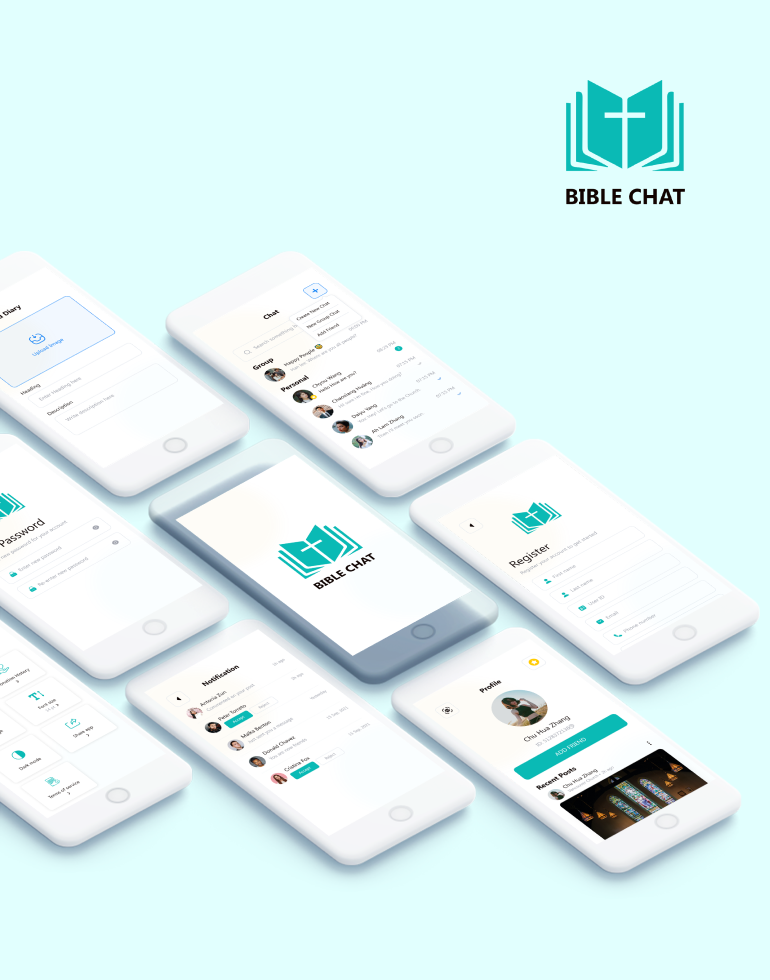
We've shipped AI-driven products including vBites.ai, an AI nutrition product, and a faith-based AI chat app, and we publish how we build, from vector-embedding matching for marketplaces to RAG for medical document search.
What's included
Capabilities- + Agentic workflows & task automation
- + AI matching & recommendation engines
- + RAG & semantic search
- + AI assistants grounded in your data
- + Document & content automation
- + LLM integration (Claude, OpenAI)
- + Evaluation, guardrails & safety
- + AI features in existing apps
How we work
Process- 01
Find the workflow
We start from a task worth automating and a measurable outcome, not "add AI", and check whether an agent, a simpler automation, or nothing is the right tool.
- 02
Prototype & evaluate
A working agent on your data within weeks, with an evaluation set so quality is measured before we commit to a full build.
- 03
Build with guardrails
Production engineering: grounding, scoped permissions, human-approval steps, monitoring, rate and cost limits.
- 04
Ship & improve
We launch behind sensible limits, watch real task-completion rates, and keep tuning prompts, retrieval and models.
Frequently asked
What's the difference between a chatbot and an agent?
A chatbot answers questions. An agent completes tasks: it looks things up, makes decisions within rules you set, takes actions in your systems, and hands back a finished result. We build both, but agents are where the ROI usually is.
What can an agent actually do in my product?
Concrete examples from our work: triage inquiries and book appointments, match buyers to sellers on a marketplace, assign and track deliveries, draft documents from unstructured input. We start from a real workflow, not the technology.
How long does it take?
A proof of concept on your data is typically 3–4 weeks. A production agent with one or two connected systems, evaluation, guardrails and monitoring takes 4–6 weeks, and a multi-agent or deeply connected system 8–12 weeks, depending mostly on how many systems it touches.
How do you stop an agent from doing something wrong?
Scoped permissions, human-approval steps for consequential actions, evaluation against real examples before launch, and monitoring after. Autonomy is earned incrementally, not granted on day one.
Which models do you use?
Leading models including Anthropic's Claude and OpenAI's, chosen per use case on quality, latency and cost: you're not locked to one vendor.
Will it work with our existing systems and data?
Yes. Most of our AI work is integration into live products, connecting to your data sources, APIs and auth.

Industries we serve
All industries →Related insights
All posts →Beyond the LLM Wrapper: Architecting Defensible AI Moats in a Commoditized Market
From Chatbots to Autonomous Agents: Understanding the Anatomy of an AI Agent
Agentic AI Implementation: A Practical Engineering Guide
Measuring AI ROI: The Success Metrics That Actually Matter
MLOps Lifecycle: A Practical Guide to Scaling ML in Production
AI Chatbot for Customer Engagement: What Actually Works
How to Measure the ROI of an AI Agent or Automation Project
First time hiring a dev team?
Our fixed-price Scoping Sprint lets you see how we work before you commit, and you keep everything we produce.