End-to-End Product Development
End-to-End Product Development
A product engineering company in India taking products from idea to launch: strategy, design, engineering and DevOps under one roof.
Planning your budget? See what a product build costs.
One accountable team across the whole product: no stitching together a designer, an agency and three freelancers.
End-to-end product development means one team owns the whole journey: discovery, design, engineering, infrastructure and launch. No briefs lost between a design studio and a dev shop, no integration surprises at the end. You get a single team accountable for the outcome, not just their slice of it.
When this is the right fit
It suits founders turning an idea into a real product, and companies launching a new line without the headcount to staff a full squad. If you'd rather have one partner own design, build and ops than coordinate several vendors, this is it.
It's also worth saying when it isn't. If you already have a strong in-house product and design team and just need engineering capacity, dedicated developers embedded in your team is the better-shaped engagement. If you only need to prove one idea quickly before committing to anything, start with an MVP: you can widen to end-to-end once the idea earns it.
What "end to end" actually covers
Every stage hands cleanly into the next because it's the same team throughout: the engineers who build your product sit in the discovery workshops, and the designers who shaped it see how users actually behave after launch. The four phases are broken down below.
Working with a product development company in India
We are a product engineering company based in Surat, Gujarat, and most of our clients are in the UK, Australia and Canada. If you are weighing up an offshore team, the questions worth asking are not about the code. They are about how the working relationship actually runs, so here are our answers before you ask.
Time zones. India sits four and a half to five and a half hours ahead of the UK, and the same distance behind eastern Australia, depending on daylight saving at your end. In practice that gives a real overlap window with the UK for most of your morning and almost the whole Australian working day. North American clients get a smaller overlap, so we schedule the fixed points, the sprint demo and planning, inside it and run the rest asynchronously. We would rather tell you the overlap is four hours than pretend it is eight.
What the rate actually buys. Our published blended rate is about $20 per hour for a senior team. The same scope quoted by a US or Western European agency at $120 to $250 per hour lands roughly six to twelve times higher. That gap is cost of living, not skill, and it is the honest reason offshore development exists. It is also why we publish prices: the saving only means something if you can see the number before the call.
Who you actually talk to. A small, senior team, no account-manager layer, and the engineers building your product in the room when it is scoped. We are a studio of just over twenty people, not a body shop staffing your project from a bench.
What we have to show for it. Over a hundred products in seven years, sixty-plus clients, and a client retention rate of ninety-five percent. We also build and run our own products, which means we live with our architectural decisions for years rather than handing them over and moving on.
The part people worry about and rarely raise. You own all the intellectual property, and you have access to the repository from day one rather than at handover. That means you can see the commit history as it happens, bring in your own reviewer, or walk away with a working codebase at any point. Ask every partner you are considering where the code lives during the build, not just at the end of it. The answer tells you a lot.
How we keep it moving
We work in two-week sprints with working software at the end of each, so you're never waiting months to see progress. Decisions are made with you, not around you: you see the sprint board, you join the demos, and you always know what's shipping next. We're a small, senior team by design, with no account-manager layer between you and the people building your product.
What it costs
Most agencies won't put numbers on a services page. We publish ours, because "it depends" wastes everyone's time:
- A production-ready MVP typically runs $5,000–$25,000. The full tier breakdown is in our MVP cost guide.
- A custom web application runs $5,000–$50,000+ depending on scope: see the web app cost guide.
- A mobile app across iOS and Android typically lands at $10,000–$50,000 for a funded v1. The mobile cost guide has the feature-level arithmetic.
- A SaaS product spans $5,000–$150,000+ from single-product MVP to scaled multi-tenant platform, priced out in the SaaS cost guide.
Those are honest general ranges, not quotes. The way to get a real number for your product is a Scoping Sprint: it ends with a fixed quote, and it's the only figure on this site that's a firm offer.
Product development or product engineering?
The two terms get used interchangeably and it is worth being precise, because which one you need changes what you should buy.
Product development is the whole arc, including deciding what to build. Discovery, user research, prioritisation and the decision to cut a feature all sit inside it. If you have an idea rather than a specification, this is what you need.
Product engineering is the building of it: architecture, code, infrastructure, testing and release. If you already know exactly what you want and it is documented, you may only need this half, and you should not pay for discovery you do not need.
We sell both as one engagement, which is what end-to-end product engineering means in practice: the same team decides what to build and then builds it. The engagement is shaped to whichever half you actually need, and the quickest way to find out which one that is, is a conversation rather than a form.
Proof it works
We've taken products live end to end across web and mobile:
- SecondCare, a medical second-opinions platform, taken from concept through design, build and launch.
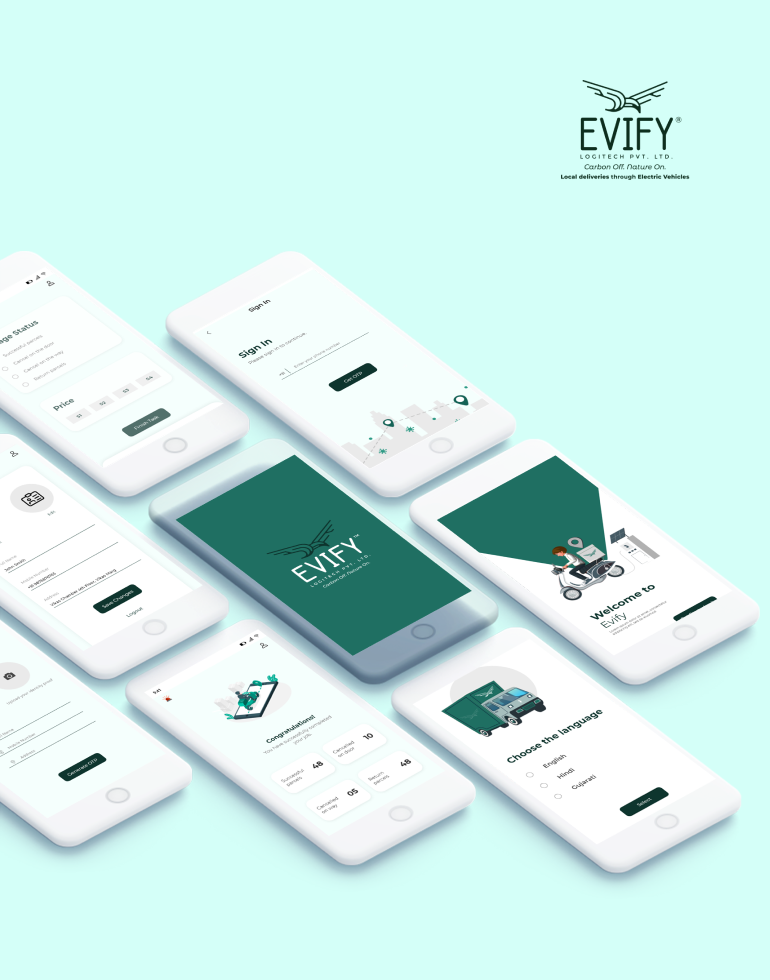
- Evify, an EV-logistics platform for fleet operations.
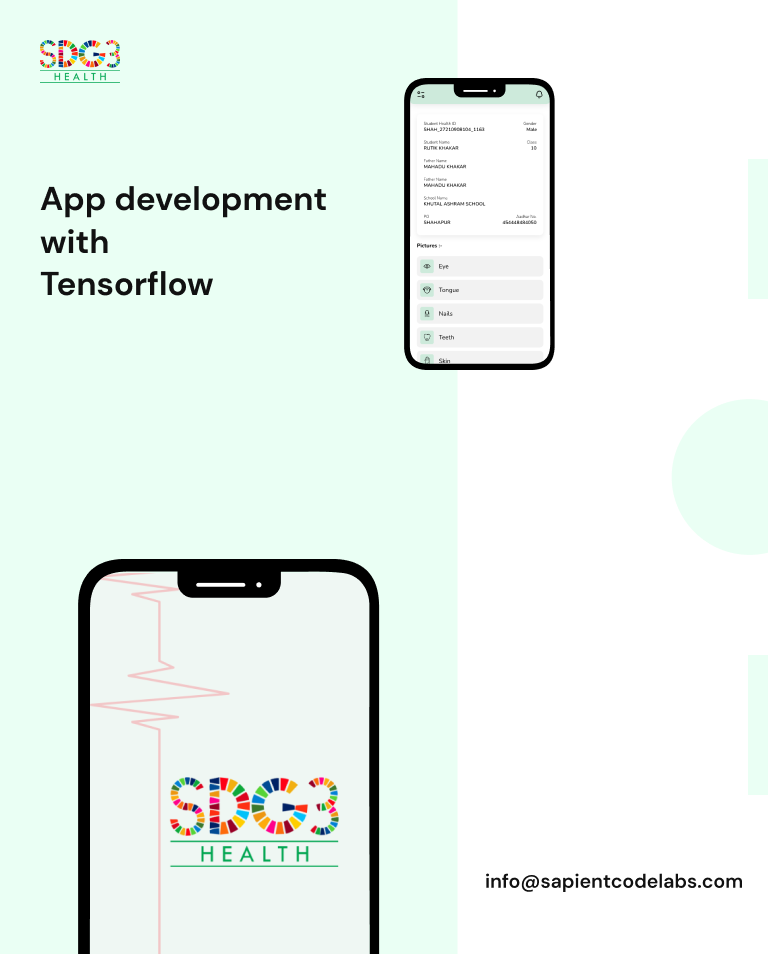
- SDG3 Health, a health-focused mobile app.
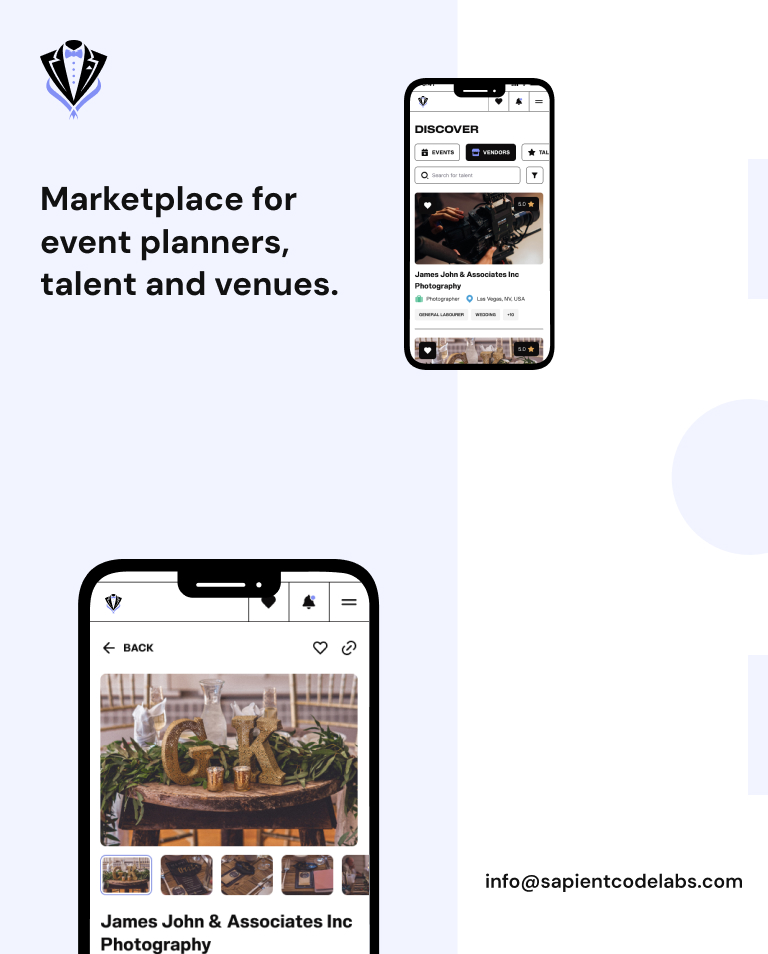
- A multi-vendor marketplace connecting event planners, talent and venues: mobile and web, with payments and matching.
We also build and run our own products, Denti360, DatumQ and Cleargate, which keeps us honest: we live with our architectural decisions long after launch, the same way you will. See the rest on the portfolio page, and how we run engagements on how we work.
What's included
Capabilities- + Product discovery & strategy
- + UX & product design
- + Web & mobile engineering
- + APIs & integrations
- + Cloud, CI/CD & DevOps
- + QA & release management
- + Analytics & iteration
- + Maintenance & scaling
How we work
Process- 01
Discover
Workshops to pin down goals, users and the riskiest assumptions. You leave this phase with a prioritised roadmap to a first release, a technical approach, and a clear statement of what we are not building yet, which is where most budgets are actually saved. If the discovery work shows the idea needs a smaller first step than you planned, we'll say so.
- 02
Design
Prototypes and a design system that covers web and mobile, validated with real users before a line of production code is written. Design here isn't a Dribbble exercise: every screen exists to be built, and the design system is structured so engineering inherits components, not pictures.
- 03
Build
Two-week sprints across front end, back end and infrastructure, with demoable software at the end of every sprint. Our core stack is React and Node on the web, Flutter for iOS and Android from one codebase, and the APIs and integrations that tie a real product together: payments, messaging, third-party data, and increasingly AI and agentic features that do real work inside the product.
- 04
Launch & scale
We ship, measure and harden: cloud infrastructure, CI/CD, monitoring, and the QA and release management that make deploys boring. Then we stay on for what comes after go-live, because the product you launch is rarely the product you finish with. Most clients keep us on for iteration, maintenance and scaling.
Frequently asked
What does end-to-end product development include?
Everything from discovery and design through engineering, cloud/DevOps and launch, handled by one team rather than several vendors, plus the iteration and scaling work after go-live.
Are you a product development company in India?
Yes. We are a product engineering studio in Surat, Gujarat, founded in 2019, with just over twenty people. Most of our clients are in the UK, Australia and Canada. Over a hundred products shipped, sixty-plus clients, and ninety-five percent client retention.
How does working with an offshore product development team actually work?
Two-week sprints with a demo at the end of each, a shared sprint board you can see at any time, and direct access to the engineers rather than an account manager. India runs four and a half to five and a half hours ahead of the UK, which gives a real overlap through your morning, and close to a full working day of overlap with eastern Australia.
What is the difference between product development and product engineering?
Product development includes deciding what to build: discovery, research and prioritisation. Product engineering is the building of it: architecture, code, infrastructure and release. End-to-end product engineering services cover both halves in one team. If you have a documented specification you may only need the second, and you should not pay for discovery you do not need.
How much does end-to-end product development cost in India?
Our published blended rate is about $20 per hour for a senior team. A production-ready MVP typically runs $5,000 to $25,000, a full web application $5,000 to $50,000+, and a SaaS platform $5,000 to $150,000+ depending on scale. The same scope from a US or Western European agency usually lands five to ten times higher, which is cost of living rather than skill.
How is this different from an agency plus freelancers?
One accountable team owns the whole outcome, so there are no briefs lost between vendors and no integration surprises at the end. The engineers who build the product were in the room when it was scoped.
Do you cover both web and mobile?
Yes. Web (React and Node), mobile (Flutter, iOS and Android from one codebase), plus the APIs, cloud and DevOps that tie them together.
Who owns the code and the intellectual property?
You do. The client owns all intellectual property in the work, and you get repository access from day one rather than at handover. You can watch the commit history as it happens, put your own reviewer on it, or take a working codebase away at any point in the engagement. We put that in the contract rather than the small print.
How long until we have something live?
We work in two-week sprints and aim for an early, usable release fast; a full first launch is typically a few months depending on scope. The Scoping Sprint gives you a real timeline for your product rather than a generic one.
Who will actually work on my product?
A small, senior team of designers and engineers who stay on your product across phases. No hand-off between a "sales team" and a "delivery team", and no account-manager layer between you and the people building it.
Do you stay involved after launch?
Yes. Most clients keep us on for iteration, maintenance and scaling after go-live. Plan for ongoing product work at roughly 15 to 20% of the build cost per year.
What if I'm not sure the idea justifies a full build yet?
Then don't buy a full build. Start with the Scoping Sprint or a small MVP and let user evidence make the case for the rest. We'd rather tell you to build less: it's why clients trust the bigger recommendations when we make them.
Related insights
All posts →Product Development Company in India: How to Choose One
AI Code Generation and Refactoring: A Practical Guide
Scaling an MVP to a Full Product: What Actually Changes
How to Build Autonomous AI Agents with Claude API and LangChain for Enterprise Automation
End-to-End Product Development: What It Includes, Stage by Stage
Not ready to commit to a full build?
Start with a 2-week Product Scoping Sprint: clickable prototype, technical plan and a fixed build quote, credited in full if we build together.