Zunikon Technologies · Web Application Development
Vbites.ai
VBites is a video testimonial platform we built: a business sets up its own studio and questionnaire, sends customers a link to record a video testimonial or leave feedback, then reviews, edits and publishes the best ones. It ships as a web app for the business, a customer portal and shareable landing page for collecting testimonials, and an admin panel for the platform owner.
If you are researching how to build a video testimonial or review collection platform, the write-up below is the useful part. It covers how the product splits into three, why recording in the browser is the hard part, what the video pipeline should and should not be, how consent works, what the metrics are for, what it costs to scope, and when an existing testimonial tool is the better answer.
Video testimonials
made simple with
VBites.
+ Frontend : ReactJS
+ Backend : Nodejs
+ Database : MongoDB
+ Hosting : AWS
+ 3rd party services : AWS SES, Stipe Payment Gateway, MUX API, AWS S3
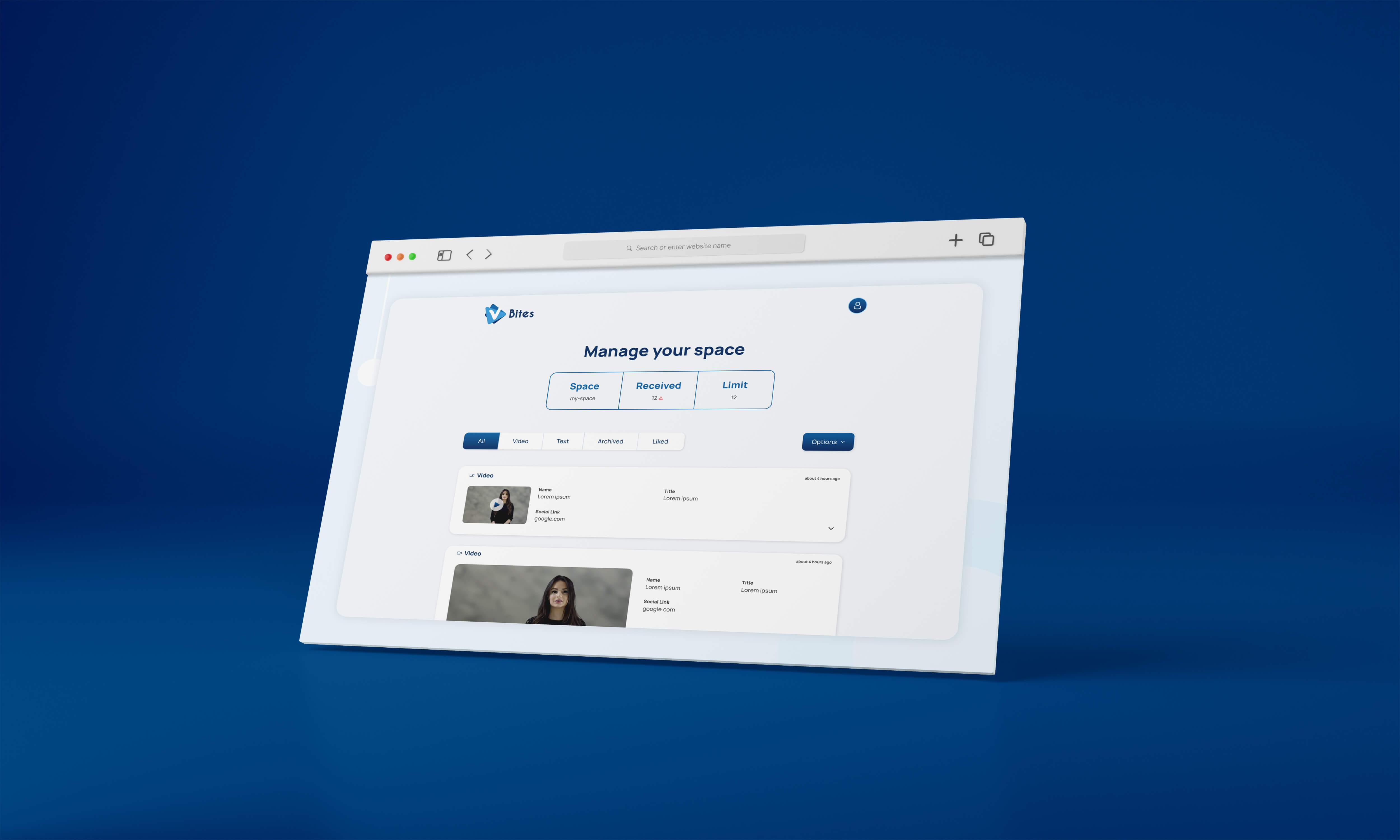

Web app
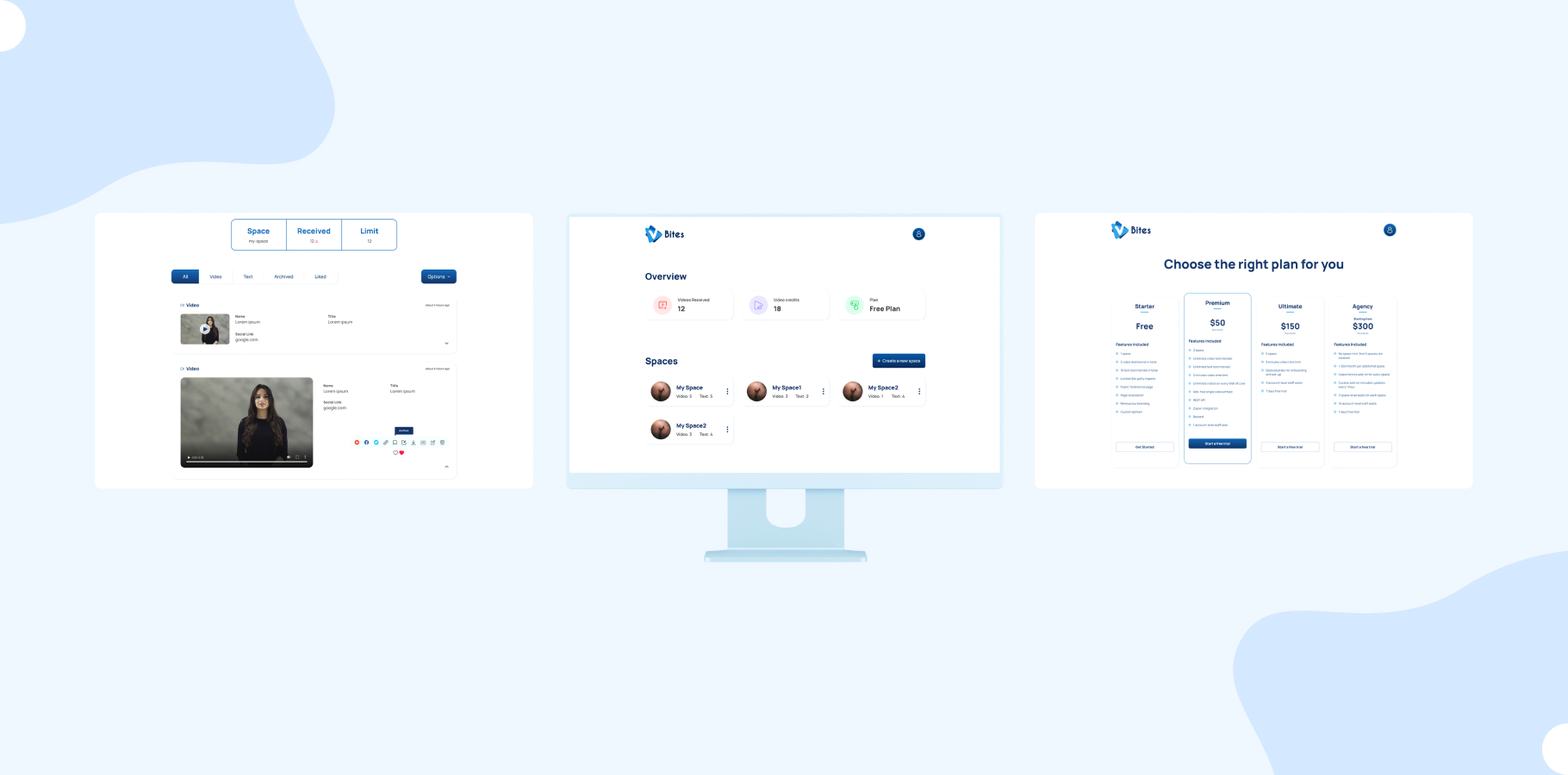
+ Create your studio and customize your questionnaire.
+ Review and edit videos to make them stand out.
+ Track metrics from all embedded videos and promote the best-performing videos to different marketing channels.
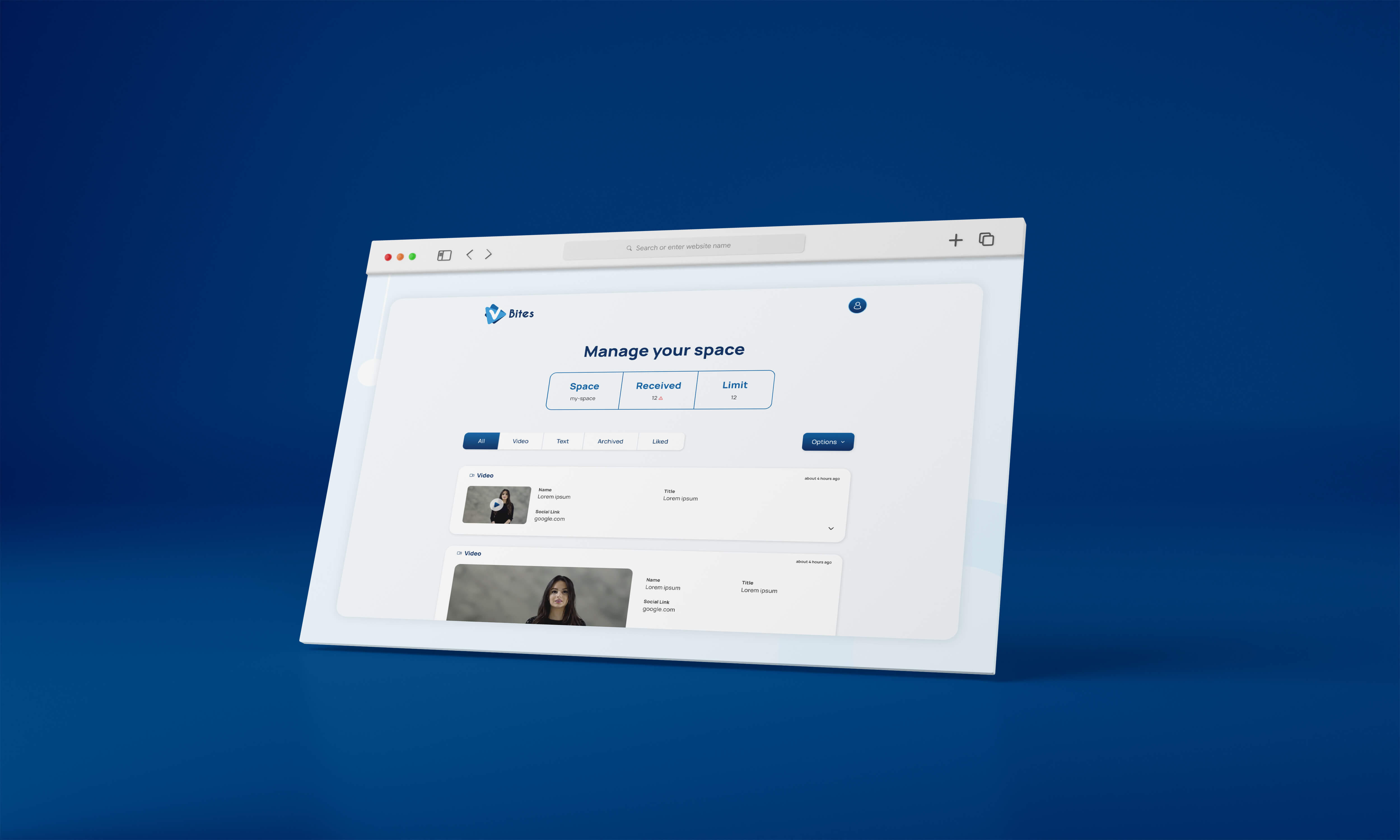
Admin Panel
+ Dashboard with an easy overview of the platform.
+ User metrics and analytics on platform usage.
+ Revenue tracking and report generation.


A testimonial platform is three products, not one
A testimonial tool looks like a recording button and a gallery. Structurally it is a small multi-tenant SaaS product with two very different users: the business that wants testimonials, and the customer who is asked for one and owes the business nothing.
- The business web app. In VBites this is where a business creates its studio, customises the questionnaire its customers answer, reviews and edits the videos that come in, and tracks how embedded videos perform.
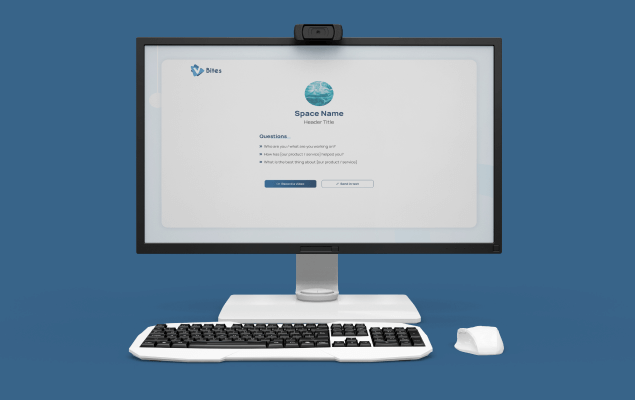
- The collection side. A customer portal for leaving feedback and recording a video testimonial, and a dedicated landing page for each business with links it can share by email or message.
- The admin panel. A platform dashboard, user metrics and usage analytics, and revenue tracking with report generation.
Each business is a tenant. Put the business identifier on every record from the first schema, including questionnaires, recordings, edits and metrics, because a testimonial that leaks into another company's gallery is the one bug this product cannot survive.
Recording in the browser is where most of the effort goes
The person recording is a customer doing a favour. They will not install an app, create an account or read instructions. Whatever happens between tapping the link and finishing the recording decides how many testimonials a business actually gets.
That puts the hardest engineering on the collection side:
- Camera and microphone permissions. Browsers ask once, and a customer who taps "block" by accident needs a clear way back, which differs between phones and desktops.
- Different browsers, different formats. Browser recording produces different video containers and codecs on different platforms, so the backend has to accept them all and normalise them later.
- Uploads on weak connections. A two-minute phone video is large. Upload in chunks that can resume, and confirm receipt before the customer closes the tab.
- Retakes and limits. Let people re-record before sending, show the time limit while they record, and keep the questionnaire visible so they are not speaking from memory.
Test this flow on cheap phones and on mobile data before anything else. A polished dashboard does not matter if half the recordings never arrive.
Buy video encoding and playback, keep the originals
VBites uses the Mux API for video and AWS S3 for storage. For most products in this space, buying the video layer is the sensible default.
Building it yourself means transcoding every upload into several sizes for adaptive streaming, generating thumbnails, serving video through a CDN and keeping players working across browsers. That is infrastructure work with no product value of its own. A video API takes the upload, prepares it for streaming and gives you a playback URL, and bills by minutes encoded, stored and watched.
Several decisions stay yours:
- Keep an original. Store the untouched upload in your own storage, so editing, re-encoding or changing provider never depends on a copy someone else holds.
- Edit non-destructively. Trims and edits should be instructions applied to the original, so a business can undo a cut without asking the customer to record again.
- Model the bill on views. Playback is usually the cost that grows, because a good testimonial embedded on a busy page is watched far more often than it was recorded.
Consent is part of the product, not a checkbox
A video testimonial is a customer's face, voice and name used in someone else's marketing. That makes it personal data, and using it in ads or on social channels needs the customer's permission for that use.
- Record consent with the video. Store what the customer agreed to, when, and the wording they saw, against the recording itself.
- Ask per use. Showing a video on the business's own site and running it as a paid ad are different requests, and customers answer them differently.
- Make withdrawal work. When someone asks for their video to come down, removing it must reach every embed and every copy the platform controls.
- Know where you operate. Data protection rules differ by country, and a platform selling to businesses in several markets has to meet the strictest one its customers fall under.
Embeds and metrics are what businesses pay for
Collecting videos is the start. The value to the business is putting the right video in front of buyers. VBites tracks metrics from every embedded video and lets a business promote its best-performing videos to different marketing channels.
| Piece | What it has to do | Where it goes wrong |
|---|---|---|
| Embed code | Drop a player or a gallery onto any website with one snippet | Heavy scripts slow down the customer's own page |
| Shareable landing page | Give each business a page and links it can send without a website | Pages that look generic and get ignored |
| View and play metrics | Count loads, plays and watch time per video and per placement | Counting page loads as views and overstating results |
| Promotion | Move the best videos to other channels | Reusing videos beyond what the customer agreed to |
Decide early what a "view" means and apply it everywhere. Businesses compare these numbers with their own analytics, and a mismatch costs more trust than a lower number would.
Billing, email and the admin panel
VBites runs on ReactJS, Node.js and MongoDB, hosted on AWS, with Stripe for payments and AWS SES for email. Those pieces map onto the parts of a subscription product that are easy to underestimate.
- Payments. Plans, upgrades, failed card retries and what happens to a business's videos when a subscription lapses all need deciding before launch, not after the first unpaid invoice.
- Email. Testimonial requests are sent on behalf of the business, so sender setup and deliverability decide whether the request lands in an inbox at all.
- The admin panel. VBites gives the platform owner a dashboard, user metrics, usage analytics, revenue tracking and report generation. Build it alongside the product, because support questions start on day one.
What it costs, and how to scope it
There is no honest single price for a testimonial platform, but there is a method. Our published blended rate is about $20 per hour for a senior team, so cost is hours, and hours come from team size and duration. As illustrative arithmetic only, not a quote: two developers for ten weeks at 40 hours a week is 800 hours, about $16,000. A team of four for sixteen weeks is 2,560 hours, about $51,200. Video usage fees and email sending come on top and grow with use. The SaaS development cost guide breaks the pieces down.
The cheapest first release cuts features, not the collection flow. An MVP-sized first version might be one questionnaire per business, browser recording, a review screen, consent capture and a single embed, with metrics and promotion added once businesses are using it.
When you should not build one
If you are a business that wants testimonials on your own website, do not build a platform. Several testimonial tools already exist, work tomorrow and cost less per year than a week of development.
A custom build makes sense when the platform itself is the business: you are selling testimonial collection to other companies, you need it inside an existing product your customers already use, or you need control over where video and personal data are stored that a shared tool will not give you. If that describes your plan, it is SaaS development, and it is work we have shipped.
Planning a video testimonial or review collection product? A Scoping Sprint ($2,300, two weeks) ends with the recording flow, business dashboard and consent model mapped out for your case, a prototype, and a fixed quote. Or just start a conversation.