The AI Gold Rush and the Wrapper Trap
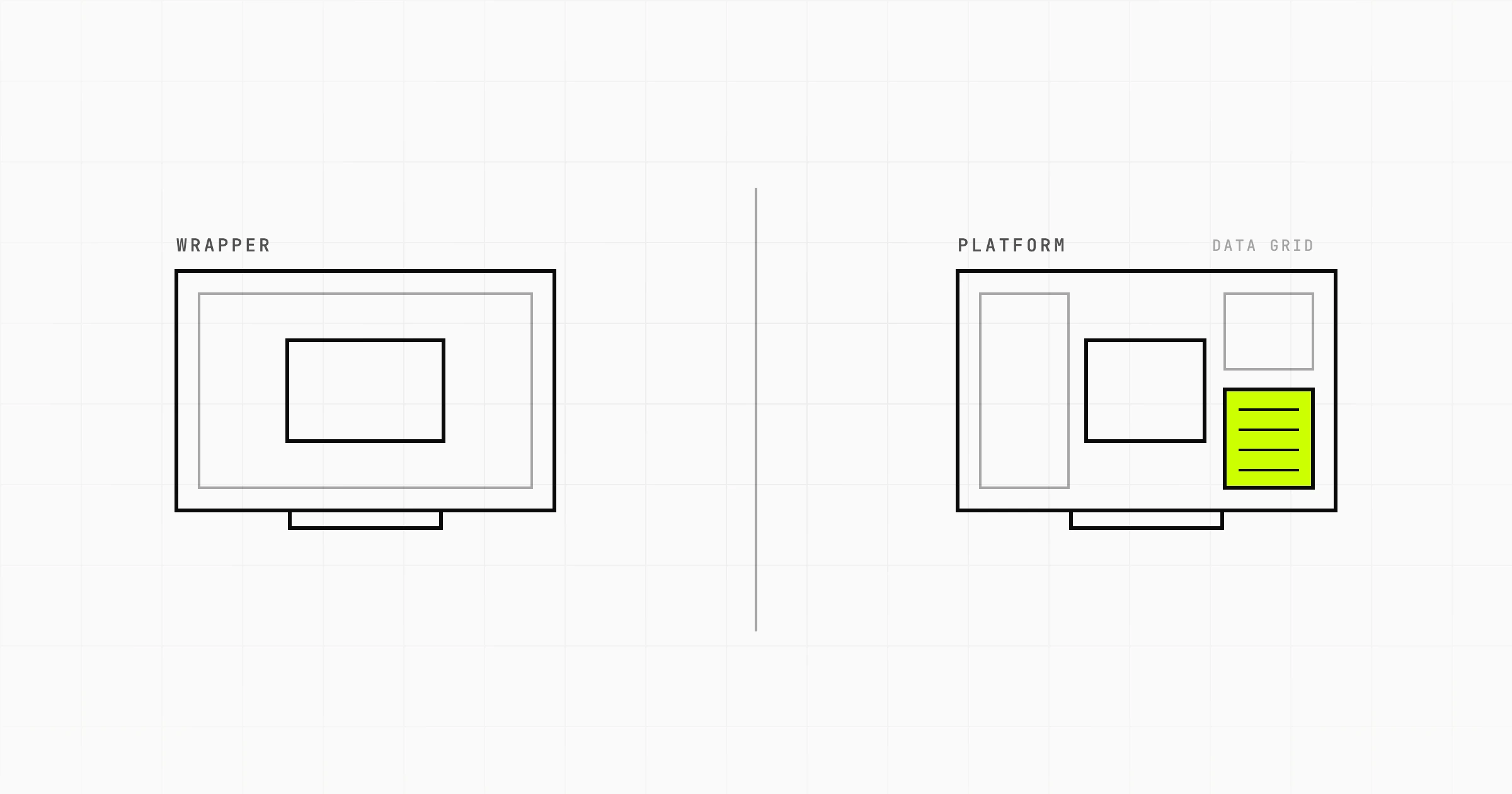
The artificial intelligence landscape in 2025 resembles a modern gold rush. Thousands of startups have emerged, promising revolutionary AI solutions built on large language models. Yet the vast majority of these companies share a critical vulnerability: they are essentially "wrappers"—thin interfaces around APIs provided by companies like OpenAI, Anthropic, and Google. While these wrapper companies may deliver functional products, they lack the fundamental elements required for long-term competitive survival.
Sapient Code Labs has observed this pattern repeatedly across the industry. Companies that launched AI products in 2023 and 2024 with simple prompt engineering and API integration are now discovering a uncomfortable truth: when your only differentiation is access to the same LLM APIs available to anyone, you have no real moat at all. As the underlying models become more capable and cheaper, the wrapper's value proposition erodes dramatically.
Turning this into a shipped product is end-to-end product development.
Understanding the Commoditization Threat
The AI market is experiencing intense pressure toward commoditization. Several converging factors make simple wrapper strategies increasingly untenable:
Model API Costs Declining: The price of LLM API calls has dropped precipitously over the past two years. What cost $20 per million tokens in 2023 now costs a fraction of that. When your business depends on margin between API costs and customer pricing, that margin compresses continuously.
Open Source Alternatives Rising: Models like Llama, Mistral, and Qwen have achieved performance that rivals proprietary alternatives. Companies can now deploy capable language models without depending on external API providers, eliminating the wrapper's intermediary role.
No-Code AI Platforms Emerge: Every major tech company now offers AI capabilities that business users can access directly, without requiring development teams. When customers can build their own "AI assistants" with Microsoft Copilot or Google Gemini, the value of a third-party wrapper diminishes.
Zero-Cost Competitors: Free alternatives emerge constantly. If your product charges for AI capabilities that are available elsewhere at no cost, customers will eventually migrate.
What Makes an AI Moat Defensible?
A true competitive moat in AI must meet one critical criterion: it must be difficult for competitors to replicate. In business strategy terms, this means creating barriers to entry that protect your market position. In the AI context, defensible moats typically derive from four primary sources:
Proprietary Data Assets
Data remains the most valuable and defensible AI asset. Companies that accumulate unique, high-quality datasets in specific domains develop compounding advantages. Consider how medical AI companies with access to proprietary clinical data can train models that general-purpose AI cannot match in that domain. The data becomes a permanent barrier—competitors cannot simply purchase or reproduce it.
The key is data that is both proprietary and continuously expanding. Each customer interaction can potentially improve your model, creating a feedback loop that strengthens your position over time. This is why AI companies aggressively pursue data network effects—the more users engage with your system, the better it becomes, which attracts more users.
Deep Domain Expertise
Expertise in specific industries or workflows creates meaningful differentiation. A legal AI system developed by attorneys and legal technologists understands the nuanced requirements of legal practice in ways that a general-purpose LLM never can. This expertise manifests in multiple forms: specialized training data, prompt engineering informed by domain knowledge, workflow integrations that understand specific business processes, and output formats designed for specific professional contexts.
If you're still validating, start from a published MVP cost breakdown.
Domain expertise is defensible because it requires years of accumulated knowledge that cannot be purchased or quickly replicated. Competitors entering your market must invest similar time and resources to match your understanding.
Workflow Integration and Embedding
AI products that become deeply embedded in customer workflows create switching costs that protect against competitive threats. When an AI system is woven into daily operations—processing documents, managing customer relationships, controlling manufacturing processes—replacing it requires substantial disruption and retraining.
The most defensible integrations are those that leverage proprietary data and create bidirectional dependencies. Your AI system learns from the customer's operations while simultaneously shaping how those operations function. This creates structural barriers to replacement that go beyond simple preference or habit.
Technical Architecture and Specialization
Building specialized technical infrastructure around AI capabilities creates architectural moats. This includes optimization of inference systems for specific use cases, proprietary algorithms for particular problem types, and specialized hardware configurations that improve performance or reduce costs.
Technical moats require ongoing investment and expertise but can provide substantial protection. When your system processes queries faster, more accurately, or more cheaply than alternatives, competitors must match that technical achievement to compete effectively.
Architecting Your Defensible AI Strategy
Building a defensible AI company requires intentional architectural decisions from the earliest stages. Rather than starting with technology and searching for applications, successful AI companies begin with specific problems and build comprehensive solutions around them.
Identify Uniquely Solvable Problems
Begin by identifying problems where AI provides transformative value and where you can build sustainable advantages. Ideal targets share several characteristics: the problem requires domain-specific knowledge to solve well, large volumes of proprietary data are available for improvement, the solution requires deep workflow integration, and customers face significant switching costs when changing tools.
Generic problems that AI solves adequately but not exceptionally will attract commoditization pressures. Focus on problems where the gap between AI-assisted and traditional solutions is substantial.
Build Data flywheels
Design your product architecture to generate valuable data from every customer interaction. This data should improve your core AI capabilities in ways that benefit all users while becoming progressively more difficult for competitors to replicate. The most powerful data flywheels combine proprietary domain data with aggregated learning across your user base.
Consider data collection strategically from day one. What data would make your system dramatically better? What unique data sources could you access that competitors cannot? Build those capabilities into your initial architecture.
Specialize Rather Than Generalize
Resist the temptation to build general-purpose AI solutions. While horizontally capable systems have broad market appeal, they also face the broadest competition. Vertical specialization allows you to develop deeper expertise, more relevant data, and stronger integrations in specific domains.
A focused AI system that excels at a specific professional workflow will often outperform general alternatives, even when those alternatives have more advanced underlying technology. Depth of integration and specialization creates defensibility that pure capability cannot match.
Layer Multiple Moats
The strongest defensive positions combine multiple moat types. A company with proprietary domain data, deep workflow integration, accumulated expertise, and specialized technical infrastructure presents an extraordinarily difficult competitive challenge. Each layer provides protection while also reinforcing the others.
Architect your business to develop these layers progressively. Start with one defensible element and build additional layers over time. The compounding effect creates increasingly strong protection against market entrants.
The Path Forward for AI Companies
The AI market in 2025 and beyond will increasingly separate companies into two categories: those with genuine defensible advantages and those competing on price alone. The wrapper companies—those that simply provide interfaces to commoditized AI capabilities—will face relentless pressure on margins and customer retention.
Companies that succeed will be those that invest in building real competitive advantages: proprietary data assets, domain expertise, workflow integration, and specialized technical capabilities. These investments require more time and resources than simple wrapper development, but they create sustainable businesses rather than temporary market positions.
For organizations developing AI strategies today, the choice is clear. You can pursue the faster path of wrapping available AI capabilities, accepting the commoditization risks that come with that approach. Or you can invest in building genuine defensible moats that will protect your market position for years to come.
Conclusion
The AI market is maturing beyond its initial hype cycle. Companies that recognized the wrapper trap early are now building the infrastructure, data assets, and domain expertise that will define competitive leadership in the coming years. Those that simply leveraged accessible AI models without building additional value face an uncertain future.
At Sapient Code Labs, we help organizations navigate this landscape. We understand that sustainable AI advantage requires more than technological implementation—it demands strategic architecture designed for long-term defensibility. Whether you are building new AI products or strengthening existing capabilities, we can help you develop the moats that will protect your market position.
The time to build your AI moat is now. Every month that passes without developing proprietary advantages is a month that competitors use to strengthen their own positions. Contact us to discuss how we can help you architect AI solutions that create lasting competitive value.
Building a defensible AI product? Sapient Codelabs offers AI & agentic development — we build AI features, agents and copilots into real products, with the evaluation and guardrails to run them in production. Talk to our team.
If you're serious about this, a Scoping Sprint ($2,300, two weeks) gets you a prototype, technical plan and fixed quote — or contact us directly.