A marketplace app costs anywhere from about $15,000 to well past $150,000, and almost none of that spread comes from screens. It comes from three decisions: what kind of transaction the platform sits in the middle of, how the money moves between the two sides, and how much trust the platform has to manufacture before strangers will deal with each other. Get those three right in the brief and the estimate stops being a guess.
This piece is for a founder or product lead who has asked a few agencies how much it costs to develop a marketplace app and received numbers that are impossible to compare. The quotes are usually not dishonest. They are pricing different marketplaces, because "a marketplace" with a buyer, a seller and a listing page hides decisions that change the build more than any feature list does.
Our published band for marketplace builds is $15,000 to $150,000+, at a blended rate of about $20 per hour for a senior offshore team. If you want the numbers, our marketplace app development cost guide prices it in tiers with a worked MVP breakdown. This article does something different: it explains which decisions move you from the bottom of that band toward the top, so you can see the cost before anyone opens a spreadsheet.
Where we use our own work as evidence, it is Nestlet, a marketplace for short-term residential leases that we built in-house. Its payment and contract design is the most expensive part of most marketplaces, and we can describe exactly how it was done.
Why the same marketplace idea gets very different quotes
Ask three teams to price "an app where customers find and pay local service providers" and you will usually get three different products back. One team prices a directory with a contact button. One prices instant booking with card payments. One prices quotes, deposits, a dispute process and payouts split across several providers. All three are fair readings of the same sentence.
The spread comes from questions the brief did not answer:
- Does money pass through the platform at all? A marketplace that introduces buyers and sellers and charges a listing fee is a different build from one that takes the payment and pays the seller later.
- Who sets the price? A fixed price on a listing, a quote negotiated per job, and a bid in an auction are three different data models with three different sets of screens.
- Is the thing being sold scarce in time? A product can be sold many times. A Saturday at a venue can be sold once, and preventing a double booking is real engineering.
- What happens when it goes wrong? Refunds, cancellations, no-shows and disputes each need a rule, a state in the data model and a screen for whoever handles them.
- How many apps? Two sides on web only is one build. Two sides on web, iOS and Android, plus an admin panel, is closer to four.
A useful exercise before asking for any quote: write one paragraph that answers each of those five questions. Agencies pricing from that paragraph will land much closer together, and the ones that still disagree will have to say why.
The marketplace model sets the floor of the bill
Most marketplaces fall into one of a handful of models, distinguished by what the buyer is actually committing to when they press the button. The model decides which parts of the build are unavoidable, so it is the first thing to pin down. Our marketplace development work sorts them broadly into marketplaces where you bid, book or apply; the table below splits them one step further.
| Model | What the buyer commits to | Parts you cannot skip | Where cost tends to pile up | Can usually wait |
|---|---|---|---|---|
| Multi-vendor products | Buying an item at a listed price | Vendor catalogues, cart across vendors, split payouts | Inventory sync per vendor, shipping and returns per vendor | Promotions, loyalty, vendor analytics |
| Booking (services, venues, rentals) | A slot in time that only one buyer can have | Availability calendars, holds, double-booking prevention | Calendar sync with suppliers' own tools, cancellation rules | Dynamic pricing, recommendations |
| Quote or bid | Accepting one seller's offer for a described job | Job posting, offers, messaging, acceptance | Deposits and milestones, scope changes after acceptance | Auctions with timers, automated matching |
| Apply (jobs, gigs, admissions) | An application the other side reviews | Profiles, applications, a review pipeline for the other side | Screening workflow, documents, status notifications | Payments, if the platform charges by subscription instead |
| Long rentals and leases | A contract over weeks or months | Contracts, deposits, held funds, scheduled charges | Contract state gating money, recurring billing, deposit returns | Reviews, search beyond the basics |
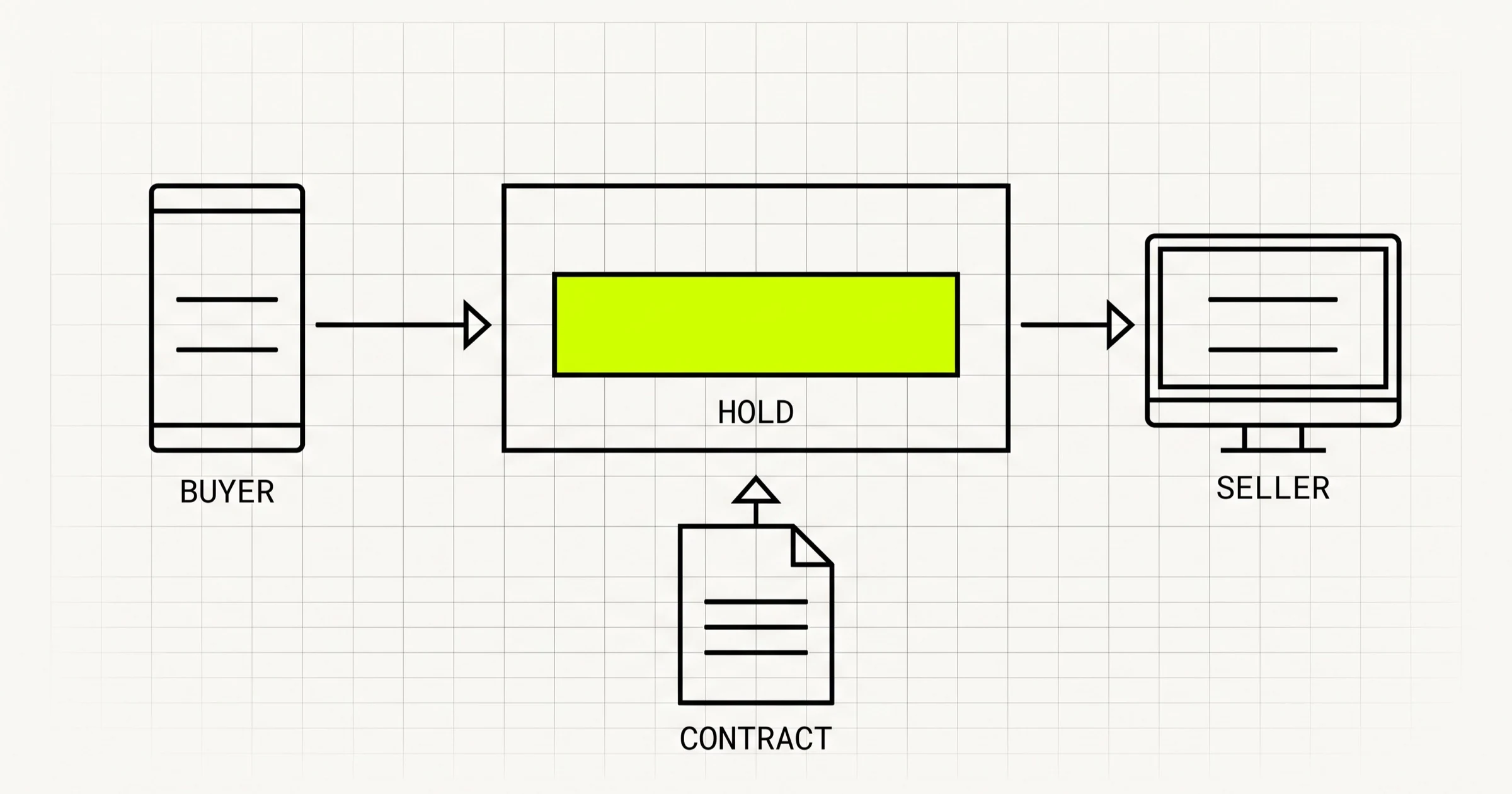
Two things in that table matter more than the rest. First, the rows near the top can be built with the money flowing straight through, while the rows near the bottom almost always need the platform to hold funds for a while. Second, every model except plain products has a state that a single action does not resolve: a hold that becomes a booking, an offer that becomes a job, a contract that becomes payable. Those states are where estimates go wrong, because each one has failure paths that someone has to design.
If your idea mixes models, for example a services marketplace where some jobs are booked instantly and some are quoted, price it as the more complex model. The simpler path is a special case of the harder one, not the other way round.
Money movement is often the most expensive single line
Founders tend to picture the listing pages and the search when they think about cost. The part that actually consumes the budget, and the part that is most expensive to get wrong, is how money gets from the buyer to the seller with the platform's fee taken in between.
Collect and forward
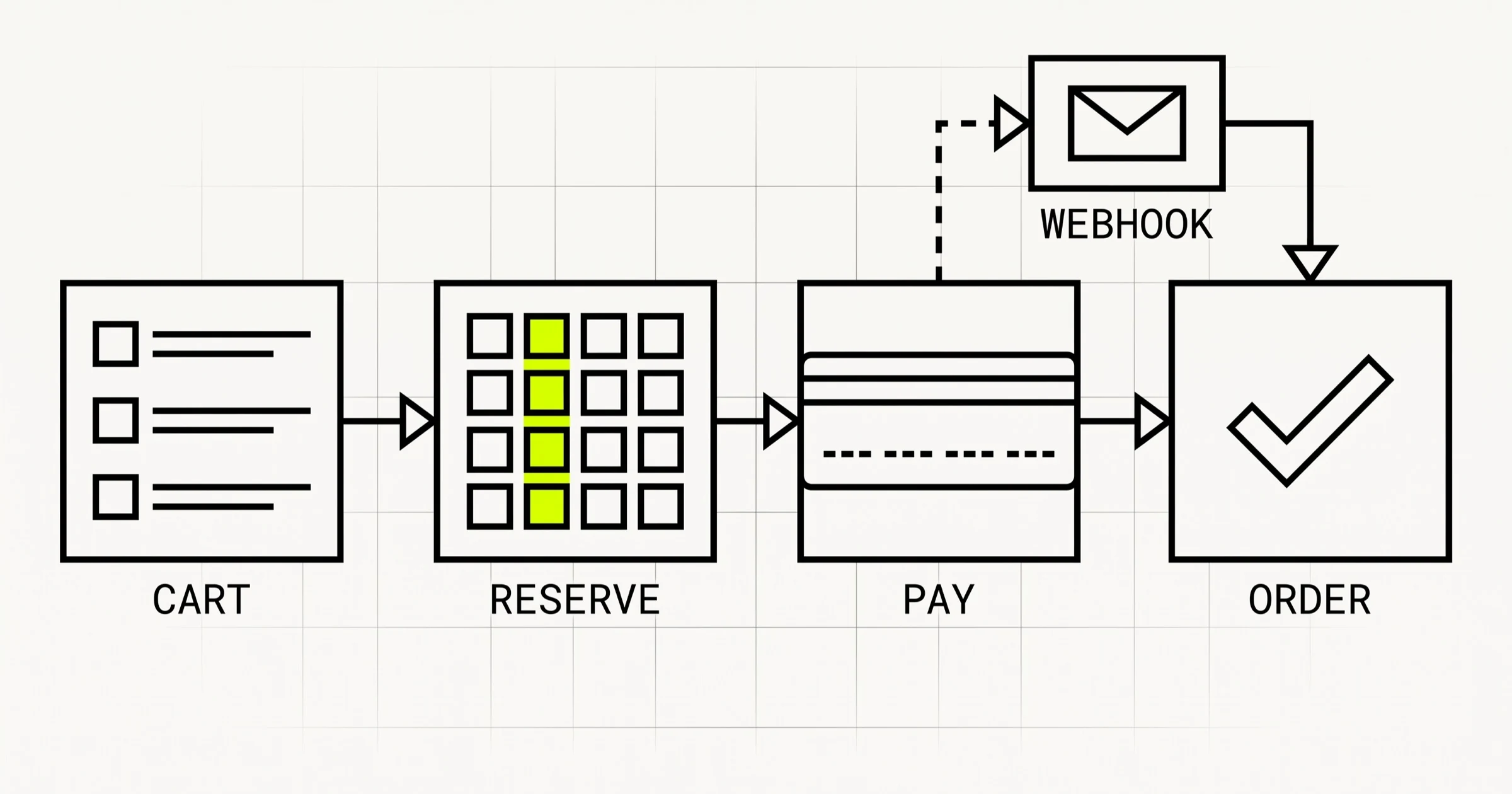
The cheapest pattern: the buyer pays, the payment provider splits it at once, the seller gets their share and the platform keeps its fee. Payment providers built for marketplaces support this directly, and for a products marketplace with one seller per order it is often enough. The engineering is mostly seller onboarding, payout reporting and refunds.
Hold and release
The moment the platform needs to hold the money until something happens, a service delivered, a contract signed, a dispute window closed, the build changes character. Nestlet is the example we can describe in detail. It used Stripe Connect with separate charges and transfers: the platform charges the renter, the funds sit on the platform balance, and the transfer to the host is a separate step that happens only once the lease contract is finalised. Signing happens inside the app through DocuSign with its emails suppressed, the executed documents are stored in S3, and the contract state is what gates the release of money.
That design is more work than collect-and-forward for concrete reasons:
- The platform has to own a state machine that the payout code reads and nobody can bypass by hand.
- Partial refunds, cancellations before release and cancellations after release are three different code paths.
- One payment can fund several sellers on different schedules, so the ledger has to track who is owed what at every moment.
- Someone on your team needs a screen to pause a release and resolve a dispute, which means admin tooling from the first version.
We wrote up the mechanics of splitting payments across vendors in a separate piece on Stripe Connect payment splits, so we will not repeat the webhook handling here. The cost point is simpler: if your marketplace needs to hold money, say so in the brief, because it is a line that often turns a low quote into a change request.
Decisions that cost little to make early and a lot to make late
Who is the merchant of record. Whether the platform fee is charged to the buyer, taken from the seller, or both. How tax is handled when sellers are in different places. Whether sellers are individuals, companies or both, because onboarding and verification differ. None of these are expensive to decide in week one. All of them are expensive to change after the first real transaction, because they are baked into the ledger.
Trust is a feature, and it is billed like one
A marketplace asks strangers to pay strangers. Everything that makes that feel safe has to be built, and the amount needed depends on what is at stake in a single transaction. A cheap item bought from a vendor needs little. A month's rent paid to a host, or a deposit for a wedding venue, needs a lot.
The trust work usually lands in four places:
- Seller verification. Identity and payout details are often handled by the payment provider's onboarding, which saves work. Anything beyond that, licences, insurance documents, background checks, is a workflow you build: upload, review, approve, expire.
- Reviews and ratings. Cheap to display, harder to make credible. Reviews tied to a completed transaction are worth building; open reviews invite abuse and need moderation.
- Agreements. For low-stakes sales, terms at checkout are enough. For contracts, the agreed document has to be stored and retrievable, and Nestlet, for example, stores every executed contract in S3 rather than relying on a message history.
- Disputes. A state that pauses money, a place to gather what both sides say, and an operator who decides. The first version can be a simple admin screen and a human, but it has to exist.
The cost trap here is building trust features for a transaction size you do not have. If your average order is small, heavy verification will slow seller sign-up and cost money for no return. If it is large, skipping it will cost you the first dispute.
Web, mobile, or both: count the apps, not the features
The number of separate applications is a bigger cost driver than most feature decisions. A typical marketplace has a buyer side, a seller side and an admin panel. Each one on web alone is one set of work. Put buyer and seller on iOS and Android as well, and the same features are built, tested and released several more times, even with a cross-platform framework doing much of the sharing.
The useful question is where each side actually does its work:
- Buyers on a consumer marketplace often browse on phones, so a responsive web app that works well on mobile is the usual first step. A native app earns its cost once repeat buyers want notifications and a saved session.
- Sellers who manage listings, calendars and payouts often do it at a desk. Our own dental practice software, Denti360, is a responsive web app with deliberately no native apps, because clinic staff work at a desk. The same reasoning applies to many seller dashboards.
- Sellers in the field, drivers, technicians, anyone accepting jobs on the move, are the case for a native app early. Cleargate, another product of ours, ships as a web PWA plus native Android and iOS apps, which shows the two can live in one product when different users need different devices.
- Admin is web, always, and is the app most often under-scoped.
A first release on responsive web for both sides, with native apps added for whichever side proves it needs them, is one of the largest savings available on a marketplace build. It does not cut a feature; it defers a duplicate.
What a marketplace costs after launch
The build quote is the number everyone compares, and it is not the whole bill. Three kinds of cost continue after launch.
Keeping the software current
From operating Denti360, which is SaaS rather than a marketplace, our planning number is ongoing engineering of 15 to 20 percent of the original build cost per year just to keep it current: dependency and security updates, platform changes, small fixes. That is before any new feature. We have no separate figure for marketplaces, but there is no reason to assume a platform with payments and two user groups needs less, so it is a sensible starting assumption for a budget.
Third-party running costs
Payment processing is charged per transaction by the provider, and marketplace accounts can carry extra fees for connected accounts and payouts. Hosting, e-mail and SMS, maps if you show locations, and e-signature if you use contracts all add monthly lines. Check current pricing with each provider when you budget; it changes, and it scales with transactions rather than with the build.
Operations, which grow with new users
Another lesson from Denti360 that carries over: support load tracks how many customers are new, not how many you have in total. On a marketplace that means seller onboarding, verification reviews and first-transaction questions take the operator time, and they peak during growth pushes. Budget a person, not just a server.
None of these appear in a build quote, and all of them should appear in your plan. A marketplace that can afford its build but not its first year has a funding problem, not a software one.
How to bring the first release down without cutting the wrong thing
The lowest credible cost comes from narrowing the marketplace, not from thinning every feature. A platform that does one kind of transaction well for one group of sellers in one place will get its first real transactions; a platform that does five things partially usually will not.
Cuts that save money and rarely hurt:
- One supply type. If you plan venues, caterers and performers, launch with the one that has the most repeat demand. We made the same argument in our guide to building an event planning marketplace, where each supply type needed its own calendar and profile model.
- Manual operations behind an admin screen. Seller approval, featured listings and dispute handling can be a person with a good admin panel for the first months.
- Plain search. Filters and a simple ranking. Recommendations need transaction history that a new marketplace does not have yet.
- Web first, as above.
Cuts that look cheap and cost more later:
- Taking payments outside the platform "for now". Sellers and buyers learn to transact around you, and moving them back is harder than building payments at the start.
- Skipping the state machine for bookings, offers or contracts. The first double booking or the first refund after a payout will cost more than building it properly.
- No admin panel. Every manual operation then becomes a developer running a database query, which is slow, expensive and risky.
- A clone of a large marketplace's feature list. Their features exist because of their scale. Yours should exist because of your first hundred transactions.
How to get a marketplace quote you can hold someone to
Rough ranges are useful for deciding whether to go further. They are not useful for signing a contract. A quote you can rely on comes from a defined build: the model chosen, the money flow drawn, the states listed, the apps counted.
When you compare quotes, ask each team the same questions:
- Does the price include holding funds and releasing them on a condition, or only splitting payments at checkout?
- Which states does the booking, offer or contract go through, and what happens on cancellation at each one?
- How many separate apps are in the price, and on which platforms?
- What does the admin panel do on day one?
- What is assumed about third-party services, and who pays their fees?
- What is the yearly upkeep assumption after launch?
If a quote cannot answer these, it is pricing a different marketplace from yours. Our guide to choosing a development agency covers the wider questions about team and process.
Our own route to a fixed number is a Scoping Sprint: $2,300, fixed, two weeks. It ends with a clickable prototype, a technical plan and a fixed quote for the build, and the $2,300 is credited in full if we go on to build it. For a marketplace, the useful output is the model decided, the payment flow drawn and the trust features sized to your transaction, which is most of what decides where in the $15,000 to $150,000+ band your build lands.
Planning a marketplace and getting quotes that do not agree? A Scoping Sprint ($2,300, two weeks) ends with your marketplace model, money flow and first-release scope made for your case, a prototype, and a fixed quote. Or just start a conversation.