An event marketplace fails in a specific order: supply is thin, so planners search and find nothing; planners leave, so suppliers stop updating their calendars; calendars go stale, so the first bookings that do happen collide with something already sold by phone. Each of those failures traces back to a modelling decision made in the first month, and this guide is written in the order those decisions have to be made.
It is for a founder or product lead with a planner on one side of the idea and some mix of venues, vendors and talent on the other. The names vary, event management marketplace, event vendor marketplace, vendor marketplace for event professionals, but the engineering is the same: what to build first, what the booking flow needs, how money moves, and whether the recommendation engine everyone asks about belongs in release one. Short answer: no, and the section on machine learning personalization for events explains what has to exist first.
We have shipped one of these. EventSphere is a four-sided marketplace for event planning: planners search and shortlist, message suppliers to check availability, and book and pay through the platform, with venues, vendors and talent modelled as three separate kinds of supply. For payments and contract state, the reference is Nestlet, a lease marketplace we built in-house. And one rule throughout: every marketplace competes with the spreadsheet of contacts the planner already has, and the spreadsheet is free.
Why an event marketplace is multi-sided, not buyers and sellers
Most marketplace writing assumes two roles. An event platform has one demand role, the planner, and at least three supply roles that share almost nothing except the need to be paid.
A venue is fixed inventory: one ballroom, a fixed capacity, and if two planners both think they have it on the fourteenth, one of them finds out at the door. A caterer or a production company is capacity-based: two jobs on a Saturday but not three, priced per event rather than per slot. A performer or a photographer is one person, and availability is binary, personal, and often unknown until you ask.
The first design trap is one Listing table with an "is available" flag. The three types do not fit it: the search filters ask a DJ for capacity, the calendar cannot express "two jobs a day", and the booking flow tries to put a hold on a person. Model them separately from the first migration. They can share an owner account, media and reviews. They should not share an inventory model.
| Supply type | Inventory model | Availability model | Pricing model | Double-booking risk |
|---|---|---|---|---|
| Venue | Fixed physical units (rooms, halls, outdoor spaces), each with a capacity per layout | Calendar per unit; a slot is free or taken; setup and teardown block time either side | Per slot or per day, often with a minimum spend and seasonal rates | Catastrophic. Prevented in the database, not the interface |
| Vendor (catering, AV, decor, production) | Capacity per day: a count of concurrent jobs, sometimes per crew | Committed jobs against a capacity ceiling; "available" means below the ceiling that day | Per event, quoted after a brief; headcount and travel drive the number | Moderate. Over-commitment is the failure, and it surfaces late |
| Talent (performers, photographers, hosts) | One person | Binary per date or time window, plus travel time between bookings | Per appearance or per hour, with a deposit norm | Absolute. No substitute inventory exists |
Supply first: onboarding, profiles, availability and verification
Planners will not come back to an empty search, so supply has to exist before the planner-facing product does. The supplier onboarding flow is the first thing you build.
Onboarding and the profile
Keep the first step short enough to finish in one sitting: name, category, location, a few photos, a starting price. Every extra required field at signup loses suppliers, and the ones you lose are the busy, good ones. Collect the rest progressively, with a completeness indicator. Store the shared fields (identity, contact, payout account, media, reviews) on one account record and the type-specific fields (capacity per layout for a venue, crew size for a vendor, a showreel for talent) on a per-type profile. That split is what makes separate search filters possible later.
Availability, per supply type
This is the piece that decides whether the marketplace works, and the piece suppliers maintain worst. The three models need three calendars.
- Venues: a calendar per bookable unit, with events occupying a time range plus setup and teardown buffers. Give the venue a one-tap way to block a date from a phone, because most of their bookings will still come from outside your platform for a long time.
- Vendors: a capacity ceiling per day and a list of committed jobs. Availability is computed, not toggled. Let them set the ceiling per period, because a caterer's December is not their February.
- Talent: a date-level yes or no, plus a travel-time rule so a wedding at three in one city does not show as available for a dinner at seven in another.
Stale calendars are the largest single source of lost bookings. Two cheap mitigations: a read-only import from whatever calendar the supplier already uses, and a supplier confirmation step in the booking flow, so a stale calendar produces a declined enquiry rather than a broken promise.
Verification
Planners are handing an event they cannot rerun to a stranger, so trust signals do the selling: identity check on the account, business registration where the category has one, insurance certificate upload for vendors who work on site, a manual review of the first listing, and reviews only from completed, paid bookings. A verified badge anyone can get by clicking is worse than no badge.
Discovery: the planner arrives with a date, a place, a budget and a need
A planner is not browsing. They open the site with a date, a city or a booked venue, a budget band and a specific gap in the plan, and the search either returns a short list they can act on or they go back to their contacts. That makes search a filtering problem before it is a ranking problem. The filters, in the order planners apply them:
- Date. A result that is not available on the date is not a result, it is an irritation. Filter on the availability model, never on a self-reported flag.
- Place and radius. Distance from the venue if one is booked, from the city centre if not. Location search sits on a maps provider; the radius logic and the travel-time rule are yours to write.
- Need. Category, then the type-specific attributes: capacity for venues, dietary coverage for catering, genre and set length for talent.
- Budget band. A range, not a number, matched against a starting price, because most vendor pricing is quoted after a brief.
Only then does ranking matter, and for a first release it can be a plain score: profile completeness, response time, rating, and how recently the calendar was updated. A supplier who updated their calendar this week is a safer result than one with a better rating and a calendar from March.
Messaging is part of discovery, not a separate feature
Event requirements rarely fit a listing, so planners ask before they book. "Can you do 180 with a vegan option?" "Are you free for a 6pm load-in?" That conversation is where availability actually gets confirmed and the real quote gets formed, which makes the thread the top of the booking funnel. So a thread belongs to an event and a supplier; the event brief travels with the first message; quotes and holds are actions inside the thread; and an enquiry unanswered after 48 hours nudges the supplier and, if it keeps happening, lowers their rank.
Messaging is also where the leak lives. Two parties who have made contact can finish the deal by phone, and no technical fix survives a determined user. What keeps people inside is that the platform holds something they want: deposit protection, written terms, a dispute process.
Bookings are a state machine, and double-booking is designed out at the database
Write the booking states down before writing the booking code. Every transition should be named, have an owner, and say what happens to the money.
| State | Meaning | Who can move it forward | Payment effect |
|---|---|---|---|
| Enquiry | Planner has asked; brief attached | Supplier (quote or decline); expires if unanswered | None |
| Quoted | Supplier has priced it, with terms and an expiry | Planner (accept, counter, or let it lapse) | None |
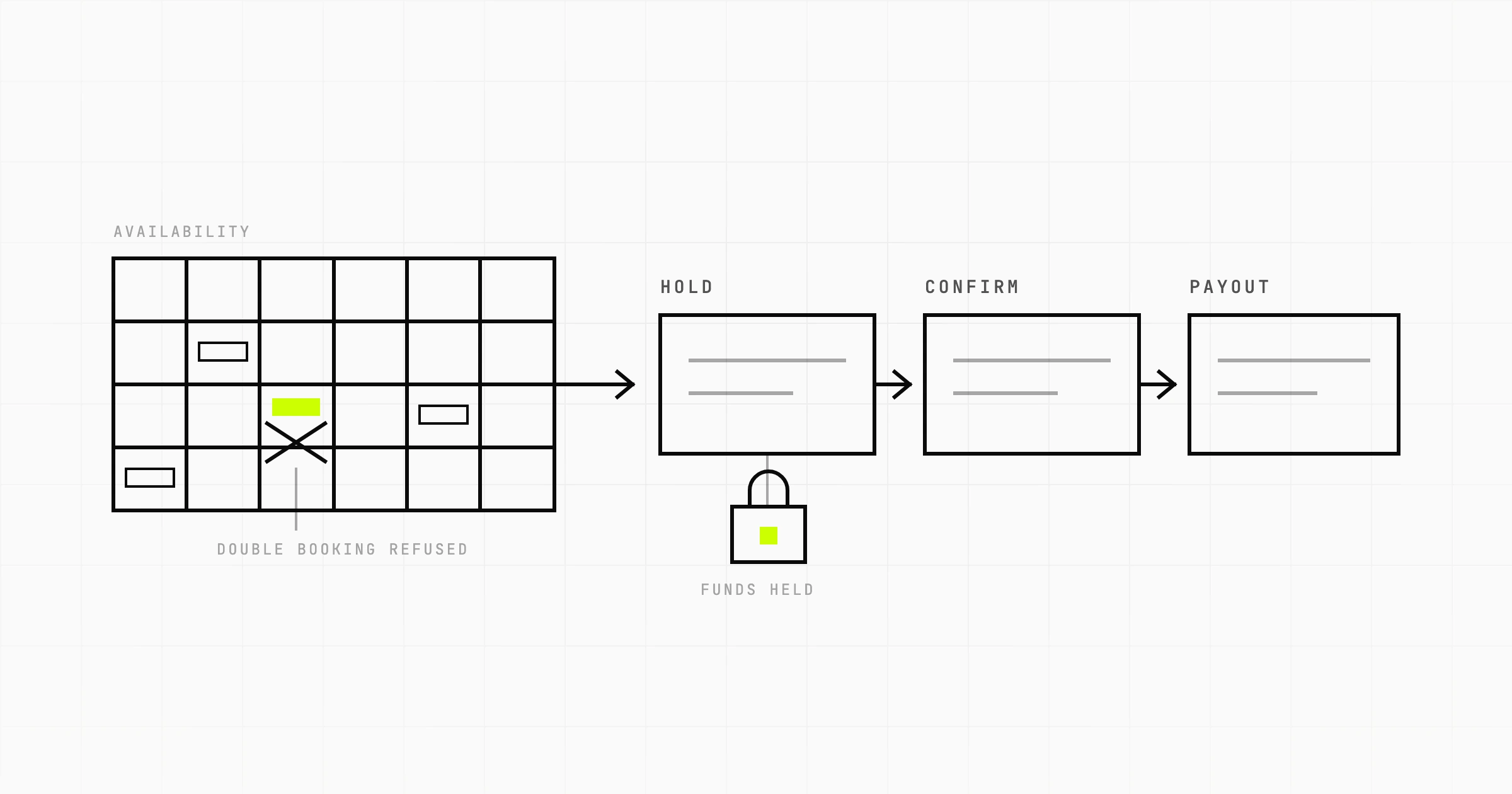
| Hold | Inventory reserved for a short window while the planner pays the deposit | System (expires) or planner (pays) | Deposit captured |
| Confirmed | Deposit received, terms accepted by both | Either party (cancel under the terms); system (to Delivered after the event date) | Deposit held on the platform balance; balance charge scheduled |
| Delivered | Event date has passed, no dispute raised inside the window | System, after the dispute window | Funds released to the supplier's payout account |
| Disputed | Planner or supplier has raised an issue within the window | Platform operator, to released or refunded | Release paused; partial or full refund possible |
| Cancelled | Ended before delivery, by either party or by expiry | Terminal | Refund per the cancellation terms; inventory released |
Delivered is the state that makes payout automatic without making it premature: the event happened, nobody complained inside the window, so the money moves without anyone on your team touching it.
Preventing double bookings
Do not prevent them in the interface. Checking availability on the page and then writing the booking is a race, and under real traffic it loses. Prevent them in the database, with a constraint the application cannot bypass:
- For venues, an exclusion constraint on (unit, time range) across holds and confirmed bookings, so the second insert fails. If your database lacks range exclusion, lock the unit row for the transaction and check inside it.
- For vendors, count committed jobs on the date inside the same transaction that inserts the new one, and reject at the ceiling.
- For talent, a uniqueness constraint on (person, date) or (person, time window), with the travel-time rule in the same transaction.
- Holds expire by a scheduled job, not by trusting the client to release them.
Payments and payouts: the platform holds the money and releases it on completion
One event can involve a venue, a caterer and a performer, each paid separately and on different schedules, usually with a deposit now and a balance later. That rules out the pattern where the buyer pays the seller and the platform takes a cut on the way past. The platform has to take the money, hold it, and pay out per supplier as each booking reaches Delivered.
The design we use for this at the studio is on Nestlet, an in-house marketplace we built for short-term residential leases. Its money flow is the one we would reuse here, because the shape of the problem is the same: a payment from one party, held by the platform, released to the other only once a contract is finalised.
- Stripe Connect with separate charges and transfers. The platform charges the payer, the funds sit on the platform balance, and a transfer to the supplier's connected account is a distinct later step. Unlike the simpler destination-charge pattern, this lets one payment fund several suppliers on several schedules, and lets you refund part of a deposit without unwinding a transfer that has already left.
- Funds released only when the contract state says so. On Nestlet, release is gated by the contract being finalised. On an event marketplace the gate is Delivered. Either way, the payout code reads a state it does not own, and nobody can trigger a transfer by hand outside it.
- In-app signing, with the executed document kept. Nestlet uses DocuSign with its emails suppressed so signing happens inside the app, and stores the executed document in S3. For events, the equivalent is the quote and terms accepted inside the thread and stored immutably, because in a dispute the answer to "what was agreed" has to be a document, not a chat log.
The rest follows. The deposit is captured at Hold and the balance charged automatically before the event. Delivered triggers the transfer after a dispute window of a few days, and suppliers who push for instant release should be refused, because a refund after a transfer is your money, not theirs. Cancellation terms are stored with the booking, not by reference to a policy page that can change. A dispute pauses release and an operator resolves it; give the operator a screen for this on day one.
Merchant of record, what the platform fee is charged on, and tax per supplier are decisions to settle before the first live transaction, because they are expensive to change once there is history. That is the substance of payment software work, not a checkbox in a dashboard.
Machine learning personalization for events: recommending the right vendor
This is the section most founders want to talk about first, so here is the engineering-grade version. ML personalization in events is a ranking problem on top of a filtering problem, and the filtering has to be right before any learning is worth doing. Recommending a caterer who is booked on the date is not a personalization error, it is a bug, and no model fixes it.
How platforms recommend events based on your preferences
The mechanism, whether the thing recommended is an event to attend or a vendor to hire, has three layers. Hard filters remove everything that cannot be right: wrong date, too far, over budget, unavailable. A score then orders what remains, using signals about the item (rating, response time, price relative to the band) and signals about the person (what they searched, shortlisted and booked, and what similar accounts booked). A little deliberate variety stops the list being ten near-identical results. "Based on your preferences" means the second layer is weighting your history and that of accounts like yours; personalized event suggestions for a brand-new account are the rules layer wearing a friendlier label.
Rules first, collaborative signals second, a model last
On day one the platform knows nothing about any planner, so personalization is rules: date, radius, budget band, capacity, category, then a fixed weighting of quality signals. This is not a lesser version of ML. It is what a model would converge to for a cold account anyway, and it is auditable: when a supplier asks why they rank fourth, you can answer.
Once planners book repeatedly, two signals become useful. Item-to-item: planners who booked this venue also booked these caterers, a co-occurrence count that needs no model. And user-to-user: this planner's booking pattern resembles those accounts, so what they booked is a candidate. Both are cheap to compute nightly from the bookings table. A learned ranking model, trained to predict booking rather than click, comes after that, and only when the simpler signals have stopped improving. It needs completed bookings in the thousands, repeat planners (a one-time wedding client gives you nothing to personalise), and event context stored against each booking. Corporate and recurring-event platforms get there; a once-in-a-lifetime category may never, and rules remain the right answer.
Cold start, evaluation, and where it goes wrong
New planners get the rules-based ranking plus whatever the event brief tells you; a brief with headcount, type and budget is worth more than a month of browsing history. New suppliers get a short, capped exploration window so they can earn reviews.
Evaluate on booking conversion, not clicks. Hold out a slice of planners on the old ranking, run the new one for the rest, and compare enquiry-to-booking rate, by supply type and by supplier, because a ranking that concentrates bookings on the top ten suppliers is quietly killing your supply side. Three failures to watch for: recommending unavailable supply, so the availability filter runs before scoring every time; learning from a leak, where off-platform bookings are invisible and the model concludes popular suppliers are unpopular; and feedback loops, where top-ranked suppliers get bookings that raise their rank until the list stops changing.
To be clear: EventSphere is a search, messaging and payments product, Nestlet has no search or recommendation component, and the guidance above is general engineering, not a claim about either.
What it costs, and the build order for a first release
A multi-sided marketplace with search, messaging, per-type calendars and platform-held payments sits inside our published marketplace band of $15,000 to $150,000+, and a sensible first release sits well below the top of it. At our published blended rate of about $20 per hour for a senior offshore team, cost is mostly a question of scope: how many supply types, and how much of the booking state machine and payout flow is automated in release one.
The way to spend less is to narrow the sides, not to thin the features. One supply type with real availability and real payments beats three done partially, which is the advice we give on multi-vendor marketplace builds generally and applies with more force here. A build order that avoids the usual failure:
- Supplier onboarding and profiles for one supply type, the one with the most repeat demand in your first city. Founders start recruiting supply now, by hand.
- Availability for that type, with external calendar import. Nothing planner-facing until this works.
- Search with the four hard filters, a plain ranking score, and shortlists. No personalization.
- Messaging threads attached to an event and a supplier, with quotes as actions in the thread.
- The booking state machine, with holds and database-level double-booking prevention.
- Payments: deposit and balance, platform-held, released on Delivered, with an operator dispute screen.
- Reviews from completed bookings, then a second supply type once planners are booking the first, then collaborative signals in ranking once the bookings table can teach anything.
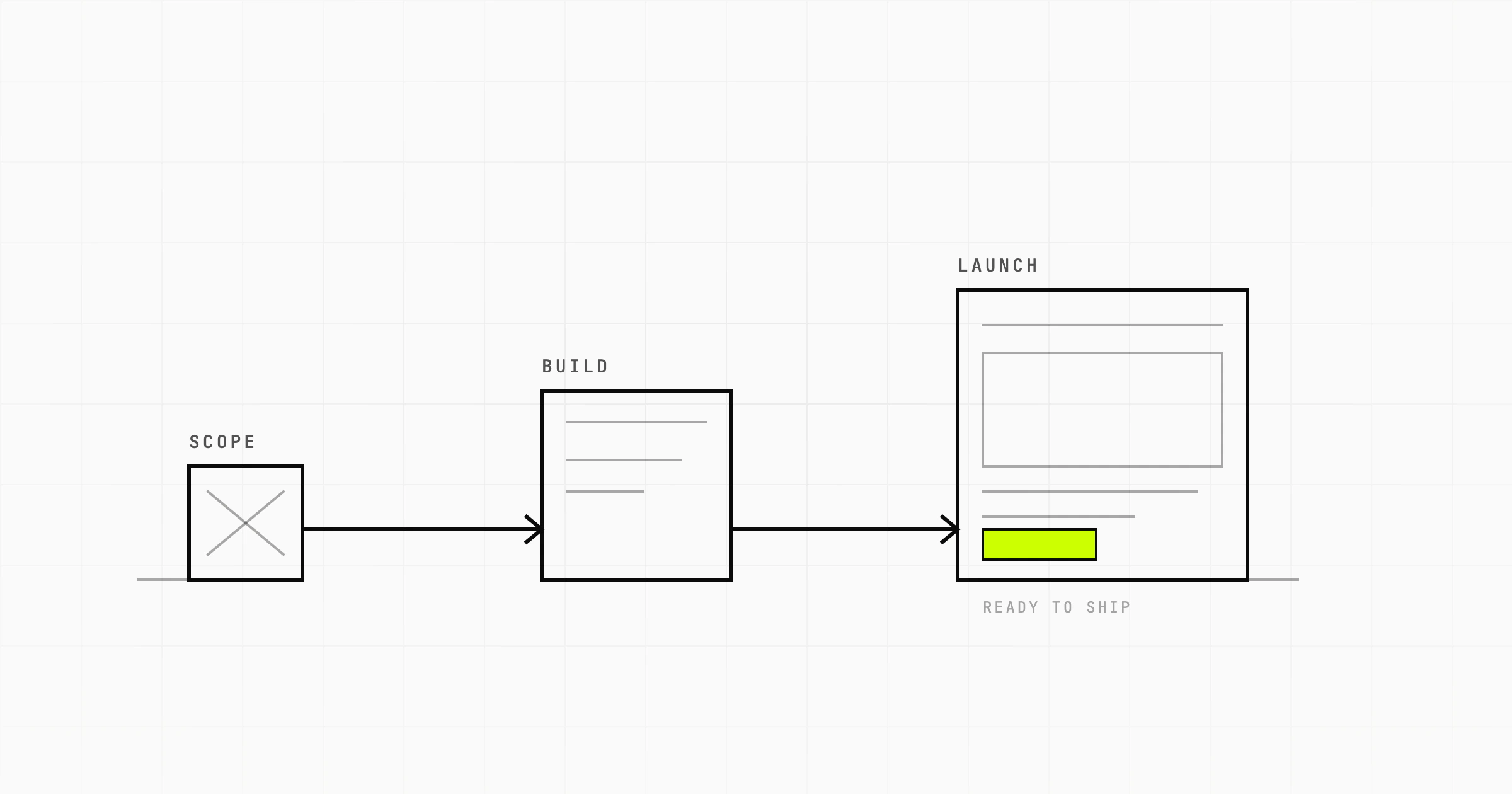
Before any of that, a Scoping Sprint ($2,300 fixed, two weeks) turns the idea into a clickable prototype, a technical plan and a fixed quote, credited in full if we go on to build. For an event marketplace the useful output is the supply-type table above filled in for your market, the booking states agreed, and the payment flow drawn before anyone writes a migration.
When not to build one: use the top marketplaces for event planners first
If you searched for the top marketplaces for event planners, the honest first answer is that you should probably use them before building anything. Established platforms already list venues, vendors and talent in most large cities: directory-style marketplaces where planners browse and enquire, venue-finder platforms that take a fee on the booking, and talent platforms where performers and crew list themselves. As a supplier, listing on two or three costs a few hours and tells you within a month whether planners in your category book online at all.
Build your own when one of these is true and you can show it: the category is under-served on the existing platforms in your city and you can recruit the first fifty suppliers by hand; the transaction repeats, such as corporate events or regular production work, so planners come back and acquisition cost is spread across many bookings; or the existing platforms are introduction services and your planners want the booking, the terms and the money handled.
Build a booking tool instead when what you actually have is your own venues or your own roster; it is a fraction of the cost and works in month one rather than month twelve. And do not build one if the transaction is rare with no repeat, such as a single wedding venue booked once: nobody returns, and the economics do not close. Where the shape is right, this is services marketplace development, and it is work we have shipped.
Planning an event marketplace and trying to decide which supply type to launch with and how the money should move? A Scoping Sprint ($2,300, two weeks) ends with the supply, booking and payout model drawn for your case, a prototype, and a fixed quote. Or just start a conversation.