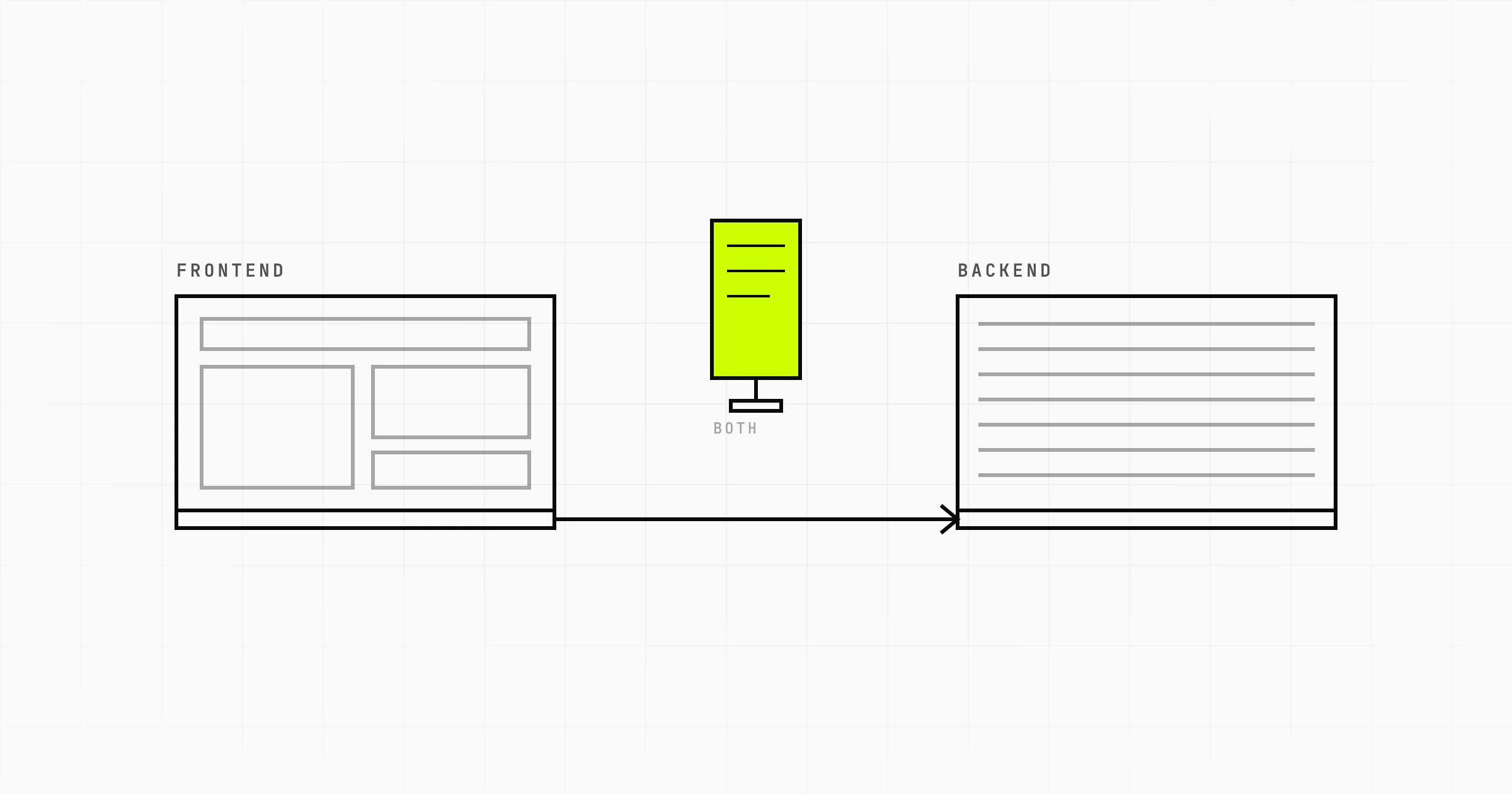
Here's the answer most comparison posts bury: NestJS and Next.js are not competitors. NestJS is a backend framework for building structured Node.js servers and APIs. Next.js is a React framework for building the frontend your users see (with some server-side ability bolted on). Comparing them is like comparing a database to a design system: the real question isn't which is better, it's which layer of your product are you building right now?
The names are nearly identical, which is why this confusion sends thousands of people to this page every month. So let's do this properly: what each one actually is, where each one wins, when you need both (which, on our client builds, is the most common answer), and when you need neither.
The 30-second version
| NestJS | Next.js | |
|---|---|---|
| What it is | A backend framework for Node.js | A frontend framework built on React |
| What you build with it | APIs, microservices, business logic, background jobs | Websites, dashboards, storefronts: the UI layer |
| Runs where | Your server, full stop | Browser + server (rendering and light API routes) |
| Philosophy | Opinionated and structured: modules, dependency injection, decorators | Flexible and rendering-obsessed: file routing, SSR/SSG/ISR, server components |
| Feels like | Angular, Spring, .NET | React, with the hard parts handled |
| Talks | REST, GraphQL, WebSockets, gRPC, message queues (Kafka, RabbitMQ) | HTTP: pages and route handlers |
| Maintained by | Open-source community (Kamil Myśliwiec) | Vercel |
If one of those rows already answered your question, you can stop here. If you're deciding what to build a real product on, keep going: the interesting part is the boundary between them.
What NestJS actually is
NestJS is a framework for the server side of your application: the part that owns your data, your business rules, and your integrations. Node.js on its own (or with Express) gives you almost no structure. Every team invents its own folder layout, its own way of wiring things together, and two years later no one can find anything. NestJS fixes that by being opinionated:
- Modules group related functionality, so a payments module, an auth module and a notifications module stay cleanly separated.
- Dependency injection means components declare what they need and the framework wires it up, which is what makes large NestJS codebases testable rather than theoretically testable.
- TypeScript-first design, with decorators doing the structural heavy lifting.
- Multi-protocol support out of the box: REST, GraphQL, WebSockets, gRPC, and message brokers for event-driven and microservice architectures.
The pattern to notice: everything in that list is about structure at scale. NestJS earns its keep when your backend has real domain complexity: roles and permissions, money movement, queues, third-party integrations, multiple services that need to talk to each other. For a four-endpoint API, it's overkill, and NestJS's own community would tell you the same.
What Next.js actually is
Next.js is a framework for the user-facing side: it takes React, which is only a UI library, and turns it into something you can ship a product with. Routing, rendering, performance and SEO all come built in:
- Hybrid rendering. Per page, you choose whether HTML is generated at build time (SSG), on each request (SSR), on a schedule (ISR), or in the browser. This is why Next.js sites can be both fast and indexable, and it's the main reason the framework exists.
- File-based routing. Your folder structure is your URL structure.
- React Server Components. Components render on the server by default, shrinking what ships to the browser and speeding up first load.
- Built-in optimization. Images, fonts, scripts and code-splitting handled by the framework instead of by hand.
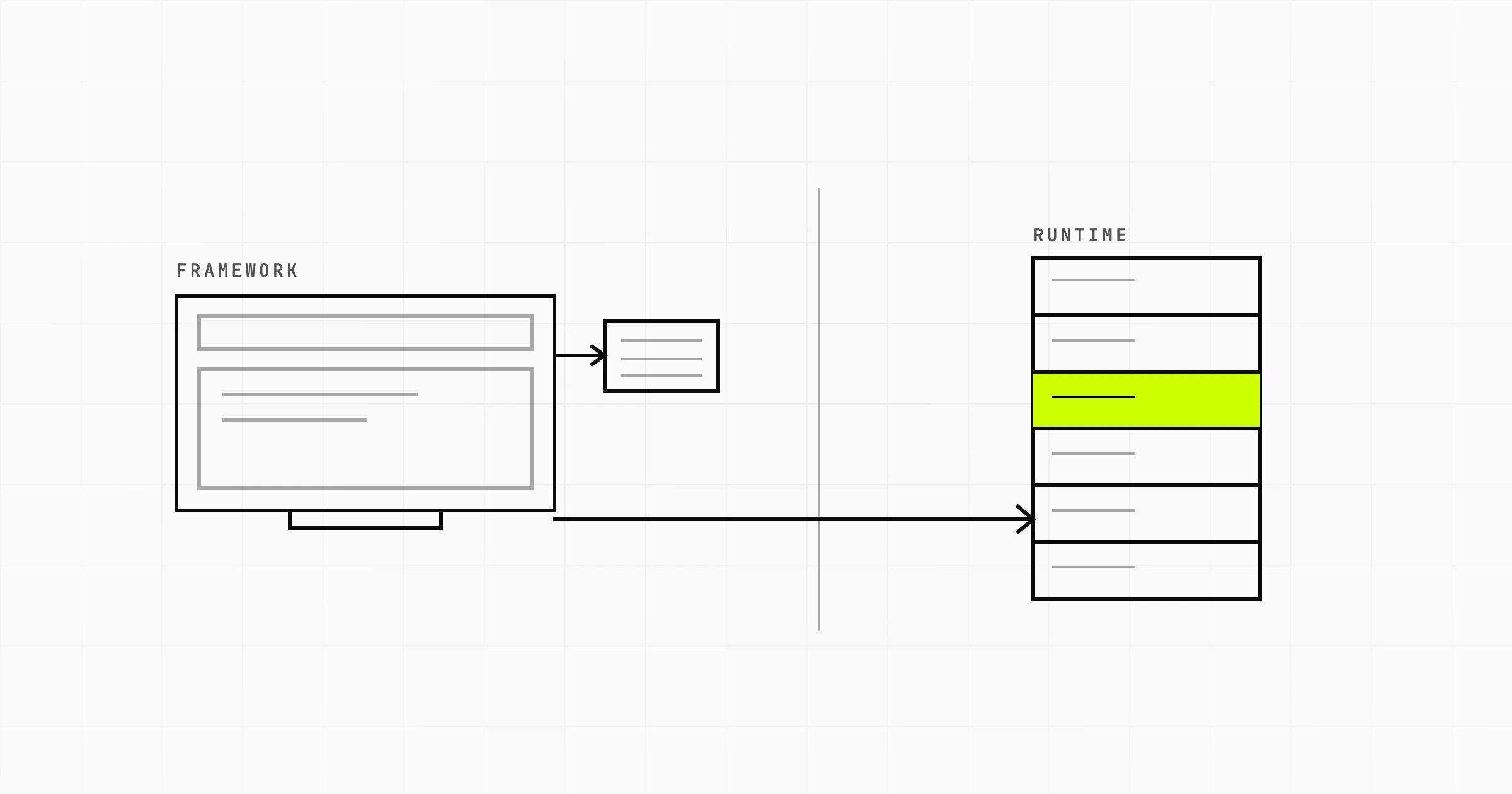
Next.js does include route handlers: you can write backend endpoints inside your Next.js project. This is the feature that causes most of the "do I even need a separate backend?" confusion, so let's answer that directly.
The real question: is Next.js's backend enough?
For a surprising number of products, yes. If your server-side needs amount to "read and write to a database, call a couple of APIs, handle auth," Next.js route handlers plus an ORM will carry you a long way, in one codebase, with one deploy. We build early-stage products this way deliberately: it's less to maintain while you're still finding product-market fit.
You've outgrown it when your backend becomes a product of its own. The signals:
- Background jobs and queues (billing runs, notifications, imports) that shouldn't live inside a web request
- More than one client (a mobile app, a partner API, internal tools) all needing the same business logic
- Real domain complexity: money, permissions, audit trails, multi-step workflows
- WebSockets, gRPC or event streams, which route handlers aren't built for
- A backend team that needs enforced structure, not conventions in a README
That's the moment NestJS (or another structured backend) enters, not before. Migrating later is not a rewrite of your product, it's a relocation of your API layer, and starting simple is usually the right trade. If you're at that decision point on a real product, this is exactly the kind of call our Scoping Sprint exists to settle with a fixed plan instead of a guess.
When to choose what
Choose Next.js alone when the product is primarily something users look at and interact with, and the server logic is thin: marketing sites, content platforms, storefronts, dashboards over an existing API, and most MVPs. One codebase, one deploy, excellent SEO. See our web application development work for what this looks like in production.
Choose NestJS alone when there is no meaningful web UI: a public API, a microservice fleet, an integration hub, the backend for a mobile app built in Flutter or React Native.
Choose both when you're building a serious product with a serious backend, Next.js rendering the experience and NestJS running the domain: SaaS platforms, marketplaces, fintech and healthcare products. This is the most common architecture across our end-to-end builds: the frontend team moves fast in Next.js without tripping over the backend, the backend enforces its rules in one place, and mobile apps reuse the same API instead of duplicating logic inside a web framework.
Choose neither when the honest answer is smaller: a content site that a CMS covers, or a lightweight service where Express or Fastify is plenty. Frameworks are leverage, not virtue.
What this costs, since you're deciding anyway
Architecture choices are budget choices. A Next.js-only build is one codebase and deploys cheaply; adding a NestJS backend adds real engineering hours but pays for itself when complexity arrives. We've published actual numbers, per tier and per feature, in our web app cost guide and SaaS cost guide, and what a two-codebase product means for an MVP budget in the MVP cost guide.
We build with both, most weeks. If you're deciding what your product should run on, a Scoping Sprint ($2,300, two weeks) ends with a clickable prototype, an architecture decision made for your actual requirements, and a fixed quote for the build, or just start a conversation.