Most enterprise AI programs don't fail in production. They fail before they ever get there — stuck in a pilot that demoed well, impressed a steering committee, and then quietly never shipped. Industry research keeps landing on the same uncomfortable number: the large majority of enterprise AI pilots never deliver measurable business value (we unpack why in detail here). The gap is almost never the model. It's everything around the model: the use case, the data, the governance, and the operating discipline to take something from "interesting" to "load-bearing."
This playbook is the sequence we use when we help teams adopt AI without burning a year and a budget on pilot purgatory. It's deliberately ordered — each phase de-risks the next. Skip ahead and you inherit the rework.
Phase 0 — Readiness before roadmap
Before you pick a use case, be honest about four readiness dimensions. A pilot that fails on any one of these will fail no matter how good the idea is.
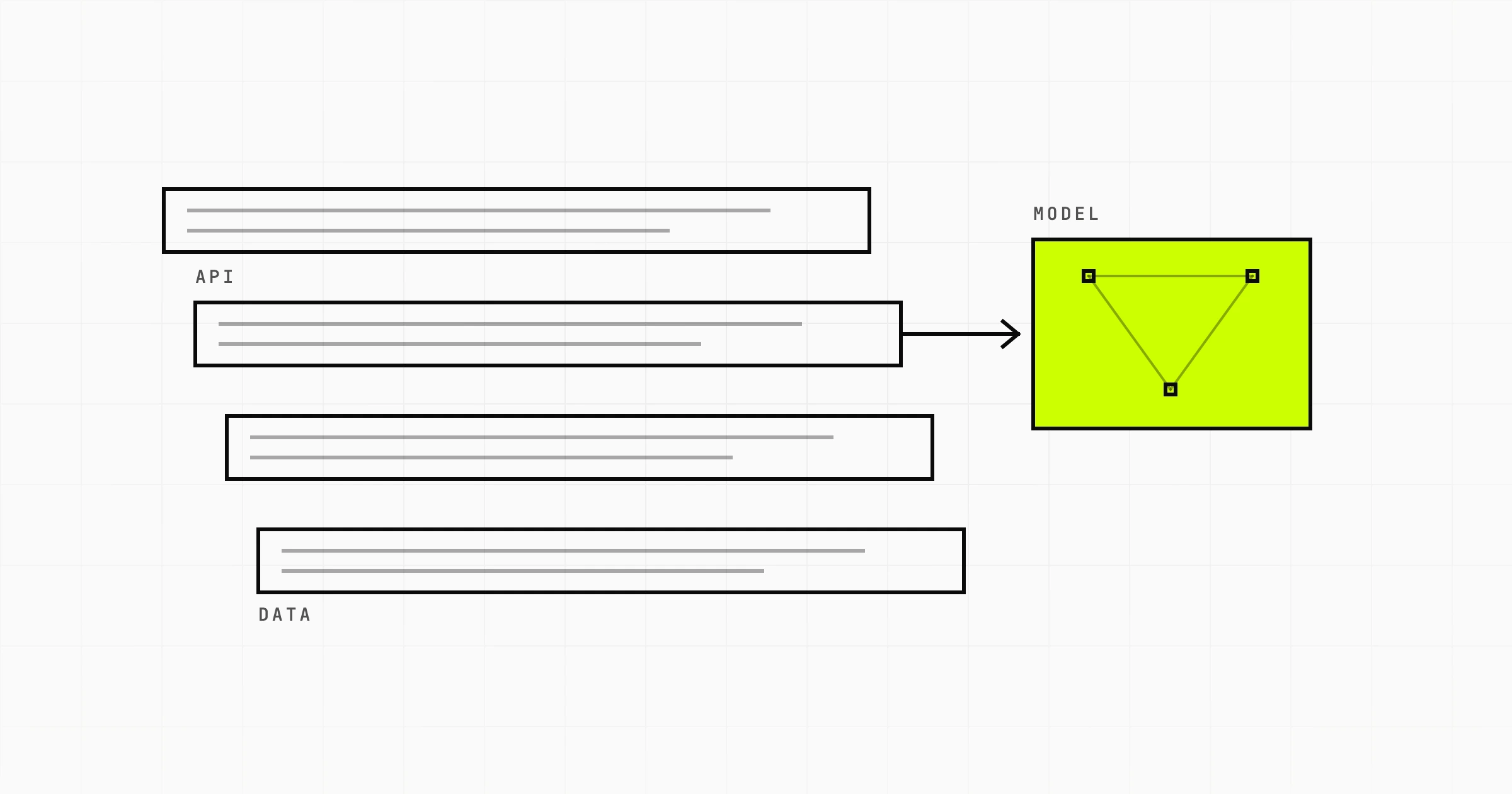
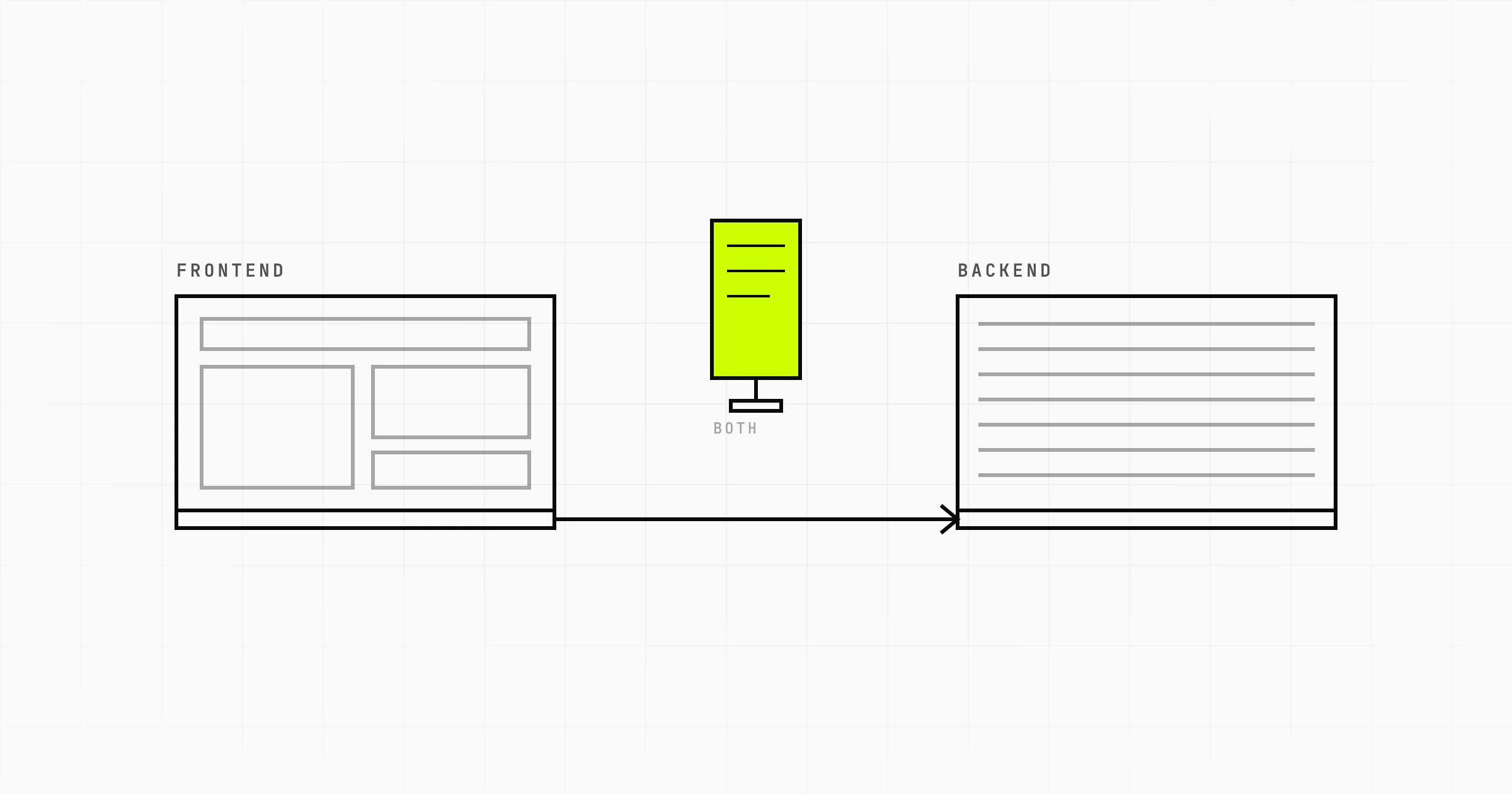
- Data. Is the data that the use case needs accessible, reasonably clean, and legally usable? Fragmented data in silos is the single most common reason integrations stall — the technical side of that is covered in the companion AI-Ready Software Architecture pillar.
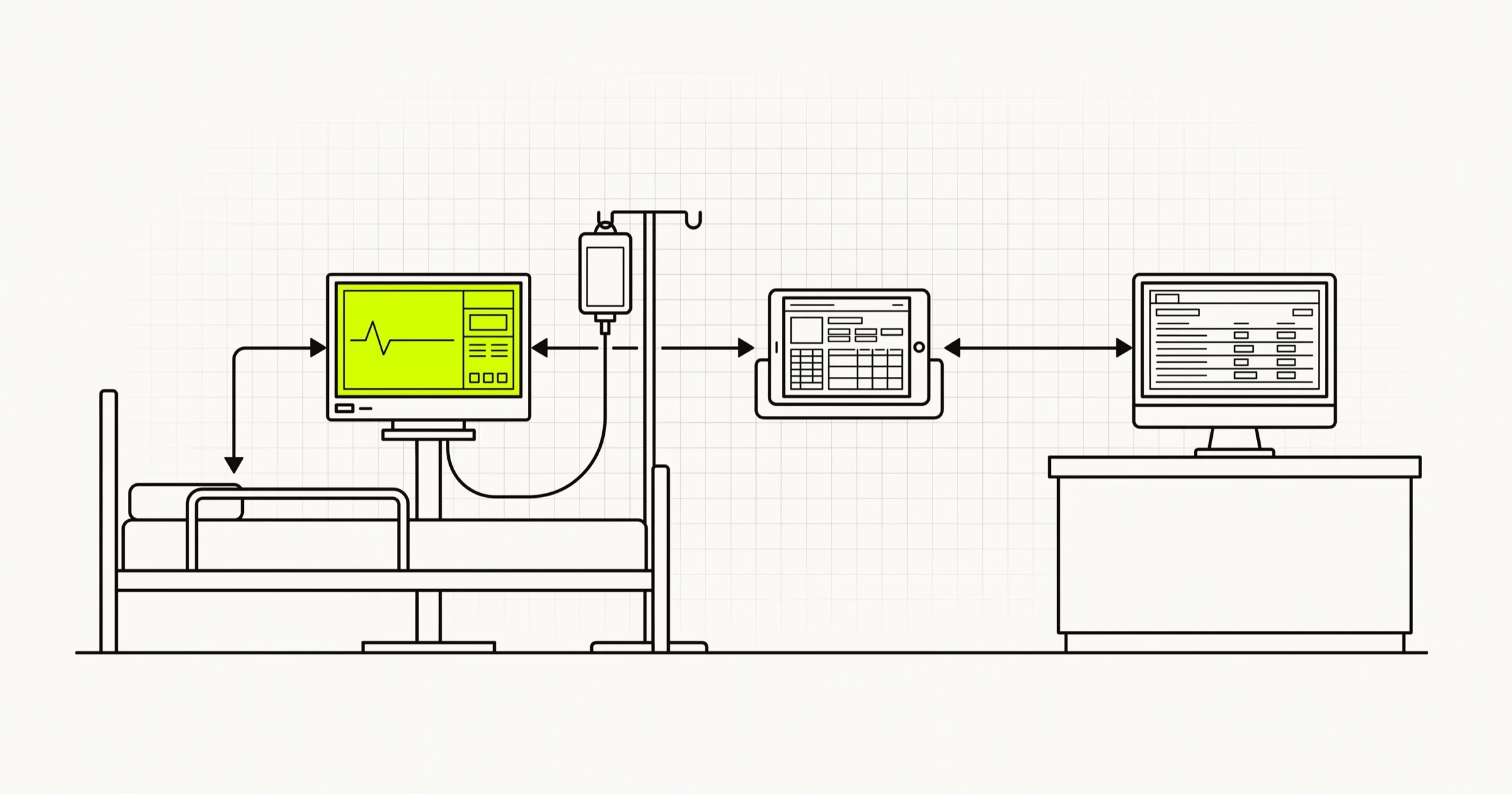
- Infrastructure. Can you deploy, monitor and roll back a model without a three-week change process? If not, that's the first fix.
- Skills. Do you have people who can evaluate an AI output critically, not just build the pipeline? This is a capability gap, not just a hiring one.
- Sponsorship. Is there a named business owner who feels the pain the use case solves? AI programs without a business owner become science projects.
A concrete example: when we built SecureData, a confidential data-collection and verification platform, the blocker readiness surfaced wasn't any model — it was data provenance. With no reliable way to prove that each survey response came from a real, unique respondent, the entire dataset was untrustworthy for anything downstream. We solved it at the point of collection: integrating fingerprint-biometric verification directly into the surveyor's mobile app, so every record is tied to a verified individual before it ever enters the pipeline. Fix trust in the data first; the intelligence you build on top is only ever as good as the inputs underneath it.
Phase 1 — Choose a use case that can actually pay back
The best first use case is boring, measurable, and owned. Map candidate use cases against two axes: business value and implementation risk. Start in the high-value / low-risk quadrant and resist the temptation to open with the most exciting idea.
Across enterprises, a handful of functions consistently offer the cleanest early wins:
| Function | High-payback AI use case | Why it's a good first move |
|---|---|---|
| Customer service | Assisted response + deflection | Volume is high, value is measurable (handle time, deflection rate) |
| Sales & marketing | Lead scoring, personalization, content drafting | Revenue-adjacent, easy to A/B |
| Finance & ops | Document extraction, anomaly detection | Rule-heavy, error-costly, well-bounded |
| Product & R&D | Search, summarization, code assistance | Productivity gains compound quietly |
Pick one. Define the metric it must move before you build. "Improve efficiency" is not a metric; "cut average claim-triage time from 9 minutes to under 3" is.
Phase 2 — Pilot to production without the purgatory
A pilot's job is not to prove the model works. It's to prove the workflow works — including the unglamorous parts: how a human overrides a bad output, how you monitor drift, how you roll back. Build those in during the pilot, and the production step becomes an increment rather than a rebuild.
- Validate on real, messy inputs — not the curated demo set. The demo set lies.
- Instrument from day one — log inputs, outputs, overrides and cost per call. You cannot improve what you cannot see.
- Define the human-in-the-loop — who reviews what, and at what confidence threshold the system escalates.
- Set a kill criterion — the metric and date at which you stop if it isn't working. This is what keeps a pilot from becoming a zombie.
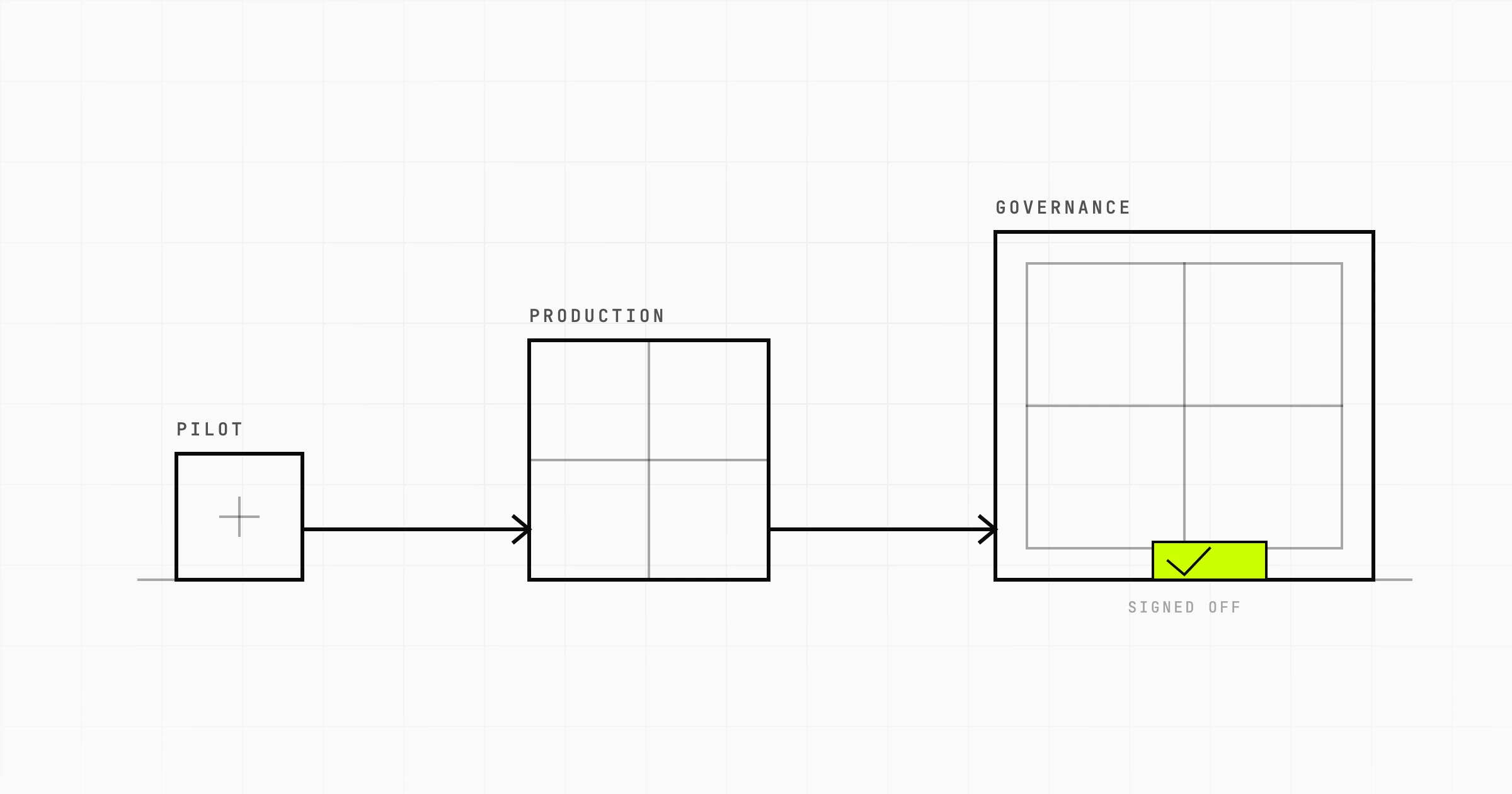
Done this way, the pilot isn't a detour — it's the foundation. In our engagements, once a validated MVP is live, we typically move from pilot to production in three to four months. Not because we rush it, but because the pilot already settled the hard parts: the workflow, the monitoring, the human-in-the-loop, and the data underneath. Going to production then means hardening and scaling something already proven on a foundation we've stress-tested — an increment, not a leap of faith. That's the difference between a pilot that graduates and one that quietly dies: you build the durable, production-grade system on solid ground rather than rediscovering the ground while you build.
Phase 3 — Governance is a feature, not a committee
Responsible AI fails when it's treated as a review gate at the end. It works when it's built into the same pipeline as everything else. A workable governance framework covers six things without becoming bureaucracy:
- Ethical guidelines — a short, real set of principles the team can actually apply, not a poster.
- Risk assessment — classify use cases by impact; a chatbot and a credit decision are not the same risk.
- Data governance & privacy — what data trains and prompts the system, and who can see it. For regulated builds, tie this to your HIPAA/GDPR posture.
- Validation standards — how a model is tested before and after release.
- Transparency & explainability — can you explain a decision to a customer, auditor or regulator?
- Monitoring & audit — drift, bias and cost, watched continuously — which connects directly to how these systems are secured.
Phase 4 — Enable the team, not just the tooling
The organizations that scale AI are the ones that treat it as a capability their people build, not a product they buy. That means structured enablement: AI fundamentals for everyone who touches the output, prompt and evaluation skills for builders, and an AI-augmented development environment so engineers ship faster with review and testing built in. The goal is judgment, not just access — a team that can tell a confidently-wrong answer from a right one.
Phase 5 — Quick wins vs. deep integration
You don't have to choose between "bolt a feature on" and "rebuild everything." Run both tracks. Ship incremental quick wins — smarter search, assisted responses, predictive recommendations, intelligent automation — to build momentum and fund the program, while you invest in the deeper, architecture-level integration that makes AI native rather than bolted-on. The quick-win track buys you the credibility and budget for the deep track.
Phase 6 — Measure, then refine continuously
AI systems are not "done" at launch; they decay. Data shifts, user behavior shifts, and yesterday's good model is today's mediocre one. Build the feedback loop: track the business metric you defined in Phase 1, retrain on real usage, and version models so you can roll back. A quarterly "what changed and what should we retrain" ritual keeps the strategy alive instead of ossifying.
The 12-month sequence, at a glance
| Months | Focus | Exit criteria |
|---|---|---|
| 1–2 | Readiness assessment & use-case selection | One owned, measurable use case chosen |
| 3–4 | Foundation: data access, deploy/monitor pipeline, governance baseline | Can ship and roll back a model safely |
| 5–7 | Pilot on real inputs, instrumented, human-in-the-loop | Metric moved on the kill criterion |
| 8–10 | Integrate, harden, and enable the team | In production for real users |
| 11–12 | Scale to adjacent use cases; establish the refine loop | Second use case underway; ROI reported |
Where Sapient Codelabs fits
We build and ship these systems end to end — from picking the first use case to running it in production. If you're at Phase 0, our Product Scoping Sprint turns a fuzzy AI ambition into a costed, sequenced plan in two weeks. If you're ready to build, see how we approach AI & agentic development, and read the technical companion to this playbook, AI-Ready Software Architecture. When you want to talk specifics, tell us what you're trying to ship.