End-to-end product development means one team carries a product from the first unanswered question to a running system with real users on it, and stays attached afterwards. The phrase is really about ownership of the gaps between stages, because the gaps are where products quietly fall apart.
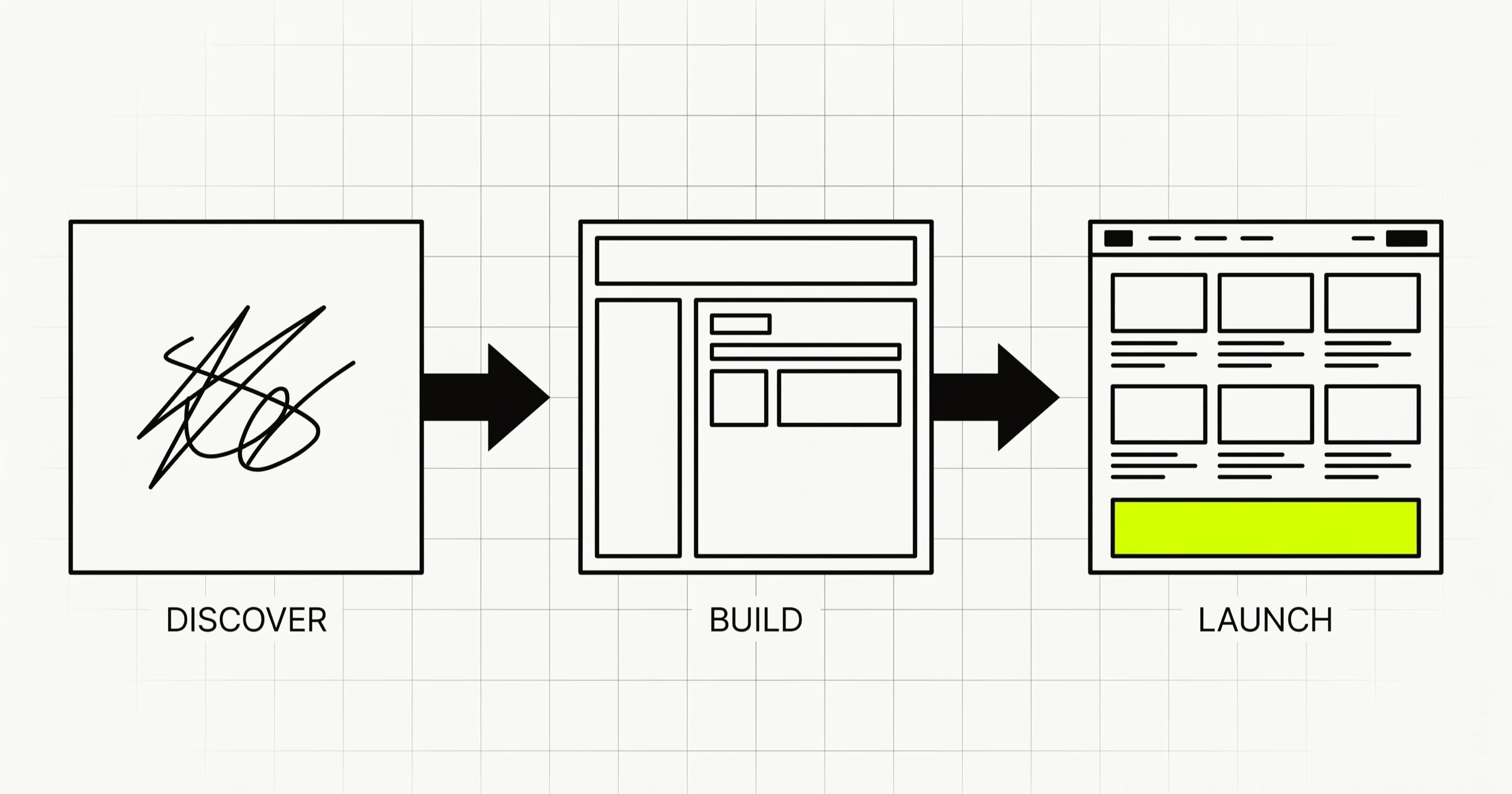
Every product goes through roughly the same stages: figure out what to build, design it, build it, make it survive contact with users, launch it, then keep it alive. A team is working end to end when the same accountable group covers all of that, including the joins. The opposite is the common arrangement where a strategy consultant writes a deck, a design studio produces screens, a development shop builds them, and a freelancer is hired in a panic three weeks before launch to sort out hosting. Each supplier delivers what they promised. The product still misses.
This is written for a founder or a product lead who has a budget and has to decide how to spend it: one partner who owns the whole thing, several specialists, or a team you hire yourself. It covers what each stage actually produces, which seams leak, which decisions are expensive to undo later, and where the money really goes, which is rarely where the first estimate suggests.
Sapient Codelabs is a product engineering studio in Surat, India, running client work and our own products side by side, so some of what follows comes from operating software after launch rather than only shipping it.
What end-to-end product development includes, stage by stage
Treat a stage as finished when a specific artefact exists, not when a meeting ends. Here is the sequence and what should physically leave each step.
| Stage | The question it settles | What leaves it |
|---|---|---|
| Discovery and scoping | What are we building, for whom, and what is explicitly not in version one | A written scope, a flow list, a named risk list, an estimate with its assumptions stated |
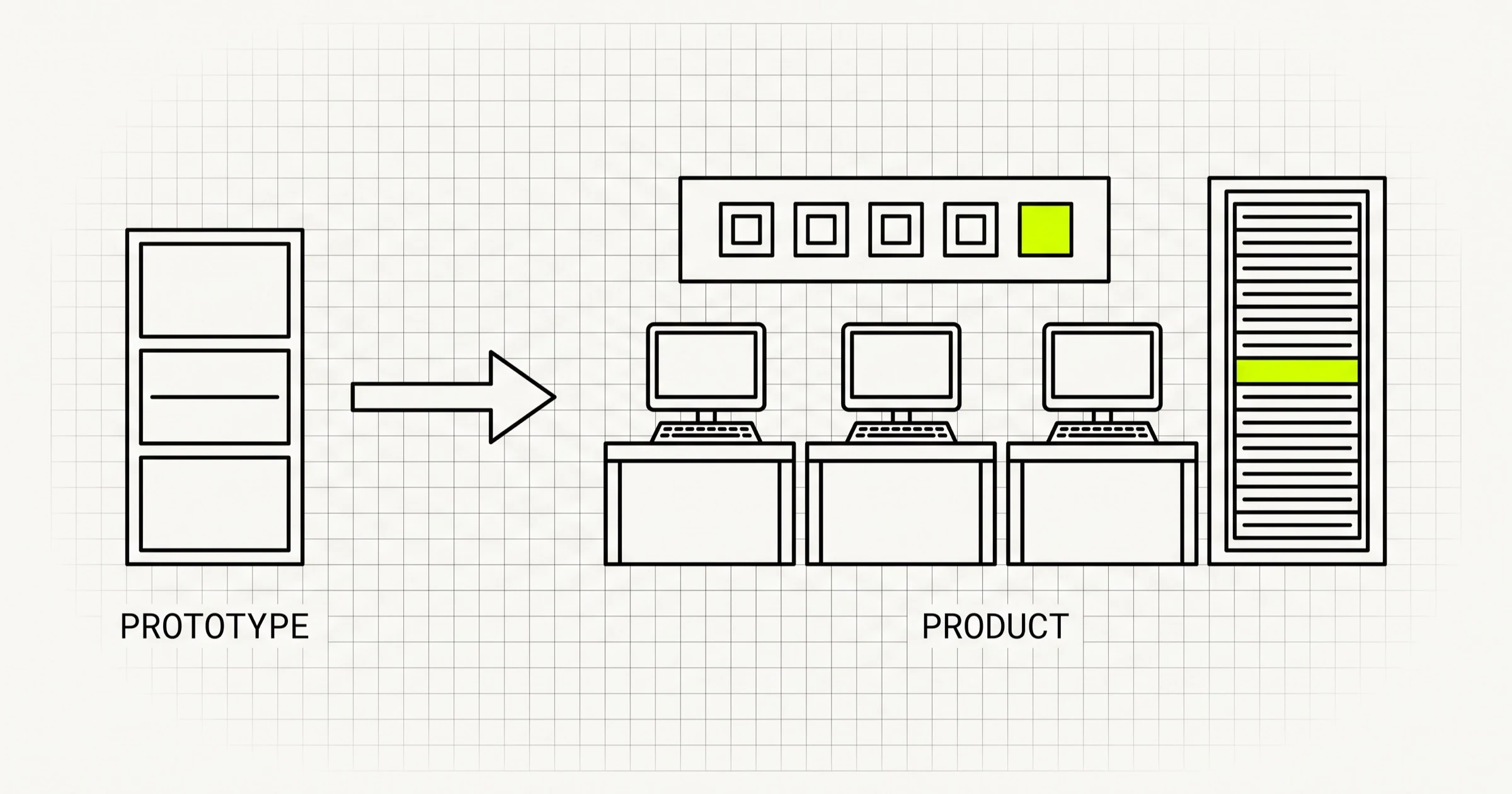
| Product design | How does a person move through it, and what does every screen look like when things go wrong | A clickable prototype, a screen inventory, the empty and error states, a design guideline document |
| Architecture and setup | What does the system look like underneath, and who owns which account | Data model, environments, repository, CI pipeline, third party accounts in the client's name |
| Build | Does it work, feature by feature | Working software behind a repeatable release process, reviewed and merged |
| Hardening and release | Will it survive real users and a bad day | Tests on the paths that matter, error tracking, backups with a tested restore, a rollback path, store listings |
| Post-launch | What do we fix, and what do we add next | A triaged defect queue, a metrics baseline, a roadmap that reflects what users did rather than what the pitch deck said |
Two rows are worth arguing over. Discovery ends with a list of exclusions, not only inclusions: a scope that says what is out of version one is a scope you can hold someone to. And design is not finished when the happy path looks good. A design that shows only the happy path is about half a design, and the missing half gets invented by whichever developer reaches that screen on a Thursday afternoon.
Note what end to end does not mean. Not that the same people do every task themselves, and not a single uninterrupted contract with no decision points. It means nobody can say "that part was not mine".
Where the hand-offs leak
Most delivery problems are not a stage done badly. They are a seam nobody was paid to cover. There are four of them and they fail in predictable ways.
Scope to design
Designers solve the problem in front of them, and in doing so they invent behaviour the scope never priced. A screen acquires a bulk action. A list acquires filters that need a new index and a new endpoint. Nobody is wrong, but the estimate was built on a different product. The fix is boring: design reviews attended by whoever wrote the estimate, and a running note of what design added, so the change is visible while it is still cheap.
Design to engineering
The states that never get drawn are the same ones every time. Empty state on first login. Loading. Partial failure where one panel of four cannot load. A name long enough to break the layout. A user who lacks permission for the button that is right there. Flaky network on mobile. Engineers will build something for each of these because they have to, and it will be inconsistent across the app. Asking for these states up front costs a designer a day or two.
Engineering to QA
If a ticket has no acceptance criteria, testing degenerates into opinion, and "it does not feel right" arrives after the code is merged. Write the criteria in the ticket before the work starts, including what the system should do when the input is wrong. Then a failure is a fact rather than a negotiation.
Build to operations
This seam bites hardest, because it surfaces on launch day. Who owns the domain registrar login and DNS. Whose Apple and Google developer accounts are the apps published under. Whose card is on the cloud account, the email service, the SMS gateway, the error tracker, the payment processor. If any of these sit in a vendor's name, you have handed over a switch you cannot reach. Make account ownership part of the scope, in the client's name from day one, with the vendor added as a collaborator. Moving a live app between store accounts afterwards is genuinely painful.
Which decisions are expensive to reverse
Most choices in a build are cheap to change. A handful are not, and they all get made in the first few weeks. These are the ones worth slowing down for.
What the data model thinks a customer is
If your product will ever serve an organisation with branches, locations, teams, or subsidiaries, that boundary belongs in the schema from the first migration. In Denti360, our own dental practice management product, branch scoping was designed into the database schema from the start rather than added later. That was deliberate, and it is the single thing that makes multi-branch reporting a query rather than a rewrite. Adding a tenancy or branch boundary to a live system afterwards means touching every table, every query, every permission check and every existing row, while customers are using it.
How money moves
Payments look like an integration and behave like an architecture. In Nestlet, an in-house marketplace we built for short-term residential leases, the payment design uses Stripe Connect with separate charges and transfers: funds sit on the platform balance and are released to the host only once the contract is finalised. That shape exists because the contract state has to gate the payout. Deciding that later, after money has flowed the simple way, means reworking refunds, payouts, reconciliation and the accounting story at the same time.
Identity, roles and permissions
Who a user is, what they can see, and whether one person can belong to two organisations. Bolting a real permission model onto an app that started with a single admin flag is a rewrite of every screen that renders a button conditionally, which is most of them.
Native apps or a web application
Decide this from where the work happens, not from fashion. Denti360 is a responsive web application with no native mobile apps, on purpose, because clinic staff work at a desk with a keyboard. Choosing native means app store review, two release trains, device testing and store accounts, all of which are ongoing costs rather than one-off ones. Choosing web when your users genuinely work on their feet with poor signal means you will be forced into an app later anyway. Either answer is defensible; drifting into one without deciding is not.
Event and analytics naming
Cheap to add on day one, impossible to backfill. Data you did not record does not exist retroactively, so the question you want to answer three months after launch can only be answered from three months after you thought to log it. Agree on a small set of events before the build, not after the dashboard disappoints.
Where the cost actually sits
Founders compare quotes for the build. The build is the visible part, and for a first version it is usually the largest single line, but the total cost of getting a product to a working state includes several lines that rarely appear in a proposal.
| Cost line | Why it gets missed |
|---|---|
| Design revisions after real users see it | Priced as one design phase; in practice the first contact with users changes flows |
| Data migration and starting content | Someone has to clean and load the spreadsheets, and it is slower than it sounds |
| Third party subscriptions | Payments, email, SMS, maps, error tracking and cloud hosting are monthly forever |
| Store and compliance overhead | Developer accounts, review rejections, privacy policies, consent copy |
| Integration with systems you do not control | The other side's API is the schedule risk, and no estimate can compress it |
| Ongoing engineering after launch | Treated as optional; it is not |
For rough orders of magnitude on our published bands: a marketplace build runs from about $15,000 to $150,000 and up depending on how much of the transaction it handles, and a growth SaaS product typically lands between $10,000 and $100,000 across four to seven months. Our published blended rate for a senior offshore team is around $20 an hour, which is what turns those ranges into arithmetic rather than guesswork. For a breakdown by feature, the MVP development cost guide works through what each part of a first version consumes.
One more thing about estimates, from our own product rather than a client's. In Denti360, billing took longer to build than its estimate implied. That is the normal shape of the error: the feature that touches money, tax, edge cases and other people's expectations is the feature that expands. When you read a quote, look for which line is money-adjacent and assume that is where the schedule risk lives.
What happens after launch, which is most of the product's life
Launch is a milestone, not an end state, and any team offering end-to-end product development should be able to describe the next twelve months concretely.
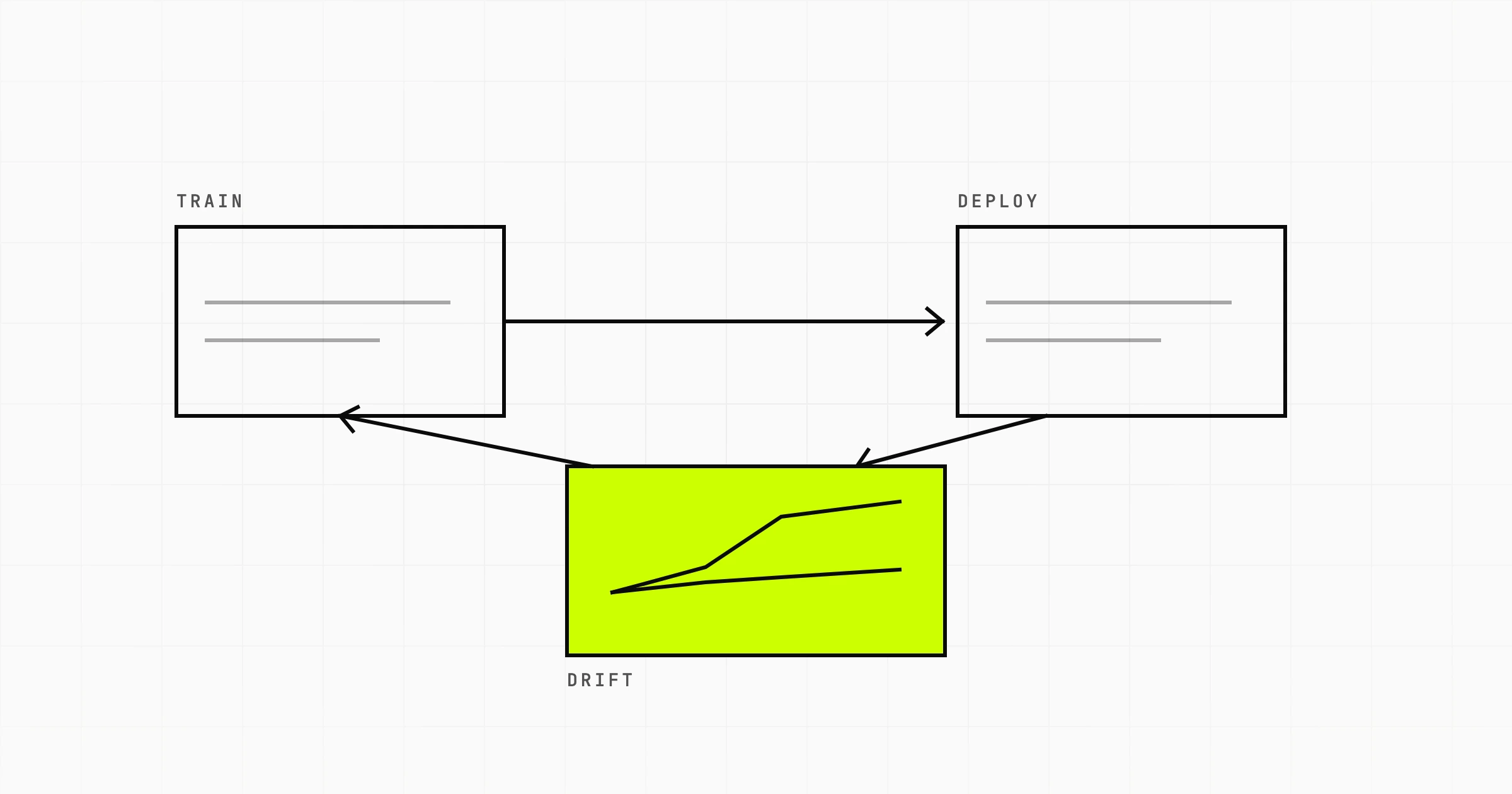
From operating Denti360 we publish a planning number for this: expect ongoing engineering of roughly 15 to 20 percent of the original build cost per year simply to keep a product current, before any new features. That covers dependency and framework upgrades, operating system and browser changes, third party API deprecations, security patches, and the defects that only appear at real volume. Budget it up front, because it does not become optional just because nobody planned for it.
Support load behaves in a way that surprises most people. It tracks how many of your customers are new, not how many customers you have. A hundred accounts onboarded last month generate far more tickets than a thousand that have been running for a year. This matters for planning: support capacity should follow your sales calendar, not your total user count, and an onboarding flow that answers questions on its own is worth more than an extra support hire.
The other post-launch job is deciding what not to build. Version one ships with a list of deferred items, and the temptation is to work through it in order. The better move is to rebuild the list from what users actually did, because part of what you deferred turned out not to matter, and something you never considered is now the most requested thing in the queue.
Agency or hire: how to decide without regretting it
This is the real question behind most searches for end-to-end product development, so here it is directly. The two options fail in different ways, and the right answer depends on how certain you are about what you are building.
| Dimension | Studio or agency | Hiring in-house |
|---|---|---|
| Time to first working code | Days to a couple of weeks | Months, before you count notice periods, which commonly run one to three months |
| Breadth of skills | Design, backend, mobile, QA and DevOps under one contract | You hire one specialism at a time and cover the gaps with contractors |
| Cost shape | Project or monthly, and it stops when you stop | Salaries, equipment and benefits continue regardless of roadmap |
| Knowledge retention | Leaves with the contract unless you insist on documentation and account ownership | Stays in the building, until the person resigns |
| Cost of changing direction | A renegotiation, sometimes an uncomfortable one | Absorbed by people already on payroll |
| Strongest fit | Version one, a fixed window, or a scope that still has real unknowns in it | A product with traction that needs continuous investment and deep domain knowledge |
The hybrid is common and usually sensible: a studio builds version one and operates it while you hire, then a permanent team takes it over with the vendor staying on for a period as a safety net. That only works if the handover was designed in from the beginning, which means documentation, account ownership, and code a new developer can read. Anyone can promise this; ask to see the artefacts from a previous handover.
Documentation written for a handover has a second use. For Nestlet, a full design guideline document was written up front specifically so the build could be handed to developers or to coding agents and come back consistent. The document that keeps a codebase coherent during the build is the same one that makes a handover survivable.
If you have decided you want one accountable team across the whole thing, that is what end-to-end product development covers for us. If you already have a product lead and designers and only need engineering capacity, dedicated developers embedded in your team is the cheaper and more honest answer, and you should be suspicious of anyone who tries to sell you the full package regardless.
How to evaluate a team before you sign
Most of the useful signal comes from questions about the unglamorous parts. Ask these, and listen for specifics rather than reassurance.
- What leaves discovery, as a document? If the answer is a proposal, discovery is a sales step. It should end with a scope, a risk list and an estimate you can interrogate.
- Show me the error and empty states from a recent design. If those screens do not exist, the design is not finished and the build will absorb the difference.
- Whose name will the cloud, store and payment accounts be in? The only acceptable answer is yours.
- What is the rollback plan for a bad release? A team that has never needed one has never shipped anything with users on it.
- Which feature in this scope worries you most? A team that names one is thinking. A team that says none is either inexperienced or managing you.
- What does year two cost, and who is actually on my team? Anyone who quotes a build with nothing after it has not operated a product. Ask for named people and their allocation, not a capability slide.
You can also buy your way out of the biggest unknown instead of guessing at it. A short paid scoping engagement that ends in a prototype and a fixed quote costs a fraction of a build and tells you whether the team can think, before you commit the rest. Our version of that is a two week Scoping Sprint, and there are others; the point is that a small priced experiment beats a long unpriced argument.
Trying to decide whether to hire a team or buy one for your first version? A Scoping Sprint ($2,300, two weeks) ends with a stage-by-stage technical plan made for your product, a clickable prototype, and a fixed quote for the build, credited in full if we build it. Or just start a conversation.