Introduction: The AI Revolution for Startup Growth
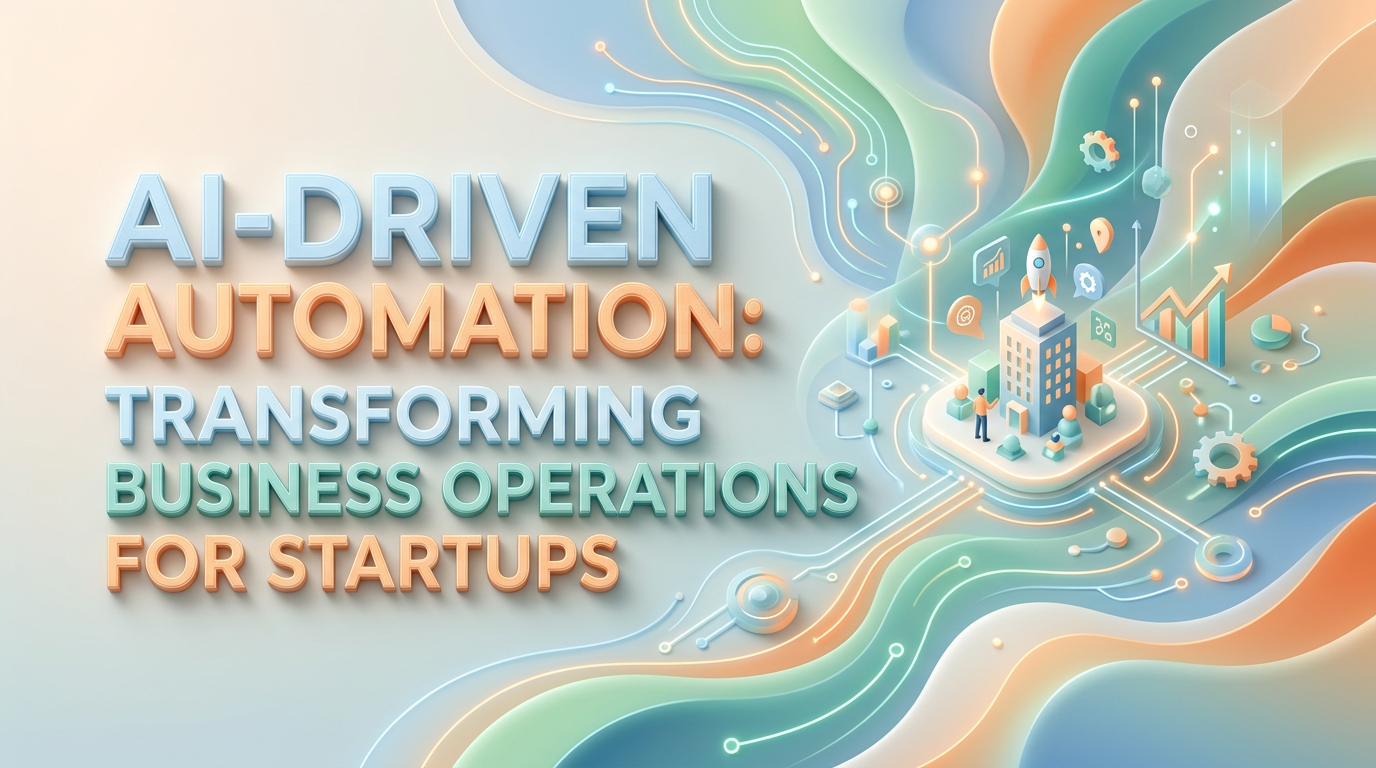
In today's fast-paced digital landscape, startups face an unprecedented challenge: how to compete with established enterprises while operating with limited resources, smaller teams, and tighter budgets. The answer lies in AI-driven automation—a transformative technology that is reshaping how young companies approach business operations, customer service, and strategic growth.
For startups, every minute counts and every dollar matters. AI-driven automation offers a compelling solution by streamlining repetitive tasks, providing intelligent insights, and enabling teams to focus on high-value activities that drive innovation and revenue. According to recent industry research, startups that embrace AI automation experience up to 40% improvement in operational efficiency and significant reductions in human error.
Turning this into a shipped product is end-to-end product development.
Sapient Code Labs has witnessed firsthand how AI integration can accelerate startup growth trajectories. In this comprehensive guide, we explore the transformative power of AI-driven automation, its practical applications, and how your startup can leverage this technology to gain a competitive edge in your industry.
Understanding AI-Driven Automation
AI-driven automation combines artificial intelligence capabilities with automated workflows to execute tasks that traditionally required human intervention. Unlike basic automation tools that follow predefined rules, AI-powered systems can learn from data, adapt to changing conditions, and make intelligent decisions in real-time.
At its core, AI-driven automation encompasses several key technologies:
Machine Learning (ML): Algorithms that analyze historical data to identify patterns and make predictions, enabling systems to improve their performance over time without explicit programming.
Natural Language Processing (NLP): Technology that allows machines to understand, interpret, and respond to human language, powering chatbots, sentiment analysis, and automated content generation.
Computer Vision: Systems that can interpret and analyze visual information, useful for quality control, facial recognition, and automated documentation.
Robotic Process Automation (RPA) with AI: Advanced automation that can handle complex, unstructured tasks by combining traditional RPA with AI capabilities.
For startups, these technologies represent more than just efficiency tools—they serve as force multipliers that allow small teams to accomplish what previously required much larger organizations.
Key Benefits of AI Automation for Startups
The advantages of implementing AI-driven automation extend far beyond simple time savings. Here are the most significant benefits that startups can expect:
1. Cost Reduction and Resource Optimization
Startup budgets are notoriously tight, and every dollar must be allocated wisely. AI automation reduces operational costs by minimizing the need for manual labor on repetitive tasks. A single AI-powered system can handle workloads that would otherwise require multiple full-time employees, allowing startups to redirect their limited human resources toward strategic initiatives that drive growth.
2. Enhanced Productivity and Efficiency
Automation eliminates the mundane tasks that consume employee time—data entry, scheduling, report generation, and customer inquiry responses. When your team focuses on creative problem-solving and relationship building rather than administrative drudgery, productivity naturally increases. Studies show that AI automation can free up to 30% of employee time for higher-value work.
3. Improved Accuracy and Reduced Errors
Human error is an inevitable part of manual operations, but AI systems maintain consistent accuracy levels that improve over time. This is particularly critical in areas like financial processing, inventory management, and compliance documentation where errors can be costly and damaging.
4. Scalable Operations
As startups grow, their operations must scale accordingly. AI automation provides the flexibility to handle increased workloads without proportional increases in staff or overhead. This scalability ensures that growth doesn't come with diminishing efficiency or rising operational complexity.
5. Data-Driven Decision Making
AI systems excel at analyzing vast amounts of data to uncover patterns and insights that would be impossible for humans to detect. Startups can leverage these insights to make informed decisions about product development, marketing strategies, customer targeting, and operational improvements.
Common AI Automation Use Cases for Startups
Understanding where AI automation delivers the most value is essential for prioritizing implementation efforts. Here are the most impactful use cases for startups:
Customer Service and Support
If you're still validating, start from a published MVP cost breakdown.
AI-powered chatbots and virtual assistants can handle customer inquiries around the clock, providing instant responses to common questions and triaging more complex issues to human agents. This ensures consistent customer support quality while dramatically reducing response times and support costs. For startups, this means delivering enterprise-level customer service without the enterprise-level support team.
Sales and Marketing Automation
AI can automate lead scoring, prioritization, and follow-up sequences, ensuring that sales teams focus their efforts on the most promising prospects. Marketing automation powered by AI can personalize content delivery, optimize ad targeting, and analyze campaign performance in real-time, maximizing return on marketing investment.
Financial Operations
From automated invoicing and payment processing to expense categorization and financial forecasting, AI streamlines finance operations with remarkable accuracy. Startups can reduce accounting errors, accelerate financial closes, and gain real-time visibility into their financial health.
HR and Recruitment
AI-powered applicant tracking systems can screen resumes, schedule interviews, and even conduct initial candidate assessments. This accelerates the hiring process while helping startups identify the best talent more efficiently. Additionally, AI can automate onboarding workflows, employee scheduling, and performance management tasks.
Data Entry and Document Processing
Intelligent document processing uses AI to extract information from unstructured documents, forms, and emails, automatically populating databases and triggering appropriate workflows. This eliminates hours of manual data entry and ensures data consistency across systems.
Implementing AI Automation: A Strategic Approach
Successful AI automation implementation requires careful planning and a phased approach. Here's how startups can get started:
Step 1: Identify High-Impact Opportunities
Begin by mapping your current workflows and identifying repetitive, time-consuming tasks that follow clear patterns. Look for processes that consume significant employee time but don't require complex human judgment. These are your prime candidates for automation.
Step 2: Start Small and Prove Value
Rather than attempting a comprehensive transformation, start with a single high-impact process. This allows you to demonstrate quick wins, build organizational buy-in, and learn valuable lessons before expanding your automation initiatives. A successful pilot project provides momentum for broader adoption.
Step 3: Choose the Right Tools and Partners
The AI automation market offers numerous solutions, from no-code platforms suitable for non-technical users to enterprise-grade systems requiring custom development. Evaluate options based on your specific needs, technical capabilities, and budget. Partnering with an experienced technology provider like Sapient Code Labs can accelerate your implementation while ensuring best practices are followed.
Step 4: Ensure Data Quality and Integration
AI systems are only as good as the data they process. Before implementation, audit your data sources, clean existing data, and establish proper data governance practices. Additionally, ensure your AI tools integrate seamlessly with existing business systems—CRM, accounting software, communication platforms—to avoid data silos and manual handoffs.
Where AI is involved in the workflow, we implement under AI agentic development.
Step 5: Train Your Team and Manage Change
Technology implementation fails without proper change management. Invest in training your team on new tools and processes, address concerns about job displacement, and emphasize how automation enhances rather than replaces human roles. A positive attitude toward AI adoption accelerates successful implementation.
Overcoming Common Challenges
While AI automation offers tremendous benefits, startups often encounter obstacles during implementation. Understanding these challenges helps you prepare effective solutions:
Limited Technical Expertise
Many startups lack in-house AI specialists. The solution lies in leveraging no-code and low-code automation platforms that enable non-technical users to build and manage AI workflows, or partnering with external experts who can guide implementation and provide ongoing support.
Budget Constraints
AI automation doesn't require massive investments. Cloud-based AI services offer pay-as-you-go pricing models that make advanced technology accessible to startups. Start with free or low-cost tools, measure ROI, and scale investments as benefits materialize.
Data Privacy and Security Concerns
AI systems often process sensitive business and customer data. Implement robust security measures, choose providers with strong compliance certifications, and establish clear data handling policies. Transparency about data usage builds trust with customers and partners.
Integration Complexity
Connecting AI tools with existing systems can be technically challenging. Select platforms with robust API capabilities and pre-built integrations, and consider working with integration specialists to ensure smooth data flow across your technology ecosystem.
The Future of AI Automation for Startups
As we move through 2025 and beyond, AI automation capabilities will continue to expand dramatically. Emerging trends that startups should watch include:
Autonomous Agents: AI systems that can independently plan, execute, and optimize complex workflows with minimal human oversight.
Hyper-Personalization: AI that delivers individualized experiences at scale, from personalized product recommendations to adaptive learning paths.
Multimodal AI: Systems that seamlessly combine text, voice, and visual interactions for more natural human-machine collaboration.
Edge AI: Processing AI capabilities directly on devices rather than in the cloud, enabling faster responses and enhanced privacy.
Startups that establish AI automation foundations now position themselves to capitalize on these advances as they mature. Early adoption builds institutional knowledge, creates competitive advantages, and establishes operational patterns that scale with future innovations.
Conclusion: Your Path to AI-Powered Growth
AI-driven automation represents a fundamental shift in how startups can approach business operations. By leveraging intelligent systems to handle repetitive tasks, extract insights from data, and deliver exceptional customer experiences, young companies can compete effectively against larger, more established competitors.
The journey to AI automation doesn't require massive investments or technical expertise from day one. By starting with focused pilot projects, measuring results, and gradually expanding capabilities, startups can build sustainable competitive advantages that compound over time.
At Sapient Code Labs, we specialize in helping startups navigate their AI automation journeys. Our team combines deep technical expertise with business acumen to deliver solutions that drive real results. Whether you're exploring your first automation use case or looking to expand your AI capabilities, we're here to help you transform your operations and achieve sustainable growth.
The future belongs to startups that embrace AI-driven automation today. The question isn't whether to adopt this technology—it's how quickly you can start realizing its benefits.
If you're serious about this, a Scoping Sprint ($2,300, two weeks) gets you a prototype, technical plan and fixed quote — or contact us directly.