The Evolution of Developer Tools: From CLI to AI-Powered Workflows
The software development landscape has undergone remarkable transformations over the past few decades. From the early days of command-line interfaces and basic text editors to today's sophisticated integrated development environments, developers have always embraced tools that enhance productivity. However, the emergence of artificial intelligence represents the most significant leap in developer tooling since the introduction of graphical user interfaces.
At Sapient Code Labs, we have witnessed firsthand how AI-powered tools are reshaping how developers write, test, and deploy code. The collaboration between human creativity and machine intelligence is not about replacing developers—it is about amplifying their capabilities and enabling them to tackle more complex challenges with greater efficiency.
When you need capacity while the permanent team forms, hire dedicated developers is the bridge.
Understanding Human-AI Collaboration in Development
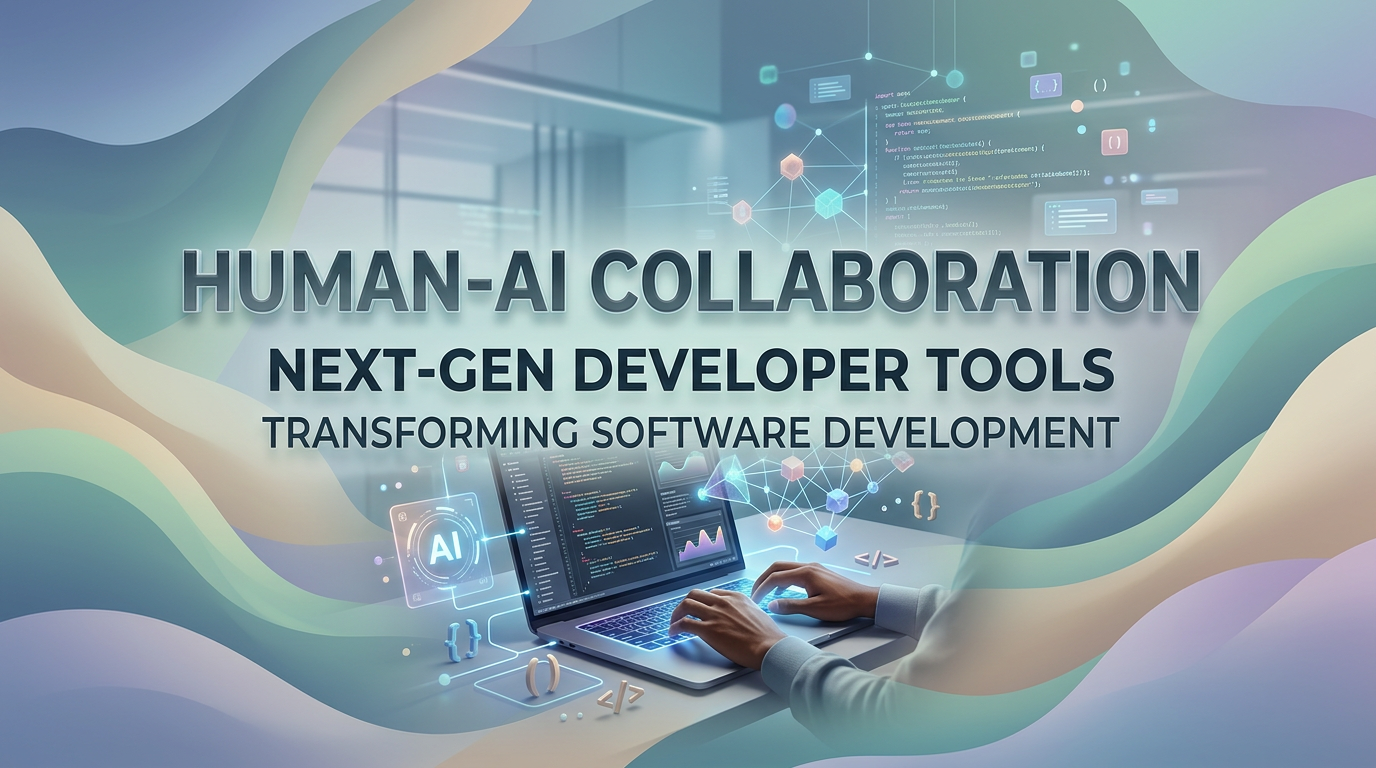
Human-AI collaboration refers to the synergistic partnership between developers and artificial intelligence systems, where each brings unique strengths to the development process. While humans contribute creativity, contextual understanding, business logic, and ethical judgment, AI systems excel at pattern recognition, code generation, automated testing, and rapid iteration.
This collaboration represents a fundamental shift in the developer experience. Rather than viewing AI as a replacement for human developers, forward-thinking organizations recognize it as a powerful collaborator that handles repetitive tasks, suggests optimizations, and accelerates the development cycle. The developer becomes a conductor, orchestrating AI capabilities while maintaining control over critical decisions.
The Current State of AI in Software Development
As of 2025, AI developer tools have matured significantly, moving beyond simple autocomplete features to become comprehensive development partners. These tools leverage large language models trained on vast repositories of code, enabling them to understand context, generate relevant code snippets, and provide intelligent suggestions throughout the development lifecycle.
The integration of AI into development workflows has created what many in the industry call "intelligent assistance"—a paradigm where AI tools actively contribute to problem-solving rather than merely responding to commands. From initial code scaffolding to deployment optimization, AI is now embedded in every stage of the software development lifecycle.
Key Categories of Next-Gen AI Developer Tools
AI-Powered Code Completion and Generation
Modern code completion tools have evolved far beyond traditional autocomplete functionality. Today's AI code assistants understand programming languages at a deep level, context within the current file and project, and even the developer's intent based on surrounding code patterns. These tools can generate entire functions, classes, and even complete modules based on natural language descriptions or existing code patterns.
What makes this technology particularly powerful is its ability to learn from the specific codebase it is working with, adapting to project conventions, coding standards, and architectural patterns. This personalized assistance significantly reduces the cognitive load on developers, allowing them to focus on solving unique problems rather than boilerplate implementation.
Intelligent Code Review and Quality Assurance
AI-driven code review tools analyze pull requests and code submissions to identify potential bugs, security vulnerabilities, performance issues, and violations of coding standards. These tools work continuously, providing instant feedback that would otherwise require extensive manual review cycles.
Beyond simple error detection, advanced AI review systems understand code semantics and can suggest architectural improvements, identify opportunities for code reuse, and ensure consistency across large codebases. This automated review process accelerates development cycles while maintaining or improving code quality standards.
Automated Testing and Debugging
Testing has traditionally been one of the most time-consuming aspects of software development. AI-powered testing tools now generate test cases automatically, identify edge cases that human testers might miss, and even predict which parts of the codebase are most likely to contain bugs based on complexity analysis.
For how delivery runs once people are in place, see how we work.
Debugging assistance has similarly benefited from AI capabilities. Modern tools can analyze error messages, trace through stack traces, and suggest potential root causes with remarkable accuracy. Some systems can even automatically generate fixes for common issues, dramatically reducing the time spent on bug resolution.
Documentation and Knowledge Management
AI tools are transforming how developers document their code and access project knowledge. Automated documentation generators analyze code and produce comprehensive documentation that describes functionality, parameters, and usage examples. Meanwhile, intelligent knowledge bases can answer developer questions by referencing project documentation, past decisions, and similar code patterns within the organization.
Benefits of Human-AI Collaboration
The integration of AI into developer workflows delivers substantial benefits that extend across organizations. Understanding these advantages helps teams make informed decisions about adopting AI-powered tools.
Accelerated Development Cycles: AI handles routine coding tasks, generates boilerplate code, and automates testing, enabling developers to complete projects in significantly less time. This acceleration does not come at the cost of quality—often, the opposite is true.
Improved Code Quality: AI-powered tools consistently identify issues that might escape human review, from subtle bugs to security vulnerabilities. This continuous quality assurance results in more robust, secure software.
Reduced Cognitive Load: By offloading repetitive tasks and providing intelligent suggestions, AI tools free developers to focus on creative problem-solving and architectural decisions. This shift leads to more satisfying work and better outcomes.
Enhanced Learning: Junior developers benefit enormously from AI collaboration. Instead of struggling with unfamiliar patterns or searching for solutions, they receive contextual guidance that accelerates their learning curve while producing quality code.
Consistent Standards: AI tools enforce coding standards and best practices across entire codebases, regardless of team size or geographical distribution. This consistency improves maintainability and reduces technical debt.
Implementing AI Tools: Best Practices for Development Teams
Successfully integrating AI into development workflows requires thoughtful implementation. Organizations that approach AI adoption strategically see better outcomes than those that simply deploy tools without proper preparation.
Start with Clear Objectives: Before adopting AI tools, identify specific problems you want to solve. Whether reducing code review time, improving test coverage, or accelerating onboarding, having clear goals helps measure success and guide tool selection.
Invest in Training: AI tools are only as effective as the developers using them. Ensure your team understands how to prompt AI systems effectively, evaluate suggestions critically, and integrate AI assistance into their workflow efficiently.
Maintain Human Oversight: While AI suggestions are often valuable, they are not infallible. Establish review processes that ensure human developers validate and understand AI-generated code before it enters production. This oversight prevents the propagation of AI hallucinations and maintains team expertise.
Choose Integrated Solutions: Select AI tools that integrate seamlessly with your existing development environment. The best tools become natural extensions of the development workflow rather than additional standalone applications that disrupt established processes.
Monitor and Iterate: Track metrics related to your objectives—development velocity, defect rates, developer satisfaction—and adjust your AI implementation strategy based on actual results. Continuous improvement ensures you extract maximum value from AI collaboration.
The Future of Human-AI Collaboration in Software Development
The trajectory of AI in software development points toward increasingly sophisticated collaboration. As language models become more capable and specialized for coding tasks, we can expect AI to take on greater responsibility in areas currently requiring significant human intervention.
Future AI systems will likely possess deeper understanding of business context, enabling them to generate code that not only functions correctly but also aligns perfectly with organizational requirements and domain-specific patterns. Natural language interfaces will become more conversational, allowing developers to describe desired functionality in plain language and receive working implementations.
However, the human element will remain essential. Strategic decisions, creative problem-solving, stakeholder communication, and ethical considerations will continue to require human judgment. The most successful developers will be those who learn to collaborate effectively with AI, leveraging its capabilities while contributing uniquely human insights.
Conclusion
Human-AI collaboration represents a new paradigm in software development—one that amplifies developer capabilities rather than replacing them. Next-generation AI developer tools are transforming every aspect of the development lifecycle, from initial code generation through testing, review, and documentation.
At Sapient Code Labs, we embrace these advancements while recognizing that successful AI implementation requires thoughtful integration, continuous learning, and maintain human oversight. The future of software development belongs to teams that effectively combine human creativity and judgment with AI's processing power and pattern recognition capabilities.
By adopting AI-powered developer tools strategically and fostering a culture of human-AI collaboration, organizations can achieve unprecedented levels of productivity, code quality, and developer satisfaction. The journey toward this future is not about choosing between human and machine—it is about leveraging both to build better software, faster.
If you're serious about this, a Scoping Sprint ($2,300, two weeks) gets you a prototype, technical plan and fixed quote — or contact us directly.