Introduction: The Critical Need for AI Supply Chain Security
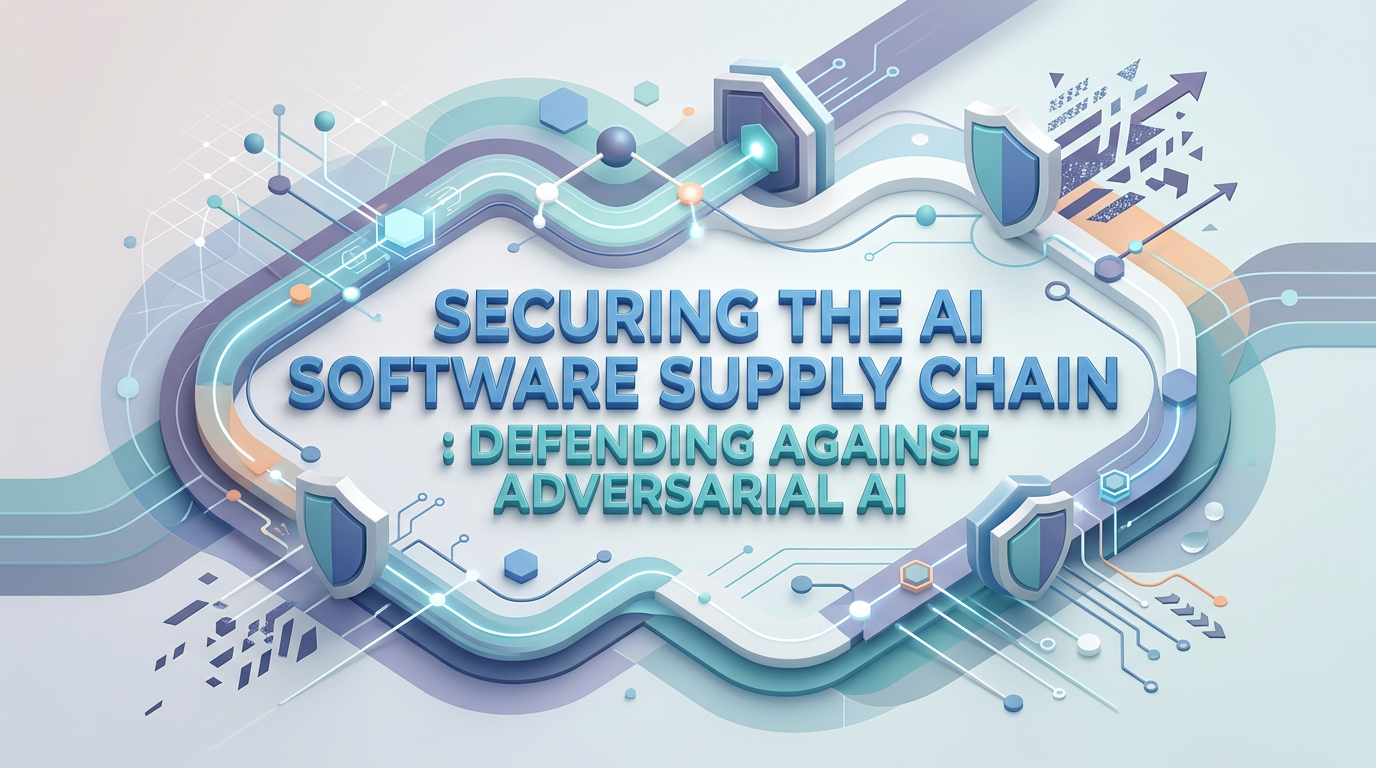
As artificial intelligence continues to transform industries from healthcare to finance, the security of AI systems has become a paramount concern for organizations worldwide. The AI software supply chain represents a complex ecosystem of models, data, frameworks, and services that can be exploited by malicious actors. At Sapient Code Labs, we understand that defending against adversarial AI requires a multi-layered approach that addresses vulnerabilities at every stage of the development and deployment lifecycle.
The proliferation of pre-trained models, open-source frameworks, and third-party AI services has created unprecedented opportunities for innovation, but it has also introduced significant security risks. Recent incidents have demonstrated that attackers can manipulate AI systems through contaminated training data, compromised model repositories, and sophisticated adversarial attacks that exploit the unique characteristics of machine learning systems.
This is the kind of system we build under logistics software development: tracking, routing, ops consoles and integrations.
Understanding the AI Software Supply Chain
The AI software supply chain encompasses all components, tools, and processes involved in developing, training, deploying, and maintaining artificial intelligence systems. This includes data collection and preprocessing, model training and validation, framework dependencies, pre-trained models from external sources, deployment infrastructure, and ongoing monitoring and updates.
Unlike traditional software supply chains, AI systems introduce unique complexities that make security particularly challenging. Models can behave in unexpected ways when exposed to inputs outside their training distribution. The interpretability of neural networks remains limited, making it difficult to detect malicious modifications. Additionally, the proprietary nature of many AI models creates opacity that can hide potential vulnerabilities from security teams.
Organizations increasingly rely on external components for their AI systems. According to industry research, the average enterprise AI application integrates dozens of third-party libraries, pre-trained models, and cloud-based AI services. Each integration point represents a potential entry vector for attackers seeking to compromise AI systems.
The Rise of Adversarial AI Attacks
Adversarial AI attacks represent a sophisticated category of threats specifically designed to exploit vulnerabilities in machine learning systems. These attacks manipulate the inputs to AI models in ways that cause them to produce incorrect or harmful outputs while appearing normal to human observers. The implications for enterprise security are profound, as adversarial attacks can bypass security controls, corrupt decision-making processes, and compromise the integrity of AI-driven operations.
Data poisoning attacks represent one of the most insidious forms of adversarial AI threats. In these attacks, malicious actors introduce contaminated data into training datasets, causing models to learn incorrect patterns or develop backdoors that can be triggered later. For organizations using pre-trained models or crowdsourced training data, the risk of inadvertently incorporating poisoned data is significant and often goes undetected until after deployment.
Model inversion attacks allow adversaries to reconstruct sensitive training data by analyzing model outputs. This type of attack poses severe privacy concerns, particularly for organizations handling sensitive information such as medical records or financial data. As AI systems become more prevalent in data-intensive industries, the potential for model inversion attacks to expose confidential information grows exponentially.
Membership inference attacks enable attackers to determine whether specific data points were used in training a model. This capability can reveal sensitive information about training datasets and may violate privacy regulations in jurisdictions with strict data protection requirements. Organizations must consider these risks when deploying AI systems that process personal or confidential information.
Key Vulnerabilities in AI Systems
Understanding the specific vulnerabilities that exist in AI systems is essential for developing effective defense strategies. The AI attack surface extends across multiple dimensions, from data ingestion pipelines to model serving infrastructure. Security teams must address vulnerabilities at each layer of the AI stack to achieve comprehensive protection.
The ops UI and APIs usually ship as web application development with real-time channels where needed.
Data integrity vulnerabilities represent a fundamental concern for AI systems. Training data can be manipulated through subtle modifications that are difficult to detect through conventional validation methods. Attackers may introduce adversarial examples that cause models to misclassify specific inputs, or they may insert backdoor triggers that activate under predetermined conditions. The challenge is compounded by the large volumes of data typically required for training modern AI models, which makes manual inspection impractical.
Framework and library vulnerabilities affect the underlying infrastructure that supports AI development and deployment. Popular machine learning frameworks such as TensorFlow and PyTorch have disclosed security vulnerabilities that could allow remote code execution or privilege escalation. Supply chain attacks targeting dependency repositories have also become more sophisticated, with attackers compromising packages to distribute malicious code to developers.
Model extraction attacks enable competitors or malicious actors to replicate proprietary AI models by repeatedly querying APIs and analyzing responses. This threat is particularly relevant for organizations that offer AI-as-a-service products, as the accessibility of model predictions through APIs creates opportunities for adversaries to reconstruct model functionality without authorization.
Infrastructure vulnerabilities in cloud-based AI deployments can expose models to unauthorized access or tampering. Misconfigured storage buckets, insecure API endpoints, and inadequate access controls have been responsible for numerous data breaches involving AI systems. As organizations increasingly adopt cloud-native AI architectures, the importance of proper infrastructure security configuration cannot be overstated.
Best Practices for Securing AI Supply Chains
Protecting AI systems from adversarial threats requires a comprehensive security strategy that addresses the entire lifecycle of AI development and deployment. Organizations should implement defense-in-depth approaches that combine technical controls, process improvements, and organizational awareness to create resilient AI systems.
Robust data validation and provenance tracking form the foundation of AI supply chain security. Organizations should implement rigorous data governance practices that verify the source and integrity of training data. Cryptographic hashing and digital signatures can ensure that data has not been tampered with during collection or transmission. Blockchain-based provenance systems offer immutable records of data origins and transformations, enabling organizations to trace the lineage of training datasets.
Model verification and integrity checking should be performed before deploying any AI model, whether developed internally or obtained from external sources. Techniques such as model fingerprinting create unique signatures that can detect unauthorized modifications. Watermarking approaches embed invisible markers in models that enable organizations to prove ownership and detect unauthorized copies. Regular integrity assessments compare deployed models against known-good baselines to identify potential tampering.
If you're piloting one corridor or fleet first, start from a published MVP cost breakdown before a multi-site rollout.
Secure development practices should be adopted throughout the AI development lifecycle. This includes implementing secure coding standards, conducting regular security reviews, and maintaining up-to-date dependencies. DevSecOps practices that integrate security into continuous integration and continuous deployment pipelines help identify vulnerabilities before they reach production environments.
Access control and authentication mechanisms should be implemented at every level of the AI infrastructure. This includes securing model training environments, restricting access to sensitive training data, and implementing strong authentication for model serving endpoints. The principle of least privilege ensures that personnel and systems have only the access necessary to perform their designated functions.
Implementing Comprehensive AI Security Frameworks
Organizations must establish formal AI security frameworks that define policies, procedures, and responsibilities for protecting AI systems. These frameworks should address risk assessment, security controls, incident response, and ongoing monitoring. Executive leadership involvement is critical to ensure adequate resources and organizational commitment to AI security initiatives.
Risk assessment processes should identify and evaluate threats specific to AI systems, including adversarial attacks, supply chain vulnerabilities, and infrastructure risks. Quantitative and qualitative risk analysis methods help organizations prioritize security investments based on potential impact and likelihood of occurrence. Regular risk assessments ensure that security measures evolve alongside emerging threats.
Security monitoring and incident response capabilities are essential for detecting and responding to AI security events. Organizations should implement monitoring solutions that track model behavior, API access patterns, and system performance. Anomaly detection systems can identify unusual patterns that may indicate adversarial activity or system compromise. Incident response plans should include specific procedures for AI-related security events, including forensic analysis and recovery procedures.
Third-party risk management should address the security posture of external providers in the AI supply chain. Vendor assessment processes should evaluate the security practices of model providers, cloud services, and data suppliers. Contractual requirements should specify security expectations, audit rights, and compliance requirements. Ongoing monitoring of third-party security posture helps identify emerging risks promptly.
The Future of AI Supply Chain Security
As AI technologies continue to advance, so too will the sophistication of attacks against AI systems. Organizations must remain vigilant and proactive in adapting their security strategies to address emerging threats. The development of adversarial training techniques, robust model architectures, and advanced detection systems offers hope for more resilient AI systems in the years ahead.
Industry collaboration is essential for addressing AI security challenges that exceed the capabilities of individual organizations. Information sharing about vulnerabilities, attack techniques, and defensive measures enables the broader community to improve its security posture. Standards development efforts are underway to establish baseline security requirements for AI systems and to provide guidance for implementing effective controls.
Regulatory frameworks for AI security are emerging across jurisdictions, creating both compliance obligations and opportunities for standardization. Organizations that proactively adopt comprehensive AI security practices will be better positioned to meet regulatory requirements and demonstrate due diligence to stakeholders.
Conclusion
Securing the AI software supply chain against adversarial threats represents one of the most significant challenges facing organizations today. The complexity of AI systems, combined with the sophistication of modern attackers, demands a comprehensive and evolving security strategy. At Sapient Code Labs, we believe that successful AI security requires integration of technical controls, robust processes, and organizational awareness throughout the AI development lifecycle.
Organizations that invest in AI supply chain security will not only protect their own systems but will also contribute to a more secure AI ecosystem overall. By implementing best practices for data validation, model verification, secure development, and continuous monitoring, organizations can significantly reduce their exposure to adversarial AI threats. The time to strengthen AI supply chain security is now, before attackers can exploit the vulnerabilities that exist in unprotected systems.
If you're serious about this, a Scoping Sprint ($2,300, two weeks) gets you a prototype, technical plan and fixed quote — or contact us directly.