Introduction to Machine Learning in MERN Projects
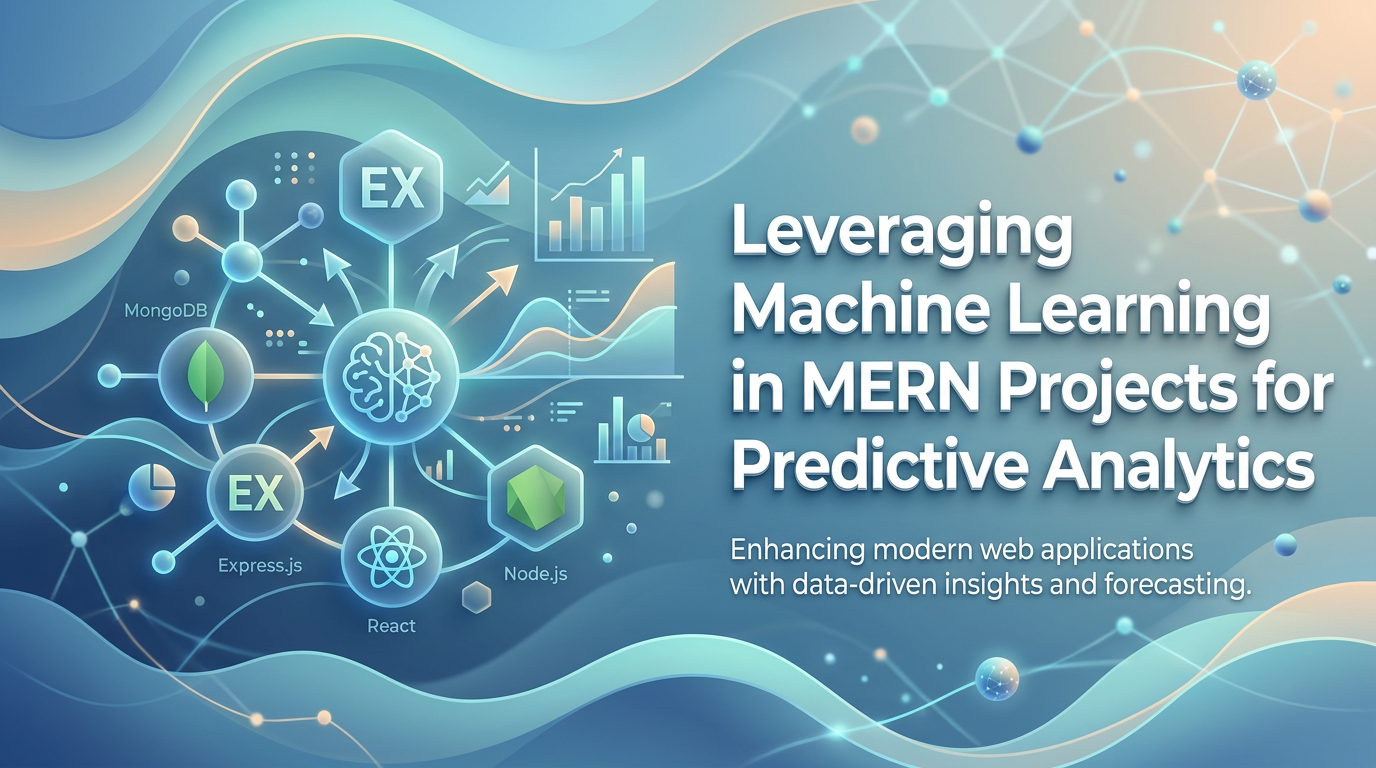
The MERN stack—comprising MongoDB, Express.js, React, and Node.js—has become one of the most popular technology stacks for building modern web applications. As businesses increasingly seek to harness the power of data-driven decision-making, integrating machine learning into MERN projects has emerged as a game-changing approach for delivering predictive analytics capabilities.
Predictive analytics involves using historical data, statistical algorithms, and machine learning techniques to identify patterns and predict future outcomes. When combined with the flexibility and scalability of the MERN stack, organizations can build intelligent applications that not only store and display data but also learn from it to provide actionable insights.
In this comprehensive guide, we'll explore how Sapient Code Labs approaches the integration of machine learning models into MERN projects, the architectural considerations, implementation strategies, and real-world use cases that demonstrate the power of this combination.
Understanding the MERN Stack Architecture
Before diving into machine learning integration, it's essential to understand the MERN stack architecture and how each component contributes to building scalable applications.
MongoDB serves as the NoSQL database that stores data in flexible, JSON-like documents. This schema-less nature makes it particularly well-suited for machine learning applications, as it can handle unstructured and semi-structured data that ML models often require for training.
Express.js provides a minimal and flexible Node.js web application framework that handles backend routing and middleware. It acts as the bridge between the React frontend and the machine learning services.
React enables the creation of dynamic, responsive user interfaces that can display predictive insights through interactive dashboards, charts, and real-time updates.
Node.js powers the server-side runtime, allowing JavaScript to run on the server. This unified language across the stack simplifies development and enables seamless integration with machine learning libraries.
Why Integrate Machine Learning into MERN Projects?
The integration of machine learning into MERN projects offers numerous advantages that can transform traditional applications into intelligent systems. Here are the primary motivations for this integration:
Enhanced Decision-Making: Machine learning models can analyze vast amounts of historical data to identify patterns humans might miss, enabling more informed business decisions.
Personalized User Experiences: ML-powered recommendation engines can analyze user behavior to provide personalized content, product suggestions, and experiences.
Automation and Efficiency: Predictive models can automate routine predictions, such as forecasting inventory needs, predicting customer churn, or identifying fraudulent activities.
Scalability: The MERN stack's scalability combined with ML's analytical power allows businesses to process growing volumes of data without compromising performance.
Competitive Advantage: Organizations that leverage predictive analytics gain insights that competitors may lack, positioning them ahead in their respective markets.
Implementing Machine Learning Models in MERN Projects
The implementation of machine learning in MERN projects requires a strategic approach that considers model training, deployment, and inference. Here's how Sapient Code Labs approaches this integration:
Model Development and Training: Machine learning models can be developed using Python-based frameworks like TensorFlow, PyTorch, or Scikit-learn. These models are typically trained outside the MERN application in dedicated environments, then exported for integration.
API-Based Integration: The most common approach involves creating RESTful APIs using Express.js that serve predictions from trained models. These APIs act as intermediaries between the React frontend and the ML model running on the server or as a microservice.
Model Serialization: Trained models are serialized into formats like ONNX, TensorFlow SavedModel, or Pickle files that can be loaded and executed within the Node.js environment using libraries like TensorFlow.js or ONNX Runtime.
Real-Time vs. Batch Processing: Depending on the use case, predictions can be made in real-time through API calls or through scheduled batch jobs that process data and store predictions in MongoDB for quick retrieval.
Popular Machine Learning Libraries for MERN Integration
Several libraries and frameworks facilitate the integration of machine learning capabilities into MERN projects:
TensorFlow.js: This library brings machine learning to JavaScript, enabling training and deployment of models directly in the browser or Node.js environment. It supports neural networks and can import pre-trained TensorFlow models.
Brain.js: A lightweight JavaScript library for neural networks that integrates seamlessly with Node.js applications, suitable for simpler ML use cases.
ML.js: Provides a collection of machine learning algorithms for Node.js, including regression, classification, and clustering algorithms.
ONNX Runtime: A performant inference engine that can run ONNX models in Node.js, offering cross-platform compatibility and optimized performance.
Python Microservices: For computationally intensive ML tasks, organizations often deploy Python-based microservices (using Flask or FastAPI) alongside their MERN application, communicating via HTTP requests or message queues.
Building a Predictive Analytics Pipeline
Creating an effective predictive analytics pipeline in a MERN project involves several stages that work together to deliver valuable insights:
Data Collection and Storage: The process begins with gathering data from various sources—user interactions, transaction records, sensor data, or external APIs. MongoDB's flexible schema allows for storing diverse data types that can evolve as requirements change.
Data Preprocessing: Raw data must be cleaned, transformed, and normalized before it can be used for training. This stage involves handling missing values, encoding categorical variables, and scaling numerical features.
Model Training: Using historical data, machine learning models are trained to recognize patterns. This typically occurs in Python environments using established frameworks, though some training can occur in Node.js for simpler models.
Model Evaluation: Trained models are evaluated using metrics like accuracy, precision, recall, and F1 score to ensure they meet performance requirements.
Model Deployment: Once validated, models are deployed to the production environment where they can receive requests and return predictions.
API Development: Express.js endpoints are created to accept input data, pass it to the model, and return predictions to the React frontend.
Frontend Visualization: React components display predictions through charts, graphs, and dashboards, making insights accessible to end users.
Real-World Use Cases
Machine learning integration in MERN projects enables numerous practical applications across industries:
E-Commerce Recommendations: Online retailers can implement recommendation systems that analyze user browsing history, purchase patterns, and product attributes to suggest relevant products, increasing conversion rates and customer satisfaction.
Customer Churn Prediction: Subscription-based businesses can predict which customers are likely to churn, enabling proactive retention strategies.
Demand Forecasting: Inventory management systems can predict product demand based on seasonal trends, marketing campaigns, and external factors, optimizing stock levels.
Fraud Detection: Financial applications can use ML models to identify suspicious transactions in real-time, preventing fraudulent activities.
Healthcare Analytics: Medical applications can predict patient outcomes, appointment no-shows, or disease progression based on historical health records.
Sentiment Analysis: Social media monitoring tools can analyze customer feedback to determine sentiment, helping businesses understand public perception of their brand.
Best Practices and Challenges
Successfully implementing machine learning in MERN projects requires careful attention to best practices while navigating common challenges:
Best Practices:
- Start with clearly defined business objectives and measurable KPIs
- Use version control for both code and trained models
- Implement proper data validation and error handling
- Monitor model performance in production and set up alerts for degradation
- Scale infrastructure based on prediction volume
- Ensure data privacy and security compliance
- Document model architecture, training data, and performance metrics
Common Challenges:
- Performance: ML inference can be computationally expensive; consider model optimization and caching strategies
- Data Quality: Poor data leads to poor predictions; invest in data cleaning and preprocessing
- Model Drift: Over time, model predictions may become less accurate as data patterns change; implement regular retraining pipelines
- Integration Complexity: Combining Python ML ecosystems with JavaScript requires careful architectural planning
- Scalability: Ensure your infrastructure can handle increased prediction loads as the application grows
Future Trends in MERN and Machine Learning
The intersection of MERN stack development and machine learning continues to evolve rapidly. Several trends are shaping the future of this integration:
Edge Computing: Running ML models on edge devices closer to users reduces latency and enables real-time predictions without constant server communication.
AutoML: Automated machine learning platforms are making it easier to develop ML models without extensive expertise, accelerating the integration process.
Federated Learning: This approach allows models to be trained across decentralized data sources, enhancing privacy while still leveraging collective intelligence.
Pre-Trained Models: The availability of pre-trained models through APIs and libraries reduces development time and enables faster implementation of common ML use cases.
Serverless ML: Cloud providers are offering serverless machine learning services that automatically scale based on demand, simplifying infrastructure management.
Conclusion
Integrating machine learning into MERN projects opens a world of possibilities for building intelligent, predictive applications. The MERN stack provides an excellent foundation with its flexible database, efficient backend framework, responsive frontend, and unified JavaScript environment.
As organizations increasingly recognize the value of data-driven insights, the demand for applications that combine robust web development with machine learning capabilities will continue to grow. By understanding the architectural considerations, implementation strategies, and best practices outlined in this guide, development teams can successfully create predictive analytics solutions that deliver real business value.
Whether you're building recommendation engines, forecasting systems, or fraud detection mechanisms, the combination of MERN and machine learning offers the tools and flexibility needed to transform your application into a powerful predictive platform.