Introduction to AI Integration in Enterprise Environments
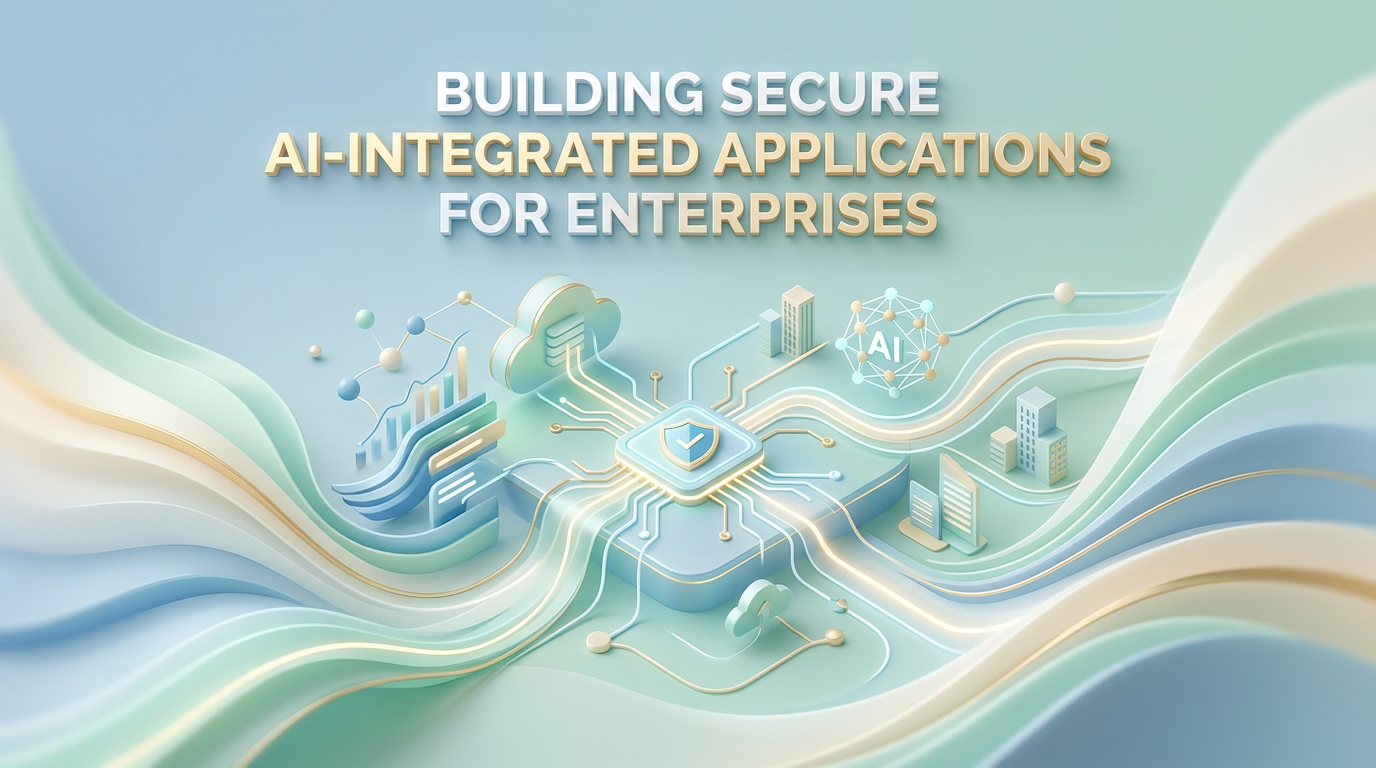
Artificial intelligence has transformed how enterprises operate, enabling automation, predictive analytics, and enhanced decision-making capabilities. As organizations increasingly adopt AI technologies to remain competitive, the need for robust security measures in AI-integrated applications has become paramount. Building secure AI applications requires a comprehensive approach that addresses data protection, model security, access controls, and regulatory compliance.
At Sapient Code Labs, we understand that enterprises face unique challenges when integrating AI into their existing infrastructure. The stakes are high sensitive business data, customer information, and proprietary algorithms all require protection against evolving cyber threats. This guide explores the critical strategies and best practices for developing secure AI-integrated applications that meet enterprise-grade security requirements.
Turning this into a shipped product is end-to-end product development.
Understanding the Security Landscape for AI Applications
AI applications introduce a distinct set of security vulnerabilities that traditional software development practices may not adequately address. Unlike conventional applications, AI systems rely on machine learning models that can be manipulated through adversarial attacks, data poisoning, and model inversion techniques. Understanding these vulnerabilities is the first step toward building resilient AI-integrated enterprise applications.
The attack surface for AI applications extends beyond traditional code-level vulnerabilities. Model theft, where competitors or malicious actors steal proprietary machine learning models, represents a significant intellectual property risk. Additionally, AI systems often require access to large volumes of sensitive data for training and inference, creating potential data exposure points that must be carefully secured.
Core Security Principles for Enterprise AI Integration
Data Protection and Privacy
Data forms the foundation of any AI system, making data protection the cornerstone of secure AI integration. Enterprises must implement comprehensive data governance frameworks that classify information based on sensitivity and apply appropriate protection measures. Encryption should be enforced both at rest and in transit, ensuring that data remains protected throughout its lifecycle.
When training AI models, organizations should consider privacy-preserving techniques such as differential privacy, federated learning, and secure multi-party computation. These approaches enable organizations to leverage AI capabilities while minimizing data exposure. At Sapient Code Labs, we implement data minimization principles, collecting only the information necessary for specific business objectives and retaining it only for required periods.
Model Security and Integrity
Protecting machine learning models from unauthorized access and manipulation requires a multi-layered approach. Model encryption ensures that proprietary algorithms remain confidential, while digital signatures verify model integrity and authenticity. Organizations should implement robust versioning systems that track all changes to AI models, enabling quick identification of unauthorized modifications.
Adversarial robustness testing should be incorporated into the development lifecycle to identify vulnerabilities to manipulation attempts. Regular security assessments and penetration testing help identify weaknesses before malicious actors can exploit them. Additionally, implementing input validation and sanitization mechanisms protects models from adversarial inputs designed to cause incorrect predictions.
If you're still validating, start from a published MVP cost breakdown.
Access Control and Authentication
Enterprise AI applications require granular access control mechanisms that align with organizational role hierarchies. Role-based access control ensures that users can only interact with AI capabilities relevant to their job functions. Multi-factor authentication adds an extra layer of security for sensitive AI operations, particularly those involving model training or access to training data.
API security becomes critical when AI capabilities are exposed as services across the enterprise. Implementing rate limiting, request validation, and comprehensive audit logging helps prevent abuse and enables security teams to detect anomalous behavior patterns. API tokens should be rotated regularly and revoked immediately upon suspicious activity.
Regulatory Compliance and Governance
Enterprises operating in regulated industries must navigate complex compliance requirements when implementing AI systems. Regulations such as GDPR, HIPAA, and industry-specific standards impose strict requirements on how AI systems handle personal and sensitive information. Organizations must ensure that their AI applications incorporate privacy by design principles and maintain comprehensive documentation for compliance audits.
Establishing an AI governance framework helps organizations define policies for acceptable AI use, model validation requirements, and ongoing monitoring procedures. This framework should include clear accountability structures, regular model performance reviews, and mechanisms for addressing bias or fairness concerns. Documentation of model training data sources, hyperparameters, and validation results supports both compliance and organizational knowledge retention.
For enterprises operating across multiple jurisdictions, understanding regional variations in AI regulation becomes essential. The European Union's AI Act, emerging US state regulations, and other regional frameworks create a complex compliance landscape that requires careful navigation. Building flexible AI systems that can adapt to evolving regulatory requirements protects long-term investments.
Implementation Best Practices
Secure Development Lifecycle
Integrating security into every phase of AI application development ensures that protection considerations are addressed proactively rather than retrofitted. Threat modeling sessions at the design phase help identify potential security risks before implementation begins. Security requirements should be documented alongside functional requirements and validated through testing.
Where AI is involved in the workflow, we implement under AI agentic development.
Code review processes should include security assessments specific to AI components, evaluating both traditional software vulnerabilities and ML-specific risks. Automated security scanning tools can identify common vulnerabilities, while specialized ML security testing addresses threats unique to AI systems. All dependencies should be carefully vetted and regularly updated to address newly discovered vulnerabilities.
Infrastructure Security
The infrastructure hosting AI applications must be configured with security as a primary consideration. Cloud-based AI deployments should leverage provider security features while implementing additional controls appropriate to organizational requirements. Network segmentation isolates AI systems from broader enterprise networks, limiting the impact of potential breaches.
Container security ensures that AI applications run in isolated environments with minimal privilege requirements. Regular infrastructure audits verify that security configurations remain aligned with organizational policies. Implementing infrastructure as code practices enables consistent, repeatable security configurations across environments.
Monitoring and Incident Response
Comprehensive monitoring enables organizations to detect security events quickly and respond effectively. AI-specific metrics should include model performance indicators that may signal adversarial manipulation or data quality issues. Security information and event management systems should aggregate logs from AI components alongside traditional infrastructure events.
Developing incident response procedures specific to AI security events ensures that teams can respond appropriately when issues arise. This includes procedures for model rollback, data breach notification, and regulatory reporting where required. Regular incident response drills help ensure that teams remain prepared to handle security events effectively.
Building a Security-First AI Culture
Technical controls alone cannot ensure AI security without organizational commitment to security practices. Training programs should educate development teams about AI-specific security risks and mitigation strategies. Security champions within development teams can advocate for secure practices and serve as resources for colleagues.
Encouraging collaboration between security teams and AI developers helps bridge knowledge gaps and ensures that security considerations are appropriately integrated into AI initiatives. Regular knowledge sharing sessions keep teams informed about emerging threats and effective countermeasures. Organizations that foster a security-first culture are better positioned to reap the benefits of AI integration while managing associated risks.
Conclusion
Building secure AI-integrated applications for enterprises requires a comprehensive approach that addresses technical, organizational, and regulatory considerations. By implementing robust data protection measures, securing machine learning models, establishing strong access controls, and maintaining regulatory compliance, organizations can confidently leverage AI capabilities while protecting their assets and stakeholders.
The team at Sapient Code Labs specializes in developing enterprise-grade AI applications with security at the core of every implementation. Our expertise in secure software development practices, combined with deep knowledge of machine learning security, enables us to deliver AI solutions that meet the demanding requirements of modern enterprises. Contact us today to learn how we can help your organization build secure, scalable AI-integrated applications that drive business value while maintaining robust protection against evolving threats.
Ready to ship this? Run a Scoping Sprint ($2,300, two weeks) for a prototype, plan and fixed quote — or talk to us.