Introduction: The Dawn of Agent-Based AI in Enterprise
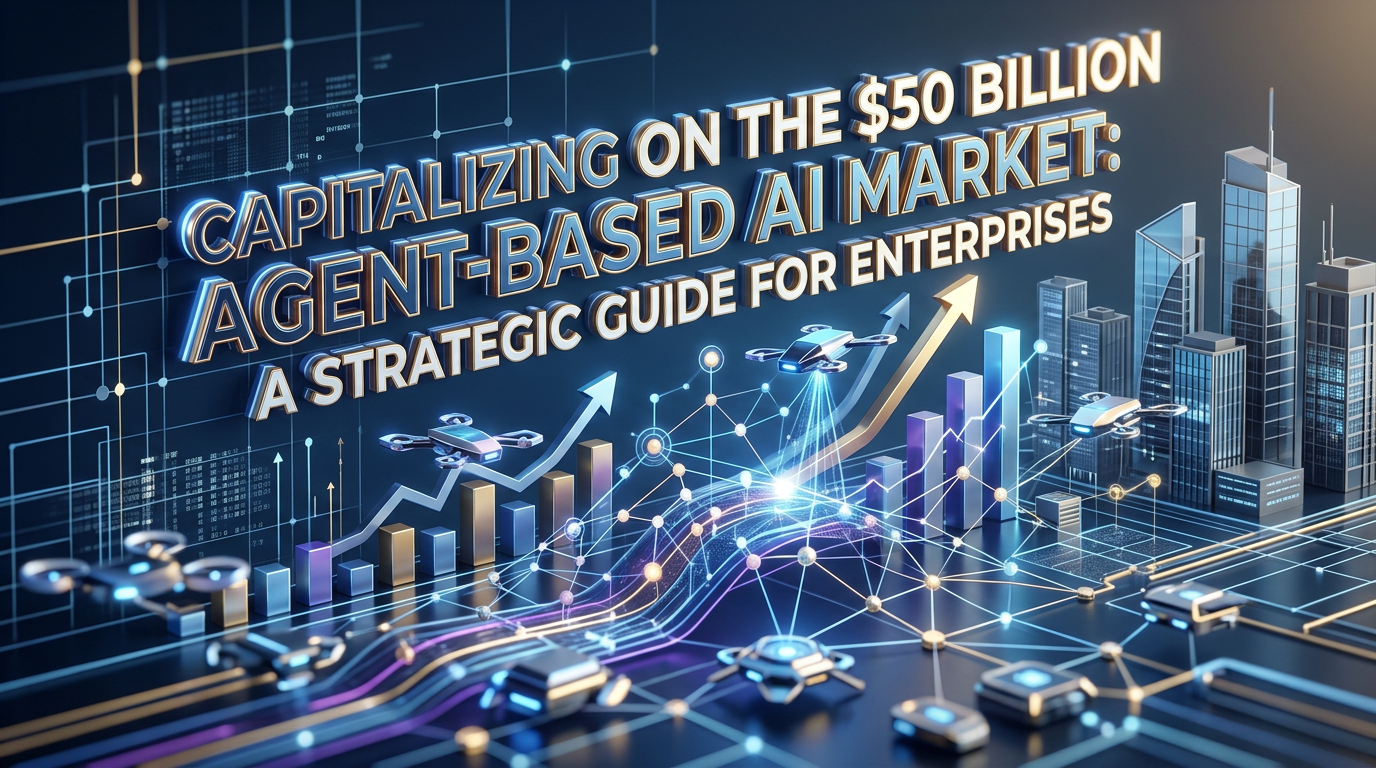
The enterprise technology landscape is undergoing a seismic shift, and at the center of this transformation lies agent-based artificial intelligence. With market projections indicating growth to $50 billion, organizations that fail to capitalize on this opportunity risk being left behind in an increasingly competitive marketplace.
Agent-based AI represents a fundamental evolution from traditional artificial intelligence systems. Unlike conventional AI models that respond to prompts, AI agents operate autonomously, making decisions, executing complex workflows, and adapting to changing conditions without constant human intervention. This capability positions agent-based AI as a game-changer for enterprises seeking operational excellence, enhanced customer experiences, and sustainable competitive advantages.
Production agents need auth, audit, evaluation and integration — that's AI agentic development.
For Sapient Code Labs and similar technology partners, this market presents unprecedented opportunities to deliver cutting-edge solutions that address real business challenges. The question is no longer whether enterprises should adopt agent-based AI, but how quickly and effectively they can implement these technologies to maximize returns.
Understanding Agent-Based AI: More Than Just Automation
To appreciate the market opportunity, enterprises must first understand what distinguishes agent-based AI from other artificial intelligence approaches. Traditional automation follows predefined rules and requires explicit programming for each scenario. In contrast, AI agents combine large language models with reasoning capabilities, memory systems, and tool integration to handle complex, multi-step tasks autonomously.
Modern AI agents can perceive their environment through various inputs, reason about complex situations, plan optimal courses of action, and execute tasks while learning from outcomes. This creates a technological foundation capable of handling nuanced business scenarios that previously required human judgment.
The architecture of enterprise-grade AI agents typically includes several sophisticated components. Natural language understanding enables agents to interpret user intentions accurately. Knowledge bases provide the information foundation for decision-making. Integration layers connect agents with existing enterprise systems, from CRM platforms to supply chain management tools. Most importantly, feedback mechanisms allow continuous learning and improvement over time.
The Market Landscape: Understanding the $50 Billion Opportunity
The agent-based AI market's projected growth to $50 billion reflects more than hype—it represents fundamental changes in how businesses operate. Several converging factors drive this expansion, creating a favorable environment for enterprise adoption.
Advancements in foundation models have dramatically improved agent capabilities. Modern language models provide the reasoning and generation capabilities that make autonomous agents viable. Simultaneously, improvements in tool use and function calling allow agents to interact meaningfully with enterprise systems.
Enterprise demand for operational efficiency has never been higher. Organizations face mounting pressure to reduce costs while increasing output, and AI agents offer a pathway to achieve both simultaneously. Unlike human workers, agents can operate continuously without fatigue, maintain consistent quality, and scale rapidly to meet demand fluctuations.
The competitive landscape further accelerates adoption. Early adopters of agent-based AI report significant improvements in customer satisfaction, employee productivity, and decision-making speed. This creates a ripple effect as competitors race to match or exceed these capabilities.
Strategic Benefits for Enterprise Adoption
Enterprises that successfully implement agent-based AI stand to realize substantial benefits across multiple dimensions of their operations. Understanding these benefits helps organizations prioritize initiatives and build compelling business cases for investment.
Operational Efficiency and Cost Reduction represent the most immediate and measurable returns. AI agents can handle routine inquiries, process transactions, and manage administrative tasks that previously consumed significant human resources. This allows organizations to redirect talent toward higher-value activities that require creativity, strategic thinking, and complex problem-solving.
Enhanced Customer Experiences emerge from agents' ability to provide instant, personalized responses at scale. Unlike human agents limited by availability and capacity, AI agents can engage with unlimited customers simultaneously while maintaining consistent service quality. This transforms customer support from a cost center into a competitive differentiator.
We treat the surrounding product as end-to-end product development, not a separate science project.
Improved Decision-Making results from agents' capacity to synthesize vast amounts of information, identify patterns, and generate actionable insights. Enterprise agents can monitor market conditions, analyze competitor activities, and surface relevant information to decision-makers precisely when needed.
Accelerated Innovation becomes possible when organizations free their most talented people from routine tasks. Creative and technical teams can focus on developing new products, services, and processes that drive growth rather than maintaining existing operations.
Implementation Strategies: A Framework for Success
Successful adoption of agent-based AI requires thoughtful planning and systematic execution. Enterprises should approach implementation as a strategic transformation rather than a technology deployment.
Start with High-Impact, Low-Risk Use Cases provides the best foundation for building experience and organizational buy-in. Customer service applications, document processing, and data entry automation offer clear benefits while presenting manageable risks. These initial implementations generate visible results that build confidence for more ambitious projects.
Establish Robust Governance Frameworks becomes essential as agents take on more significant responsibilities. Organizations need clear policies regarding agent decision-making authority, data handling, human oversight requirements, and escalation procedures. Governance frameworks should balance operational autonomy with appropriate controls.
Invest in Integration Architecture determines long-term success more than the agents themselves. Agents that cannot effectively connect with existing systems, data sources, and workflows will fail to deliver value. Enterprise-grade integration capabilities ensure agents can access the information and tools necessary for effective operation.
Prioritize Change Management addresses the human dimension that often determines project outcomes. Employees need clear communication about how agents will change their work, what new skills they must develop, and how the organization will support their transition. Resistance to change can undermine even technically excellent implementations.
Technical Considerations for Enterprise-Grade Solutions
Organizations evaluating agent-based AI solutions must address several technical considerations to ensure successful deployment.
Security and Privacy requirements demand careful attention. Agents processing sensitive business data must implement robust encryption, access controls, and audit capabilities. Enterprises should verify that solutions meet their security standards and compliance requirements before deployment.
Scalability and Reliability determine whether agents can meet enterprise demands. Production systems must handle peak loads gracefully, maintain consistent performance, and recover gracefully from failures. Architecture decisions made early in implementation often prove difficult to change later.
Use our SaaS development cost guide to budget the product shell around the models.
Customization and Extensibility enable organizations to tailor solutions to their specific needs. The best platforms provide flexibility to adapt agents to unique business processes, integrate with proprietary systems, and extend capabilities as requirements evolve.
Monitoring and Observability capabilities allow teams to understand agent behavior, identify issues, and optimize performance. Comprehensive logging, analytics, and alerting systems prove invaluable for maintaining healthy production deployments.
Building Competitive Advantage Through Agent-Based AI
Beyond operational improvements, agent-based AI offers opportunities to build genuine competitive advantages that are difficult for competitors to replicate.
Data Advantages compound over time as agents interact with customers, process transactions, and learn from outcomes. Organizations that deploy agents effectively accumulate proprietary insights that inform business strategy and product development.
Speed Advantages emerge from agents' ability to respond instantly and operate continuously. In fast-moving markets, the difference between instant response and hour-long turnaround can determine whether opportunities are captured or lost.
Experience Advantages develop as organizations refine their agent implementations based on real-world feedback. Each interaction provides learning that improves future performance, creating an ever-improving flywheel of capability enhancement.
The Future Outlook: Preparing for Tomorrow's Opportunities
The agent-based AI market will continue evolving rapidly, and enterprises must prepare for emerging developments that will shape the competitive landscape.
Multi-agent systems represent the next frontier, where specialized agents collaborate to handle extremely complex workflows. These systems will enable even more sophisticated automation across enterprise functions.
Enhanced reasoning capabilities will allow agents to handle increasingly complex decision-making scenarios. As foundation models improve, agents will tackle problems that currently require human expertise.
Deeper vertical specialization will emerge as vendors develop agents optimized for specific industries and use cases. Healthcare, finance, manufacturing, and other sectors will see tailored solutions that address their unique requirements.
Conclusion: Seizing the Moment
The $50 billion agent-based AI market represents a defining opportunity for enterprises willing to embrace transformation. Organizations that act strategically—starting with high-impact use cases, building robust governance, investing in integration, and prioritizing change management—will position themselves for sustained competitive advantage.
The technology has reached a maturity level that makes enterprise deployment viable and rewarding. Market projections reflect genuine value creation, not speculative hype. For enterprises seeking growth, efficiency, and relevance in an increasingly digital world, agent-based AI offers a path forward that aligns technological capability with business objectives.
The time to act is now. Early movers will establish capabilities, accumulate data advantages, and build organizational expertise that latecomers will struggle to replicate. Partnering with experienced technology providers can accelerate implementation while reducing risk. The $50 billion opportunity awaits those ready to capture it.
Building production AI agents? A Scoping Sprint ($2,300, two weeks) ends with a clickable prototype, a technical plan and a fixed quote — or just start a conversation.