Introduction: The Growing Challenge of Enterprise Fraud
In today's digital economy, enterprises face an unprecedented wave of fraudulent activities. From financial transactions to identity theft, cybercriminals are becoming increasingly sophisticated, costing global organizations billions annually. Traditional rule-based fraud detection systems are no longer sufficient to combat these evolving threats. This is where AI-powered agents come into play, offering a transformative approach to enterprise risk management.
Sapient Code Labs has observed a significant shift in how organizations approach fraud detection. The integration of artificial intelligence agents into security frameworks is no longer a luxury but a necessity for businesses seeking to protect their assets and maintain customer trust. In this comprehensive guide, we explore how deploying AI agents can revolutionize your fraud detection capabilities and strengthen your overall enterprise risk management strategy.
Understanding AI Agents in Fraud Detection
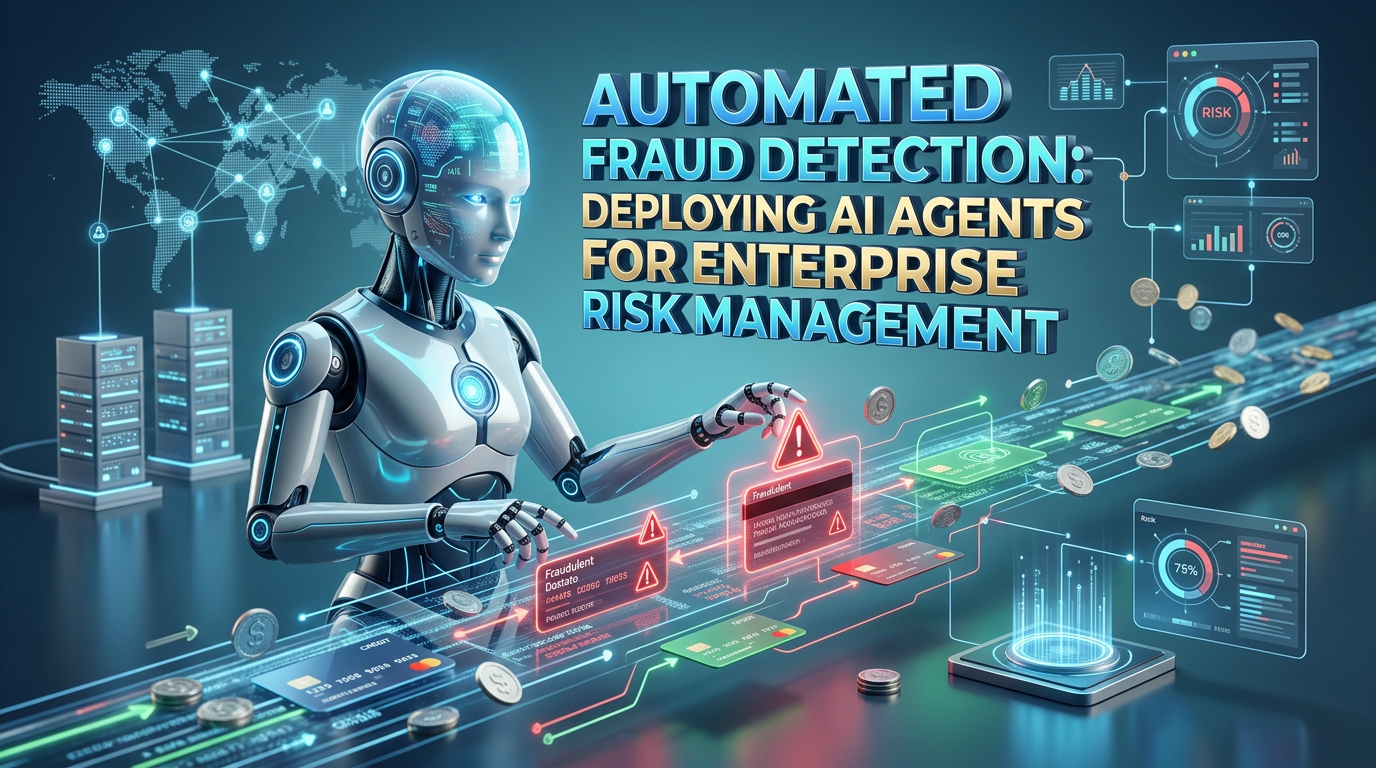
AI agents are autonomous software systems designed to perform specific tasks by perceiving their environment, reasoning about information, and taking action to achieve defined objectives. In the context of fraud detection, these intelligent agents analyze vast amounts of transaction data in real-time, identifying patterns and anomalies that human analysts might miss.
Modern AI agents combine multiple technologies including machine learning, natural language processing, and predictive analytics. They continuously learn from historical data, adapting to new fraud patterns and evolving attack vectors. Unlike static rule-based systems, AI agents can make nuanced decisions based on context, significantly reducing false positives while catching genuine fraud attempts.
The beauty of AI agents lies in their ability to operate continuously without fatigue, processing millions of transactions per second with consistent accuracy. They serve as an always-vigilant security layer that augments human analysts, enabling organizations to scale their fraud detection efforts efficiently.
How AI Agents Transform Enterprise Risk Management
Enterprise risk management encompasses identifying, assessing, and prioritizing potential threats to an organization. AI agents enhance every stage of this process, providing capabilities that were previously impossible with traditional methods.
One of the most significant advantages is real-time threat detection. AI agents can analyze transactions as they occur, flagging suspicious activities instantly. This immediate response capability is crucial in preventing fraud losses, especially in high-volume financial environments where every second counts.
AI agents also excel at behavioral analysis. By establishing baseline behaviors for individual users, they can detect deviations that might indicate account takeover or identity fraud. These systems analyze hundreds of data points including device information, location patterns, transaction timing, and spending behaviors to create comprehensive risk profiles.
Furthermore, AI agents enable proactive risk mitigation. Instead of reacting to fraud after it occurs, these systems can identify emerging threats and potential vulnerabilities before attackers exploit them. This predictive capability allows enterprises to implement preventive measures, staying one step ahead of cybercriminals.
Key Components of an AI-Powered Fraud Detection System
Implementing an effective AI-driven fraud detection system requires understanding its core components. A robust solution typically includes several interconnected elements working in harmony.
Data Collection and Integration Layer: This foundational component gathers data from multiple sources including transaction databases, customer profiles, device fingerprints, and external threat intelligence feeds. The quality and comprehensiveness of data directly impact the AI agent's effectiveness.
Machine Learning Models: These algorithms form the brain of the fraud detection system. Supervised learning models trained on historical fraud cases can identify known patterns, while unsupervised learning can detect novel anomalies without predefined labels. Ensemble approaches combining multiple models often yield the best results.
Decision Engine: This component processes the outputs from machine learning models and applies business rules to generate final decisions. It determines whether to approve, decline, or flag transactions for manual review, balancing fraud prevention with customer experience.
Feedback Loop Mechanism: Continuous learning is essential for maintaining effectiveness. The feedback loop captures outcomes from decisions made, allowing the AI system to refine its models over time and adapt to changing fraud patterns.
Benefits of Deploying AI Agents for Enterprise Fraud Detection
Organizations that implement AI agents for fraud detection experience substantial benefits across multiple dimensions of their operations.
Dramatic Reduction in Fraud Losses: AI agents can detect fraud attempts that slip past traditional systems, directly reducing financial losses. Studies indicate that machine learning-based fraud detection can reduce fraud losses by up to 70% compared to conventional approaches.
Decreased False Positives: One of the biggest challenges in fraud detection is balancing security with customer experience. AI agents significantly reduce false positive rates, minimizing legitimate transaction rejections that frustrate customers and impact revenue.
Operational Efficiency: By automating the initial screening of transactions, AI agents free up human analysts to focus on complex cases requiring expert judgment. This optimization leads to faster processing times and more effective use of skilled personnel.
Scalability: As transaction volumes grow, AI agents scale effortlessly without proportional increases in staff or infrastructure costs. This scalability is particularly valuable for organizations experiencing rapid growth or seasonal spikes in activity.
Regulatory Compliance: AI-powered systems can maintain comprehensive audit trails and generate detailed reports required for regulatory compliance. This documentation capability simplifies compliance with financial regulations and reduces the risk of penalties.
Implementation Strategies for Success
Successful deployment of AI agents for fraud detection requires careful planning and execution. Organizations should follow a structured approach to maximize their return on investment.
Start with Clear Objectives: Define specific goals for your fraud detection system. Whether reducing false positives, catching more fraud cases, or improving response times, having clear objectives guides implementation decisions and helps measure success.
Ensure Data Quality: AI agents are only as good as the data they process. Invest in data cleaning, normalization, and integration efforts before deployment. Address data silos and ensure comprehensive data collection across all relevant systems.
Adopt a Phased Approach: Rather than a big-bang deployment, implement AI agents incrementally. Start with a specific product line or transaction type, measure performance, and expand gradually. This approach allows for learning and adjustment without disrupting entire operations.
Maintain Human Oversight: While AI agents are powerful, they work best with human collaboration. Establish processes for human review of edge cases and ensure analysts can override automated decisions when necessary.
Monitor and Iterate: Continuous monitoring is essential for maintaining effectiveness. Track key metrics, analyze failures, and regularly retrain models to adapt to evolving fraud patterns.
Challenges and Considerations
While AI agents offer tremendous potential, organizations must address several challenges to ensure successful implementation.
Data Privacy Concerns: AI fraud detection systems require access to sensitive customer data. Organizations must implement robust privacy protections and ensure compliance with regulations like GDPR and CCPA. Data minimization and anonymization techniques can help address these concerns.
Adversarial Attacks: Sophisticated fraudsters may attempt to manipulate AI systems through adversarial inputs. Organizations must implement safeguards against such attacks and regularly stress-test their systems.
Model Explainability: Complex machine learning models can be difficult to explain, creating challenges for regulatory compliance and customer communication. Organizations should consider using interpretable models or implementing explanation frameworks.
Integration Complexity: Integrating AI agents with existing legacy systems can be challenging. Organizations need to plan for technical integration and ensure seamless data flow between systems.
The Future of AI in Enterprise Risk Management
As we look toward 2026 and beyond, AI agents will become even more integral to enterprise risk management. Several emerging trends are poised to shape the future of fraud detection.
Federated learning will enable organizations to train AI models collaboratively without sharing sensitive data, addressing privacy concerns while improving model accuracy. This approach allows financial institutions to benefit from collective intelligence without compromising individual customer information.
Quantum computing promises to revolutionize fraud detection by enabling real-time analysis of exponentially larger datasets. As quantum computing matures, AI agents will be able to process information at speeds currently unimaginable.
Integration with digital identity verification will create more comprehensive security ecosystems. AI agents will work seamlessly with identity verification systems to establish trust before transactions are processed, preventing fraud at its source.
Conclusion
The deployment of AI agents for automated fraud detection represents a paradigm shift in enterprise risk management. Organizations that embrace this technology gain significant competitive advantages through reduced losses, improved customer experiences, and enhanced operational efficiency.
Sapient Code Labs understands the complexity of implementing AI-powered fraud detection systems. Our expertise in developing custom AI solutions enables enterprises to build robust fraud detection capabilities tailored to their specific needs. By combining cutting-edge technology with strategic implementation guidance, we help organizations navigate the challenges of AI adoption while maximizing returns on their investments.
The threat landscape will continue to evolve, but so too will AI capabilities. Organizations that invest in AI-driven fraud detection today will be better positioned to face tomorrow's challenges. The question is no longer whether to implement AI agents for fraud detection, but how quickly your organization can deploy these transformative tools to protect your assets and customers.